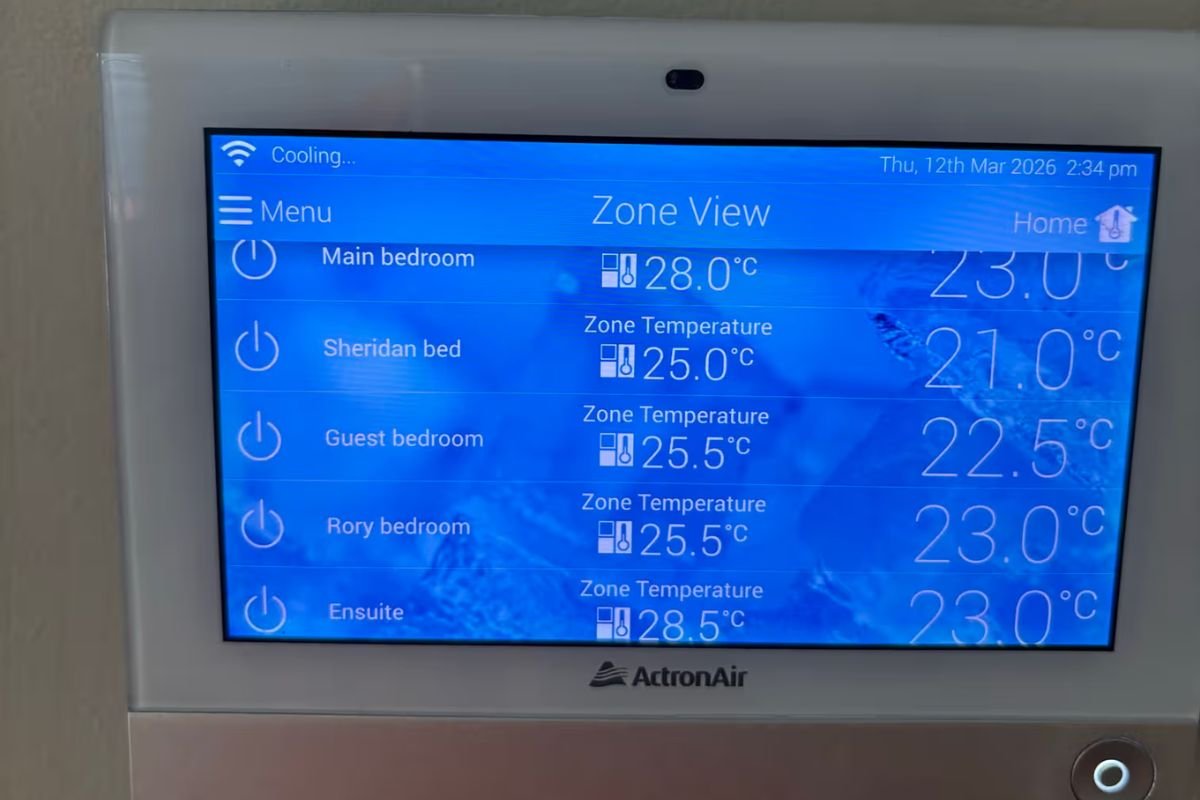
Your Gold Coast ducted air conditioning system runs. The fan sounds normal. Most of the house feels comfortable. But one room stays warm and stuffy, no matter how low you set the thermostat. Weak airflow in one room is one of the most common calls we take across the Gold Coast. Homeowners usually assume the unit is failing. In most cases, however, the unit is fine. The real fault sits above the ceiling, in a section of ductwork almost nobody ever sees. Here’s what we find up there, and what a recent Gold Coast job taught us about it.
Table of contents
- The part most homeowners have never heard of: the branch take-off
- A real Gold Coast job: two back rooms with no air at all
- How to tell it’s the ductwork, not the aircon
- Why branch take-offs fail on the Gold Coast
- What a proper repair actually involves
- Please don’t crawl into the roof yourself
- What this means for your power bill
- When to book a technician
- Frequently asked questions
The part most homeowners have never heard of: the branch take-off
A ducted air conditioning system doesn’t send air to every room through one big pipe. Instead, the main supply duct runs down the centre of the roof space. From that trunk, smaller flexible ducts branch off to each individual outlet.
The connection point where a smaller duct joins the main duct is called a branch take-off, or BTO for short.
It’s a simple component. It’s also a common failure point. A BTO is typically a moulded collar clamped and taped into the main duct, then joined to flexible duct with a cable tie, mastic and foil tape. Nothing about it is glued permanently in place. Over time, that joint can loosen, tear, or drop off completely.
When a BTO fails, the conditioned air never reaches the room. Instead, it escapes into the roof space. Your compressor still works, and your fan still pushes air. Yet you end up with weak airflow in one room while every other outlet performs normally.
A real Gold Coast job: two back rooms with no air at all
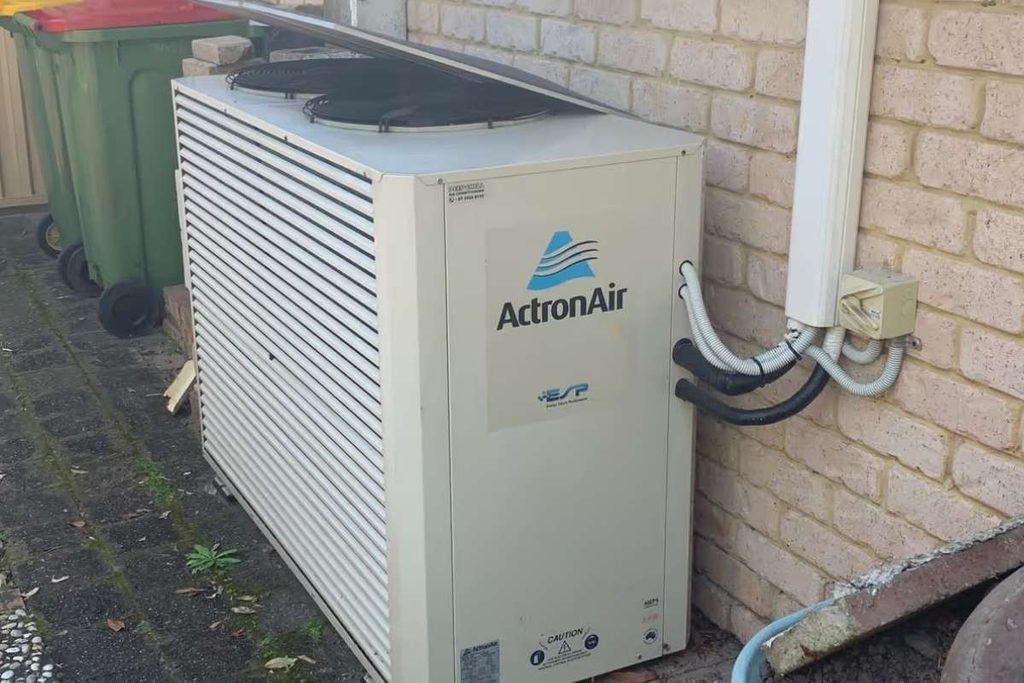
We were recently called to a home where the two back rooms on the left side of the house had almost no airflow. The rest of the house cooled normally, so the owner assumed the outdoor unit was on its way out.
It wasn’t.
Once our technician accessed the roof space, the cause was immediate. The branch take-off supplying those two back rooms had fallen off completely. It wasn’t cracked or partly detached. It had separated entirely from the main duct, and the system had been dumping expensive cooled air straight into the roof cavity.
While inspecting the rest of the run, the technician found a second problem. Another BTO was leaking heavily at the joint. That leak was quietly bleeding pressure out of the whole system, which reduced airflow to several other outlets at once.
The repair work on that visit covered:
- Reattaching and repairing the failed branch take-off feeding the two back rooms
- Repairing and re-sealing the second leaking BTO with silver foil tape
- Blowing out the condensate drain to clear any restriction
- Documenting the indoor unit serial number for the service record
- Taking before-and-after photos so the owner could see the actual fault
No new equipment, refrigerant and replacement unit. The system was mechanically healthy the whole time – the air simply wasn’t arriving where it was supposed to.
How to tell it’s the ductwork, not the aircon
Before you book anything, run through these signs. They point strongly toward a duct fault rather than a unit fault.
It’s likely a duct or BTO issue when:
- Only one or two rooms are affected, and the rest of the house cools normally
- The affected rooms sit furthest from the indoor unit, or at one end of the house
- Airflow at that outlet feels weak, but the air itself still feels cool
- The problem appeared suddenly, not gradually over several seasons
- Your power bill climbed while comfort dropped
- The roof space above those rooms feels unusually cold when the system runs
It’s more likely a unit or refrigerant issue when:
- Every room underperforms at the same time
- The air coming out isn’t cold anywhere in the house
- The outdoor unit ices up, cycles oddly, or makes new noises
- The system trips out or throws an error code
That first list matched our Gold Coast job almost exactly. The clue that seals it is simple: cool air, weak volume, isolated to specific rooms.
Why branch take-offs fail on the Gold Coast
Several local conditions explain why weak airflow in one room happens so often in Gold Coast homes. Roof spaces here are a genuinely hostile environment for flexible ductwork. Several local factors work against those joints.
Extreme roof-space heat. On a summer afternoon, a Gold Coast roof cavity can push well past 50°C. That heat cycling degrades foil tape adhesive and hardens plastic collars season after season.
Humidity and coastal air. Constant moisture in the air weakens tape bonds and accelerates corrosion on clamps and fixings.
Movement and vibration. Every start-up sends a pressure surge through the duct run. Over ten or fifteen years, that repeated flexing works joints loose.
Pests. Rodents, possums and geckos move through roof spaces constantly. They knock ducts off alignment, and they chew insulation and tape.
Original installation quality. This one matters most. A BTO fixed with tape alone will eventually let go. A properly installed joint uses a cable tie, mastic sealant, and foil tape over the top. Cheap installs simply fail earlier.
Other trades in the roof. Electricians, antenna installers and insulation crews all work in the same cavity. A duct knocked with a knee can pull straight off its collar.
Ductwork in Australia should be installed and sealed to AS 4254.2, the standard covering flexible duct systems. Sadly, plenty of older residential installs never met it.
What a proper repair actually involves
A quick wrap of tape is not a repair. When our technicians attend weak airflow in one room, the process runs like this.
1. Confirm the symptom at the outlet. We measure airflow at the affected vent and compare it against the others.
2. Access and inspect the roof space. We trace the duct run from the plenum to the failing outlet, checking every joint along the way.
3. Find every fault, not just the obvious one. Our Gold Coast job is a perfect example. The fallen BTO explained the two back rooms. The second leaking BTO explained why airflow felt slightly soft elsewhere too.
4. Reattach and seal properly. The duct is refitted to the collar, cable-tied, sealed and taped. Damaged insulation gets restored so condensation doesn’t form later.
5. Check the supporting systems. We blow out the condensate drain while we’re there, because a partly blocked drain causes water damage that costs far more than the visit.
6. Document everything. We record the indoor unit serial number and supply photos of the fault and the completed repair. You should never have to take a technician’s word for what happened above your ceiling.
Please don’t crawl into the roof yourself
We understand the temptation. But roof spaces are genuinely dangerous, and we’d rather you didn’t.
Ceiling joists are narrow, and a foot placed between them goes straight through the plasterboard. Temperatures up there cause heat stress within minutes. Live wiring runs alongside ductwork. Older homes may still contain asbestos-based materials. Insulation batts hide everything, including the joint you’re looking for.
On top of that, a repair done with the wrong tape simply fails again next season, usually during the first hot week of summer.
What this means for your power bill
A fully detached BTO doesn’t just make one room uncomfortable. It forces the entire system to work harder for a worse result.
Your thermostat sits in the hallway or living area. It reads the temperature there and keeps calling for cooling until that zone reaches setpoint. Meanwhile, a meaningful share of your conditioned air is heating up the roof cavity instead. The system runs longer, cycles more, and consumes more power to deliver less comfort.
Duct leakage is one of the biggest efficiency losses in Australian ducted systems, and it’s largely invisible to the homeowner. The federal YourHome guide to heating and cooling makes the same point about sealing and insulating duct runs properly.
Fixing a fallen branch take-off is usually a same-visit repair. The comfort returns immediately, and the running-cost saving continues every summer afterward.
When to book a technician
Book an inspection if any of the following apply to your home:
- Weak airflow in one room, while the rest of the house cools normally
- Airflow dropped suddenly rather than gradually
- Your system is more than eight years old and has never had a duct inspection
- Trades have recently worked in your roof space
- Your bills increased while comfort decreased
Our team covers the full Gold Coast, from Coolangatta through to Coomera, with our workshop based in Burleigh Heads. We diagnose the actual cause before we quote, and we send photos of what we find.
If one room in your home has given up on you, the answer is probably fifteen minutes above your ceiling – not a new air conditioner.
Book a ducted air conditioning repair with DEEPCHILL or call our Gold Coast team today.
Frequently asked questions
What causes weak airflow in one room?
- A detached or leaking branch take-off in the roof space is the most common cause. The air escapes above the ceiling before it reaches the outlet.
What is a branch take-off in ducted air conditioning?
- It’s the fitting that connects a smaller duct to the main supply duct, sending air to a specific room. Each outlet in your home has one.
Can a fallen duct damage my ceiling?
- It can. Cooled air released into a hot roof cavity creates condensation, which may stain or sag plasterboard over time.
How long does a BTO repair take?
- Most repairs are completed within a single visit, provided roof-space access is safe and clear.
Will my aircon need replacing?
- Usually not. In the job described above, the unit itself was in good working order. Only the ductwork needed attention.