It’s 33 degrees in Burleigh, Gold Coast, the air conditioning system is humming, but the room still feels like a sauna. Should I turn off AC if not cooling? In most cases, yes. Leaving a struggling system running rarely fixes the problem. Instead, it can turn a small repair into a big one. In this guide, our DEEPCHILL team explains why, what to check first, and when to call a technician.
DEEPCHILL has looked after Gold Coast homes and businesses air conditioning systems since 1986. Over those 40 years, our technicians have seen every reason an aircon stops cooling. Many of those call-outs started with the same choice: “I’ll just leave it on and see if it catches up”.
Table of contents
- The short answer: Yes, in most cases
- Why running a non-cooling AC can make things worse
- Frozen coil? Turn off the AC cooling or switch to fan mode
- 3 quick checks before you turn off an AC that’s not cooling
- When it’s okay to keep it on in Fan mode
- When to call a technician
- Why you shouldn’t top up the gas yourself if your AC is not cooling
- Prevention beats repair
- Frequently asked questions
- Need air conditioning help on the Gold Coast?
The short answer: Yes, in most cases
If your aircon is running but not blowing cool air, switch the cooling off. A working air conditioner should feel noticeably cool at the vents within a few minutes. If it doesn’t, something is stopping the system from doing its job.
That “something” might be simple, like the wrong mode on the remote. However, it could also be low refrigerant, a blocked filter or ice on the coil. In those cases, every extra hour of running adds stress to the parts that cost the most to replace.
So, the safest first move is to stop the cooling cycle. Then work through a few quick checks before deciding what to do next.
Why running a non-cooling AC can make things worse
An air conditioner that isn’t cooling isn’t simply “doing nothing.” It is still working hard, often harder than normal. Here is what can happen behind the scenes.
The compressor can overheat
The compressor is the heart of your system. It pumps refrigerant between the indoor and outdoor units. When refrigerant runs low, usually from a slow leak, the compressor keeps working but can’t move enough heat. As a result, it runs hotter and longer than it should.
Refrigerant also helps cool the compressor itself. Therefore, a system that is low on gas can overheat its own most expensive part. A failed compressor is one of the costliest aircon repairs. In older units, it often means replacing the whole system.
The coil can freeze
Low refrigerant or poor airflow can drop the indoor coil below freezing. Moisture in the air then turns to ice on the coil. This is common on the Gold Coast, because our summer air holds so much humidity.
Once ice forms, it blocks airflow even further. Consequently, the coil gets colder and the ice grows. If you keep the cooling on, the problem feeds itself.
You pay for power and get no comfort
A struggling aircon still draws electricity. In fact, it may run non-stop because the room never reaches the set temperature. That means a higher power bill with nothing to show for it.
The technician gets a clearer picture
Turning the system off early also helps with diagnosis. For example, a technician can’t properly test a frozen system until the ice melts. Stopping early often means a faster, more accurate repair.
Frozen coil? Turn off the AC cooling or switch to fan mode
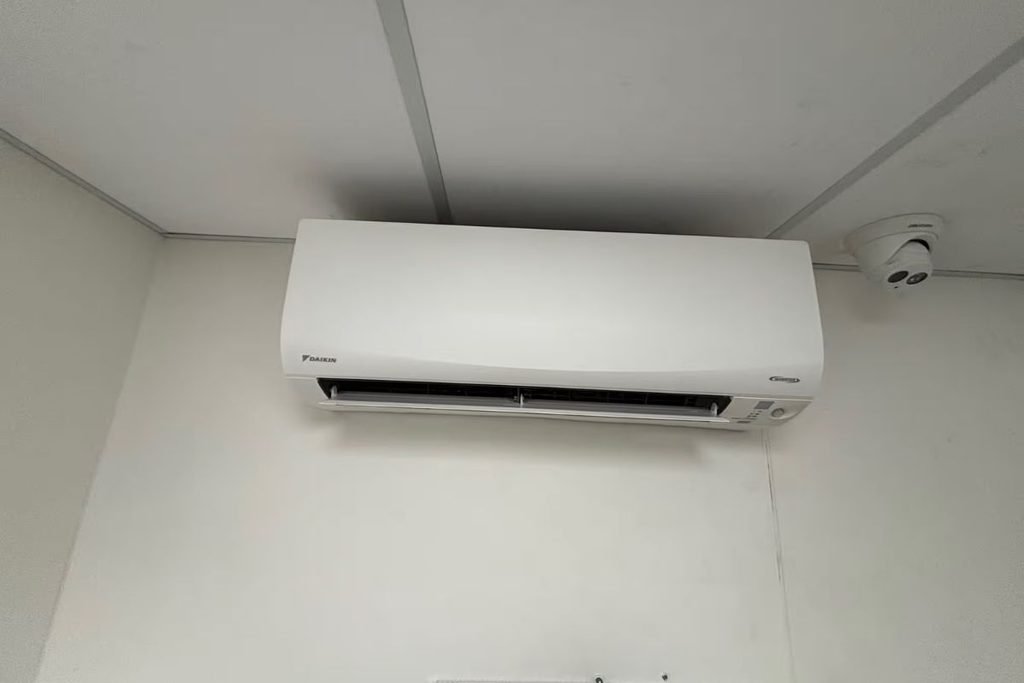
If you can see ice or frost on the indoor unit, or on the copper pipes outside, you likely have a frozen coil. Here’s how to thaw it safely:
- Turn off the cooling. Use the remote to switch off Cool mode.
- Run Fan mode if your unit has it. Moving room air across the coil helps the ice melt faster.
- Give it time. Thawing usually takes a few hours. Heavy ice can take longer.
- Protect the floor and furniture. Melting ice produces water. Place a towel under the indoor unit if it starts to drip.
- Don’t chip or scrape the ice. The coil fins bend easily, and the pipes can puncture.
Once the coil is fully thawed, you can try cooling again. If the ice comes back within a day or so, the cause hasn’t gone away. At that point, it’s time for a professional check.
3 quick checks before you turn off an AC that’s not cooling
Before you assume the worst, spend five minutes on these checks. Our technicians regularly find one of these behind an “aircon not blowing cool air” call.
1. Check the mode
Many remotes cycle through Auto, Cool, Dry, Fan and Heat. It’s easy to bump the wrong button. Fan mode only moves air, and Dry mode focuses on removing humidity. Neither will cool the room the way Cool mode does. Make sure the snowflake symbol is showing.
2. Check the set temperature
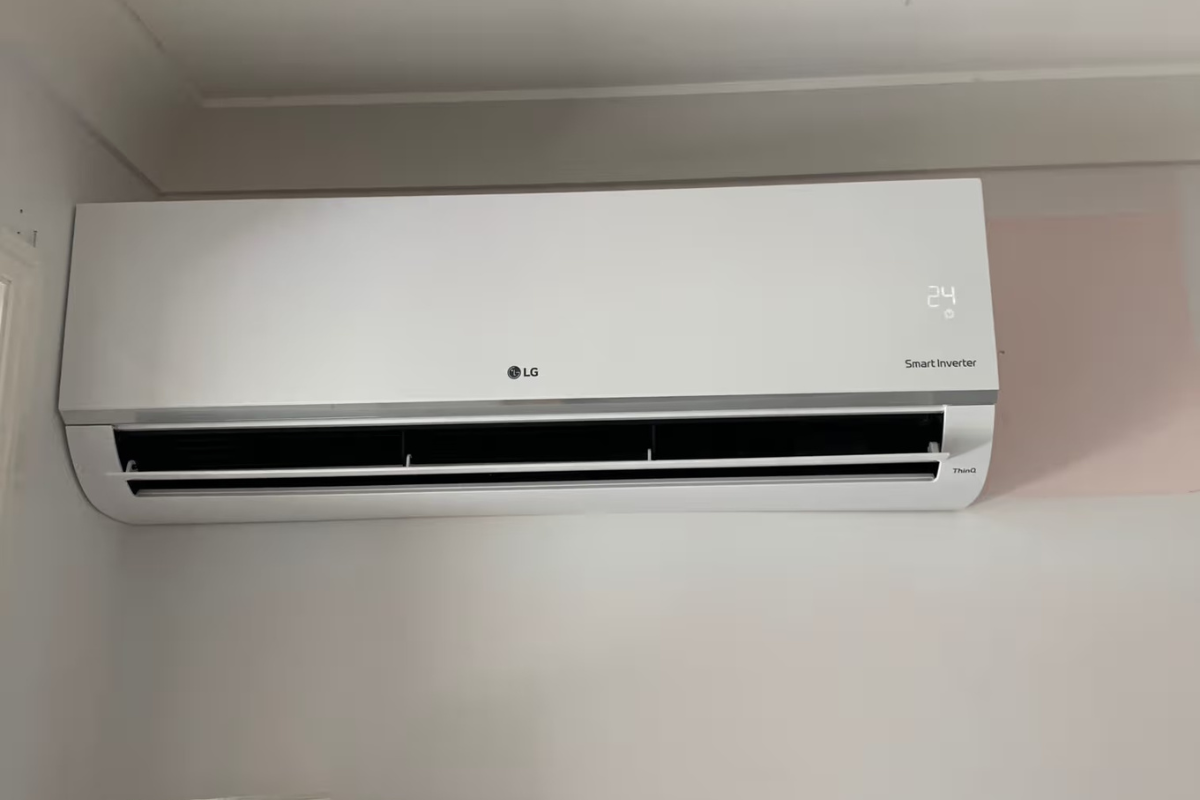
Next, look at the target temperature. If it’s set at or above the room temperature, the system has no reason to cool. Try setting it to around 24°C. That’s a comfortable, efficient setting for most Gold Coast homes. Also check that a timer or sleep setting hasn’t kicked in.
3. Check the filter
Finally, open the front panel of your split system and slide out the filters. A filter clogged with dust and lint chokes airflow. In turn, poor airflow is one of the most common causes of a frozen coil.
If the filter looks grey or furry, rinse it under lukewarm water. Let it dry fully in the shade, then refit it. For most homes, cleaning filters every few weeks in summer is a good habit.
When it’s okay to keep it on in Fan mode
Fan mode is generally safe to use while you wait for a technician. It doesn’t run the compressor, so it won’t add strain to the parts that matter most. It’s useful in these situations:
- You’re thawing a frozen coil.
- The room is stuffy and you just want air moving.
- You’ve cleaned the filter and want to check the airflow is strong.
However, turn the unit off completely, and switch it off at the isolator or circuit breaker, if you notice any of these:
- A burning, electrical or musty smell
- Grinding, rattling, screeching or loud buzzing
- Water dripping from the indoor unit near power points or wiring
- The circuit breaker tripping
- The unit turning itself on and off repeatedly
These signs point to an electrical or mechanical fault. In that case, safety comes before comfort.
When to call a technician
If the three quick checks haven’t helped, it’s time to book a professional. Call an air conditioning repair technician if:
- The aircon still isn’t blowing cool air after you’ve checked the mode, temperature and filter
- Ice keeps forming on the coil or pipes
- You hear hissing or bubbling, which can mean a refrigerant leak
- You see oily marks around the pipe joints
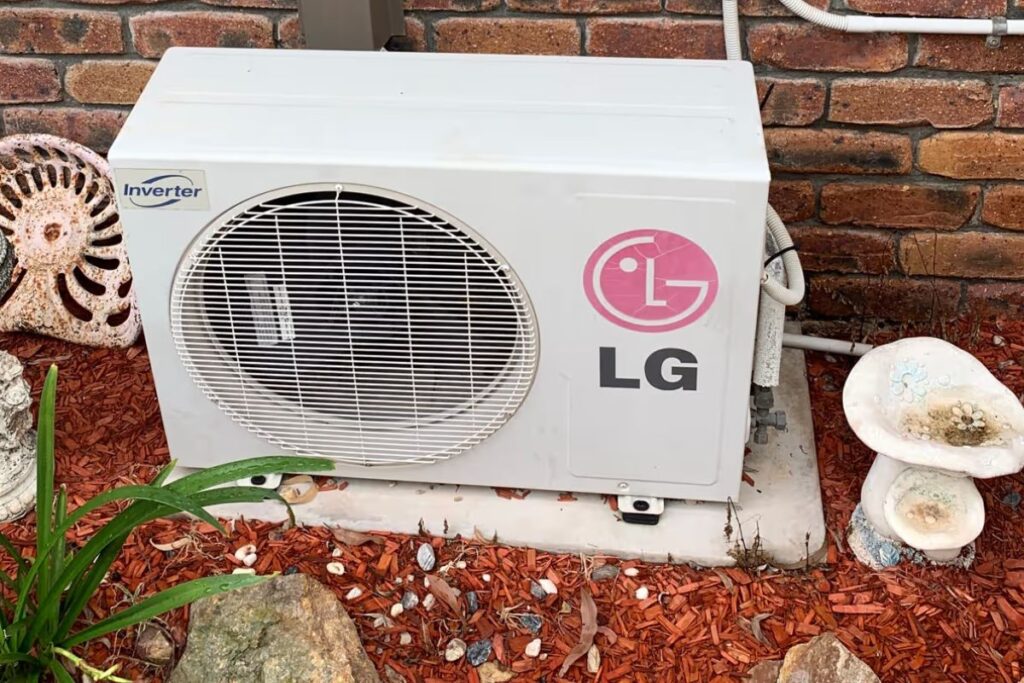
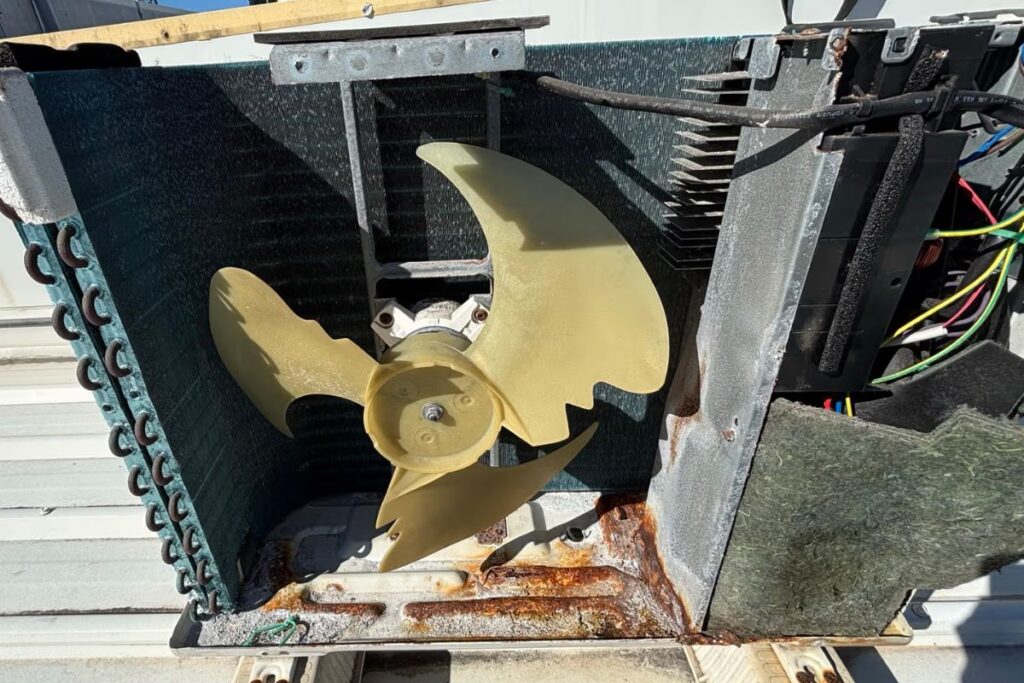
- The outdoor unit’s fan isn’t spinning while the system runs
- Water leaks from the indoor unit even after the coil has thawed
- Your power bill has jumped without a clear reason
Why you shouldn’t top up the gas yourself if your AC is not cooling
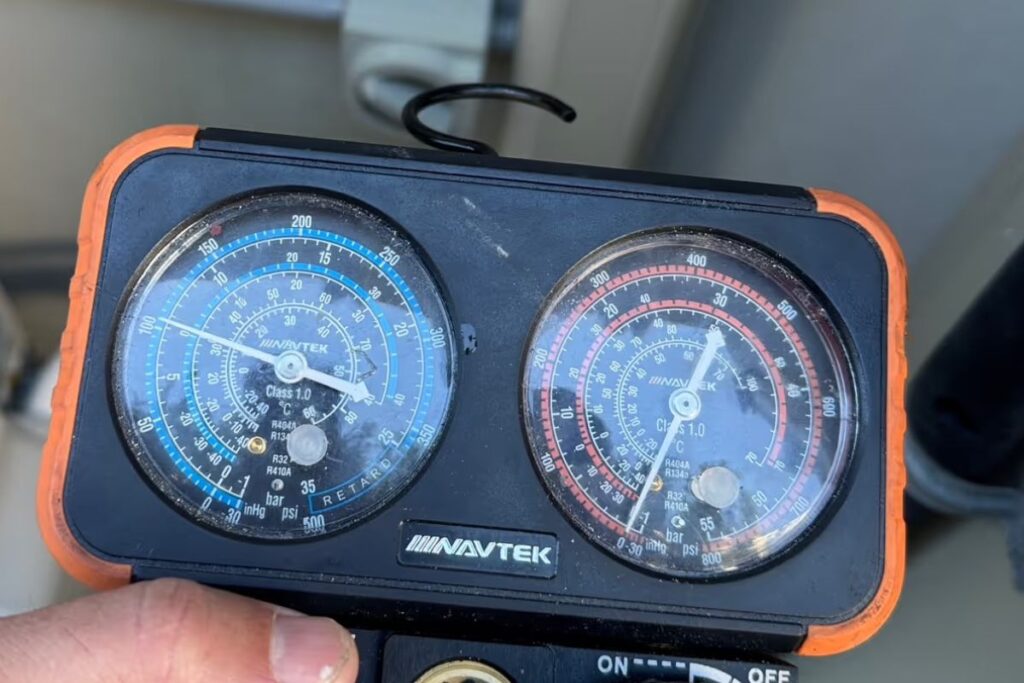
If low refrigerant is the cause, it needs a licensed fix. In Australia, only technicians holding a licence from the Australian Refrigeration Council (ARCtick) can legally handle refrigerant. Topping up a leaking system also isn’t a real repair. The leak must be found and fixed first, or the gas simply escapes again.
What Gold Coast conditions add to the mix
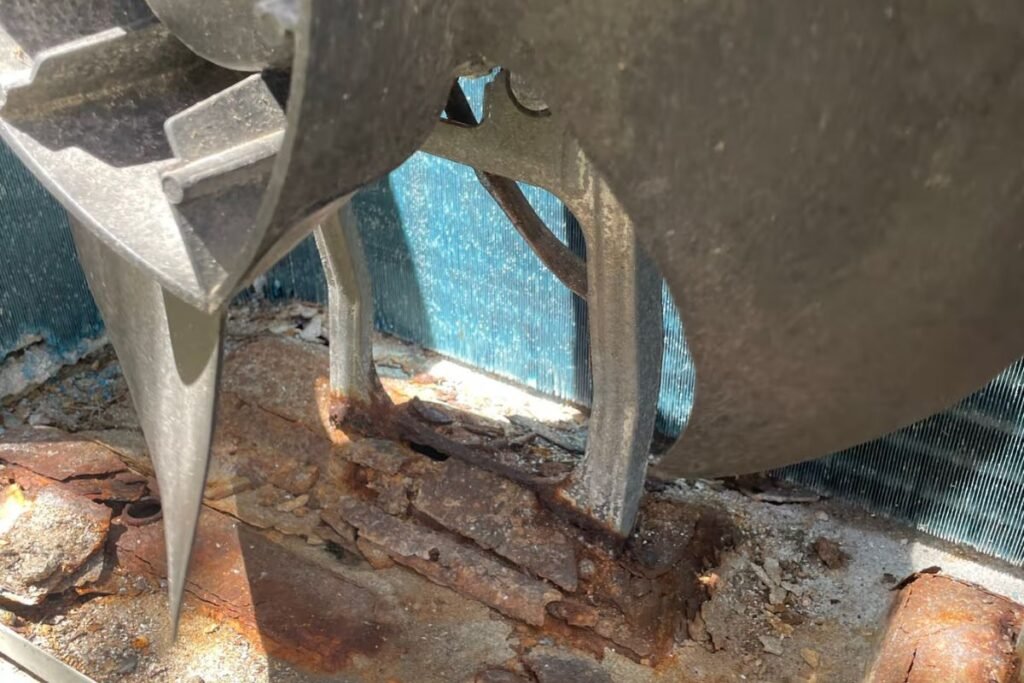
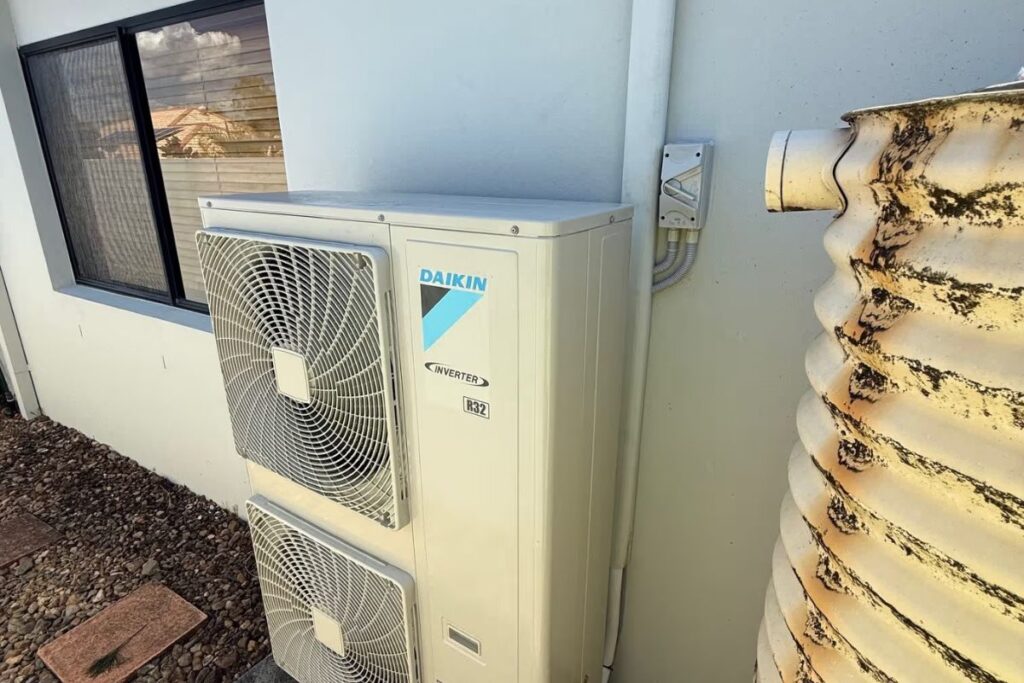
Our coastal climate is tough on air conditioners. Salt air can corrode outdoor coils, especially near the beach. Geckos and insects often nest inside outdoor units and short out the electronics. Meanwhile, high humidity makes coil freeze-ups more likely. A local technician knows to check for all of these.
Prevention beats repair
Most “not cooling” problems build up slowly. A dirty coil, a slow gas leak or a blocked drain rarely appears overnight. Regular servicing catches these issues early, usually before the hottest week of summer.
That’s why we recommend a professional service at least once a year for homes. Busy commercial sites, like restaurants and offices, often need more frequent visits. To find the right plan for your setup, call DEEPCHILL and our team will talk you through the options. You can also book an annual service online.
If your system is older and keeps breaking down, replacement may cost less in the long run. As Fujitsu/GENERAL National Dealer of the Year in 2024 and 2025, we can help you compare options. See our air conditioning installation page for more.
Frequently asked questions
Should I turn off AC if not cooling, or will it fix itself?
- Turn it off. A system that isn’t cooling rarely fixes itself. Running it can overheat the compressor or worsen a frozen coil.
Why is my aircon running but not blowing cool air?
- Common causes include the wrong mode, a high set temperature, a dirty filter, a frozen coil or low refrigerant. Start with the three quick checks above.
How long does a frozen aircon coil take to thaw?
- Usually a few hours in Fan mode. Heavy ice can take longer. If ice returns soon after, book a technician.
Is it safe to leave my aircon in Fan mode?
- Generally, yes. Fan mode doesn’t run the compressor. However, switch it off completely if you smell burning or hear unusual noises.
Can I re-gas my air conditioner myself?
- No. In Australia, only ARC-licensed technicians can handle refrigerant. A leak also needs repairing before any re-gas.
Need air conditioning help on the Gold Coast?
If your aircon still isn’t cooling, don’t keep running it and hoping for the best. DEEPCHILL has served Gold Coast homes and businesses for 40 years. Our technicians diagnose the real cause, explain it in plain English and fix it properly the first time.
Call DEEPCHILL today or book online for fast, local air conditioning Gold Coast service.