Storm season has arrived on the Gold Coast. One minute the sun is out, and the next a storm rolls in from the hinterland. Afterwards, the air turns thick, heavy and sticky. If you’re looking for the best settings for high humidity rainy days, you’re in the right place. Most people grab the remote and set the lowest temperature. However, on these days the real problem usually isn’t heat. It’s moisture. In this guide, the DEEPCHILL team explains which mode to use, what temperature to set, and how to keep your system running well all season.
DEEPCHILL has been servicing air conditioning across the Gold Coast since 1986. The advice below is based on what our technicians see in local homes and businesses every wet season.
Table of contents
- Why humid days feel worse than hot days
- Dry mode vs Cool mode: Which to use when
- Recommended temperature range: 24–26°C
- Fan speed: Why lower or auto removes more moisture
- Close windows and doors (Here’s why opening them backfires)
- Storm season safety: Protect your system
- Signs your air conditioner needs a repair
- Quick settings cheat sheet
- Frequently asked questions
- Stay comfortable this storm season with DEEPCHILL
Why humid days feel worse than hot days
Your body cools down by sweating. As sweat evaporates from your skin, it carries heat away with it. On a dry day, this works well.
On a humid day, though, the air is already full of water vapour. As a result, your sweat can’t evaporate properly. It just sits on your skin, and you feel hot, sticky and tired, even when the temperature isn’t extreme.
That’s why 28°C after a storm can feel worse than 32°C on a dry, breezy day. In summer, Gold Coast humidity often sits around 70%. That’s well above the 40–60% range most people find comfortable indoors.
High indoor humidity also shows up around the house:
- A musty smell in wardrobes or bedrooms
- Damp-feeling sheets and towels
- Mould spots on ceilings, leather shoes or bags
- Condensation on windows and mirrors
How your air conditioner removes moisture: Warm, humid air passes over the cold coil inside your indoor unit. The moisture condenses on the coil, just like water forms on a cold glass. That water then drains away through the drain line. Every split system removes some moisture. The settings you choose decide how much.
Dry mode vs Cool mode: Which to use when
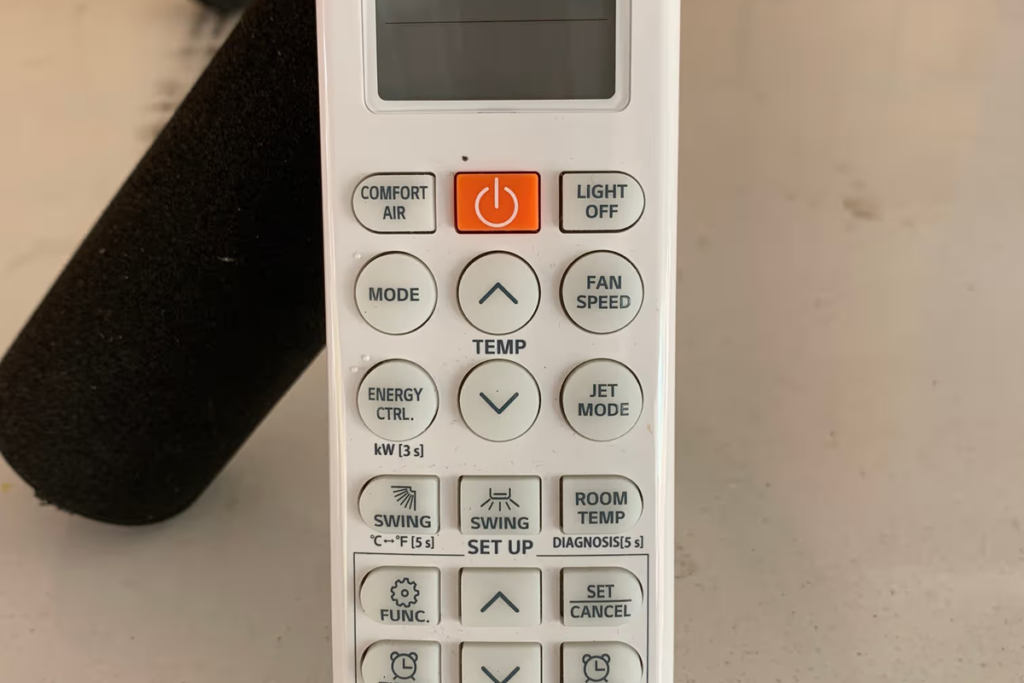
Dry mode (water droplet icon 💧)
Dry mode puts moisture removal ahead of cooling. On most models, the fan runs at a low speed and the compressor cycles on and off. Because of this, the air spends more time passing over the cold coil, so more water gets pulled out. Dry mode also usually uses less energy than Cool mode.
Use Dry mode when:
- It’s raining and mild (roughly 22–28°C outside) but the air feels sticky
- A storm has passed and the temperature has dropped, but the house still feels damp
- You can smell mustiness, or clothes and bedding feel damp
Good to know: On many models, Dry mode locks the fan to low, and the temperature setting may behave differently. Check your manual, because each brand handles this a little differently.
Cool mode (snowflake icon ❄️)
Cool mode (some people call it “cold mode”) puts temperature first. The system runs at the capacity it needs to reach your set temperature. It still removes moisture along the way, just less of it than Dry mode.
Use Cool mode when:
- It’s hot and humid, like a 31°C afternoon before a storm hits
- You’ve come home to a hot, closed-up house
- The room temperature is well above what feels comfortable
The simple rule
- Hot and sticky? Use Cool mode.
- Mild and sticky? Use Dry mode.
- Cool, damp and drizzly? Run Dry mode in shorter bursts. If the room gets too chilly, switch to Fan mode for airflow.
- Not sure? Auto mode lets the system choose based on room conditions.
Recommended temperature range: 24–26°C
On humid days, set your air conditioner between 24°C and 26°C. Start at 25°C and adjust one degree at a time.
Here’s why going much lower doesn’t help:
- You’ll feel cold and clammy. Cold air that still holds moisture feels damp, not fresh.
- You may get condensation. Overcooled vents, walls and windows can “sweat” as humid air hits them. That moisture can lead to mould.
- Your bills go up. Every degree lower makes the system work harder, often for little extra comfort.
Once the moisture comes out of the air, 25°C feels much cooler than you’d expect. For bedrooms at night, 25–26°C with Sleep mode works well for most people.
Fan speed: Why lower or auto removes more moisture
This is the setting most people get wrong.
High fan speed pushes air across the coil quickly. As a result, the room cools fast, but much of the moisture stays in the air. That’s how you end up with a room that’s cold but still clammy.
Low fan speed slows the air down, so it spends longer in contact with the cold coil. The coil also stays colder. Together, this means more moisture condenses and drains away.
Auto fan speed lets the system balance cooling and moisture removal on its own. For most people, it’s the easiest choice.
Our recommendation:
- Coming home to a hot house? Run High for 10–15 minutes to bring the temperature down.
- Then switch to Low or Auto to keep pulling moisture out.
- Add a ceiling fan on low to spread the dry air around the room.
Close windows and doors (Here’s why opening them backfires)
When it rains, it’s tempting to open a window for “fresh air” while the aircon runs. Unfortunately, this works against you.
Your air conditioner treats the air inside a closed space. When a window is open, humid outdoor air keeps flowing in. Your system is pulling moisture out while more keeps arriving. As a result:
- It never catches up. The room stays sticky no matter how long it runs.
- It runs non-stop. This raises your power bill and adds wear on the compressor and fan motor.
- It can overflow. In very humid conditions, extra water can overwhelm the drain tray and start dripping from the indoor unit.
- Condensation forms near the gap. Cool surfaces near the open window can collect moisture and grow mould.
Simple habits that help:
- Keep windows and doors closed while the system is on
- Close doors to rooms you aren’t using, so the system treats a smaller space
- Run bathroom exhaust fans during and after showers
- Avoid drying laundry indoors in the room you’re cooling
- Draw thick curtains during heavy rain to reduce heat and moisture through the glass
Once the storm passes and the air outside feels drier, open up and let the house breathe.
Storm season safety: Protect your system
Gold Coast storms don’t only bring humidity. They also bring lightning, power outages and, sometimes, flooding. A few precautions can save you a costly repair.
- Turn the system off during severe electrical storms. Power surges can damage the circuit board in your indoor or outdoor unit. Switch off with the remote or at your switchboard. Don’t go outside to the isolator switch during a storm.
- Wait after a power outage. When the power comes back, give the system a few minutes before you turn it back on.
- Don’t run a flooded unit. If your outdoor unit sat in floodwater, leave it off. Have a licensed technician inspect it first.
- Clear debris after the storm. Check that leaves, branches and rubbish aren’t blocking the outdoor unit’s airflow.
- Clean filters more often. In the wet season, check and clean your filters every two to four weeks. Humidity helps dust, bacteria and mould build up faster.
Signs your air conditioner needs a repair
Humid months put extra load on your system, so small problems tend to show up now. Call a technician if you notice:
- Water dripping from the indoor unit. This usually means a blocked drain line, a common issue in the wet season.
- A musty or mouldy smell when the system starts up
- The room is still sticky after an hour or more on Dry mode
- Ice on the pipes or coil
- The system trips the power or won’t restart after a storm
- Unusual noises, such as rattling, gurgling or buzzing
Most of these problems can be avoided with regular servicing. A professional clean clears the drain line, removes mould from the coil and checks the electrical parts before storm season peaks. Book an annual service with DEEPCHILL before the summer rush.
Quick settings cheat sheet
| Weather Condition | Mode | Temperature | Fan Speed | Tip |
|---|---|---|---|---|
| Hot and humid before a storm (30°C+) | Cool | 24–25°C | High to start, then Low/Auto | Close windows and doors |
| Warm and sticky after rain (24–29°C) | Dry | 25–26°C | Low (often automatic in Dry mode) | Ideal for removing moisture |
| Mild, all-day drizzle (under 24°C) | Dry, in short bursts | 25–26°C | Low | Switch to Fan if it gets chilly |
| Humid nights | Cool + Sleep, or Dry | 25–26°C | Low/Quiet | Add a ceiling fan on low |
| Not sure what to choose | Auto | 25°C | Auto | Let the system decide |
| Lightning overhead | Off | – | – | Switch off from inside only |
Frequently asked questions
Is Dry mode cheaper to run than Cool mode?
Usually, yes. In Dry mode the compressor cycles on and off and the fan runs low, so it generally uses less energy. Running costs still depend on your system, room size and how long it runs.
Can I leave Dry mode on all day?
Yes, on a humid day that’s fine. If the room feels too cool, raise the temperature or switch to Fan mode for a while.
Does Dry mode replace a dehumidifier?
For most homes on the Gold Coast, Dry mode handles everyday humidity well. However, rooms with ongoing damp or mould problems may need extra help. Our team can assess your space.
Why does my air conditioner smell musty when it rains?
Moisture and dust build up on the coil and in the drain tray, which lets mould and bacteria grow. A professional hydro clean usually fixes it.
Stay comfortable this storm season with DEEPCHILL
The right settings make a big difference on humid, rainy days. Use Dry mode when it’s mild and sticky. Use Cool mode when it’s hot and humid. Keep the temperature between 24°C and 26°C, use a lower fan speed, and keep windows closed.
If your system still can’t keep up, or it’s leaking, smelling or tripping after a storm, it may need a repair or a service. DEEPCHILL has looked after air conditioning on the Gold Coast since 1986. We’re also a Fujitsu/GENERAL National Dealer of the Year (2024 and 2025).
Call our team for honest advice on the right service plan for your home or business. If your system is getting old, take a look at our air conditioning installation options.