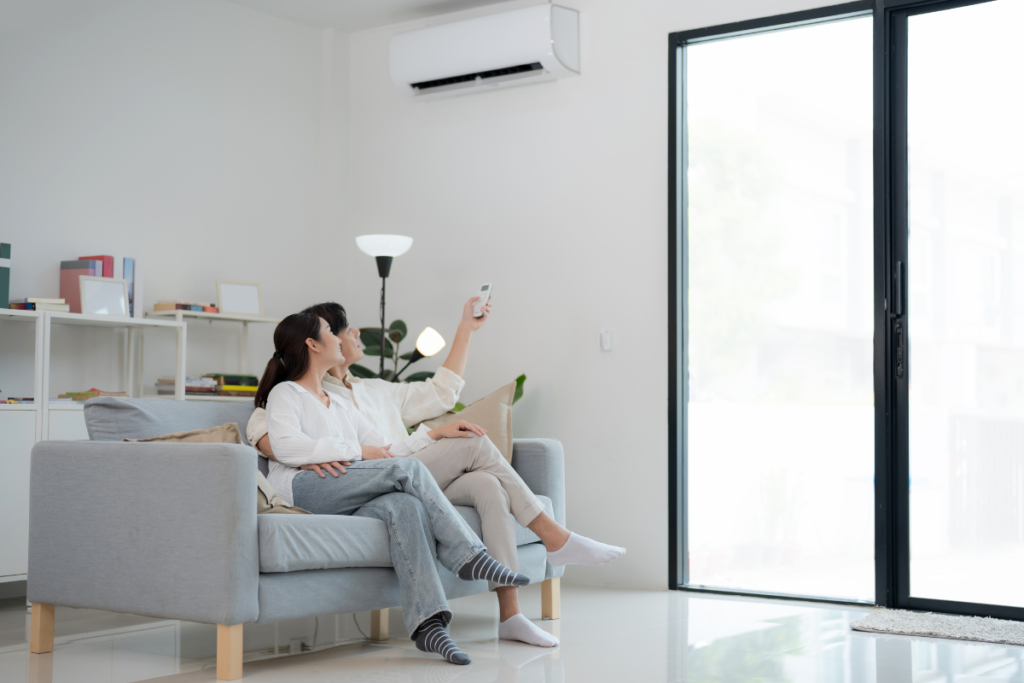
It’s 6am on the Gold Coast and the kitchen tiles are cold under your feet, but by 1pm the lounge room feels sticky and the dog is lying flat on the floor. That’s spring here: cool nights around 17°C, warm days around 25°C, and plenty of humidity in between. The good news is that one reverse cycle system can handle both. You just need to set your reverse cycle aircon the right way for each part of the day. At DEEPCHILL, we’ve been looking after Gold Coast homes since 1986, and this guide shares the settings our technicians recommend to their own customers.
Table of contents
Why Gold Coast spring is tricky
On paper, our spring looks easy. A typical October gives you nights around 17°C and days around 25°C, according to Bureau of Meteorology climate data. That’s an 8 to 10 degree swing in a single day.
However, the numbers don’t tell the whole story.
- September feels dry. Westerly winds bring dusty, crisp mornings and warm, bright afternoons.
- November feels muggy. Humidity creeps back, and afternoon storms start rolling in. A 26°C day can feel closer to 30°C.
- Where you live changes everything. Homes in the hinterland, like Mudgeeraba or Tallebudgera Valley, often feel a few degrees colder at night than beachside Burleigh or Palm Beach.
- Your house matters too. Upstairs bedrooms in Robina or Varsity Lakes townhouses trap afternoon heat. West-facing rooms cook after 3pm, even when the rest of the house is comfortable.
As a result, most Gold Coast families end up switching between heating and cooling in the same 24 hours. Without a plan, that’s exactly where power gets wasted.
What “Reverse Cycle” means
Your aircon doesn’t actually make heat or cold. Instead, it moves heat from one place to another.
- In Cool mode, it pulls heat out of your room and dumps it outside.
- In Heat mode, it runs the same process backwards. It pulls warmth from the outside air and brings it indoors.
Yes, it can find warmth in 17°C air. In fact, mild spring nights are when heating is at its most efficient.
That’s why a reverse cycle system is usually much cheaper to run than a plug-in fan heater or oil column heater. A heater turns electricity straight into heat. A reverse cycle system moves heat that already exists, so you often get several units of warmth for every unit of power you pay for.
Not sure if yours is reverse cycle? Check the remote. If you see a sun symbol or a “Heat” mode, you’re set. Most split system Gold Coast homes installed in the last 10 to 15 years are reverse cycle.
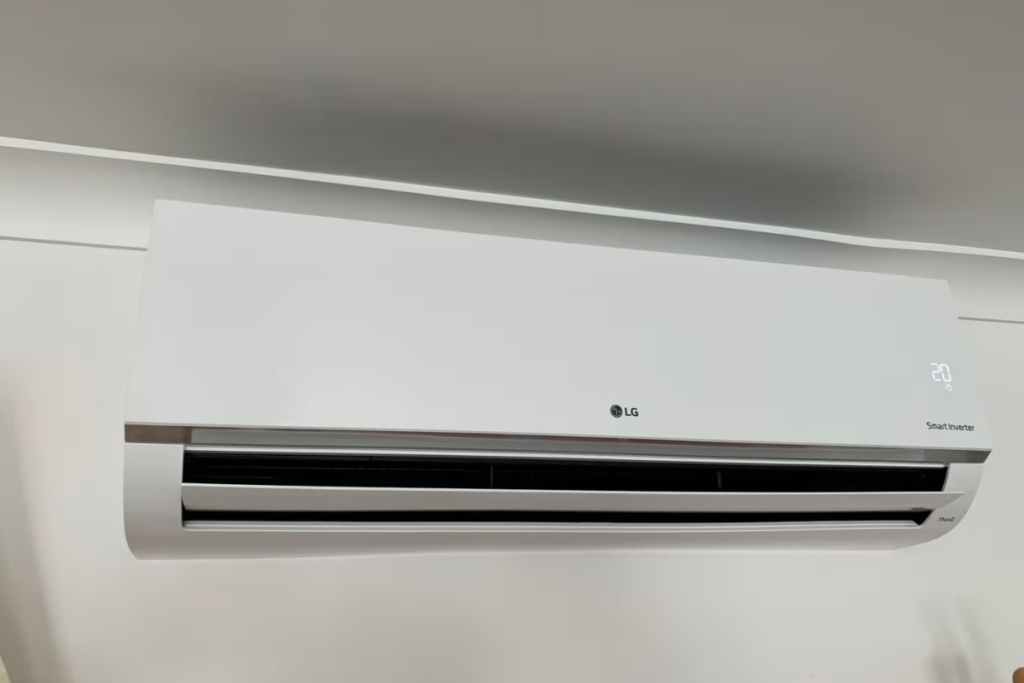
Best settings to set your reverse cycle aircon for night vs day
Here are the aircon settings we recommend to our own customers. They’re a starting point, so adjust a degree or two for your family.
Heat mode: cool nights and early mornings
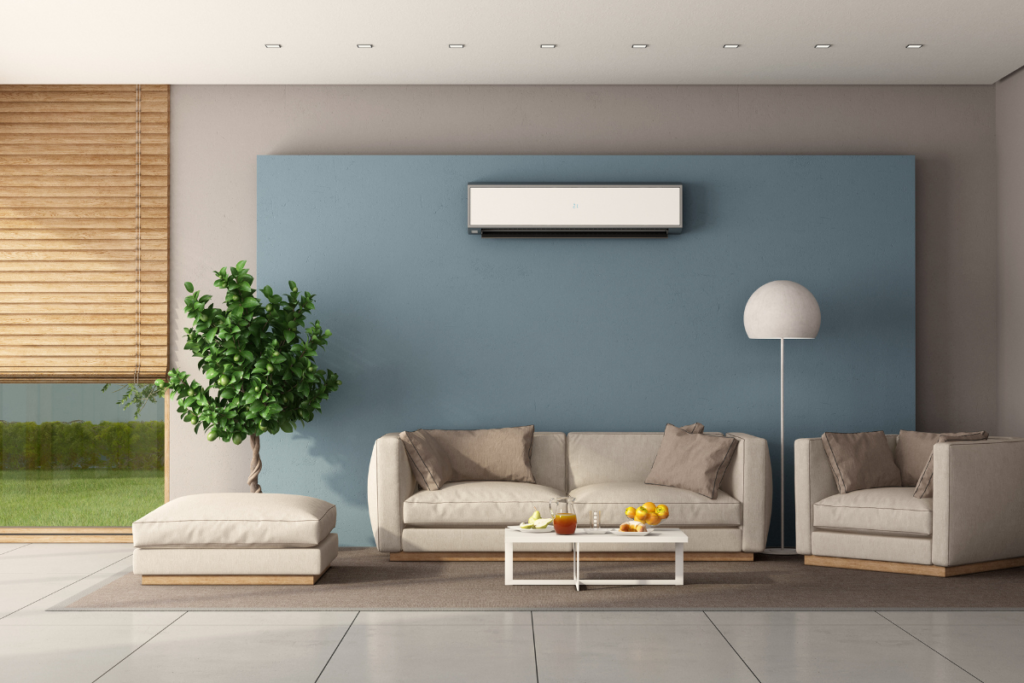
Set it to 20°C. Point the louvres down, because warm air rises and you want it reaching your feet. Close doors to rooms you’re not using.
Cool mode: warm afternoons
Set it to 24 to 25°C. Point the louvres straight out or slightly up, because cool air sinks and spreads naturally.
Dry mode: muggy, sticky days
This is the most underused button on the remote. Dry mode pulls moisture out of the air with gentle cooling. On a humid 26°C November day, dry air often feels comfortable without running full Cool mode.
Auto mode: in-between days
Auto picks Heat or Cool by itself to hold your set temperature. It works well on mild days when you’re home all day. Set it around 22 to 23°C. If you notice it flicking between heating and cooling, switch to manual Heat or Cool instead.
Fan only: breezy evenings
When the sea breeze is blowing and windows are open, fan only is enough. It costs very little to run.
| Time of day | Typical outdoor temp | Mode | Suggested setting |
|---|---|---|---|
| Early morning (5–8am) | 15–18°C | Heat | 20°C, louvres down |
| Midday to afternoon | 24–28°C | Cool or Dry | 24–25°C, louvres up |
| Humid or rainy day | 23–27°C | Dry | Default or 25°C |
| Evening (6–9pm) | 19–22°C | Fan or Auto | 22–23°C on Auto |
| Overnight | 16–18°C | Heat or Sleep timer | 19–20°C |
Every extra degree adds to your running costs. Government energy advice suggests 18 to 20°C for heating and 25 to 27°C for cooling. You can read more at energy.gov.au.
Timers and Wi-Fi control: Let the aircon switch for you
You shouldn’t have to wake up at 5am to turn the heater on. Timers do it for you.
On and off timer. Set Heat to come on 30 minutes before your alarm. Then set it to switch off when you leave for work.
Sleep timer. This slowly adjusts the temperature overnight, then turns the system off. It suits spring nights well, because it often warms up after midnight anyway.
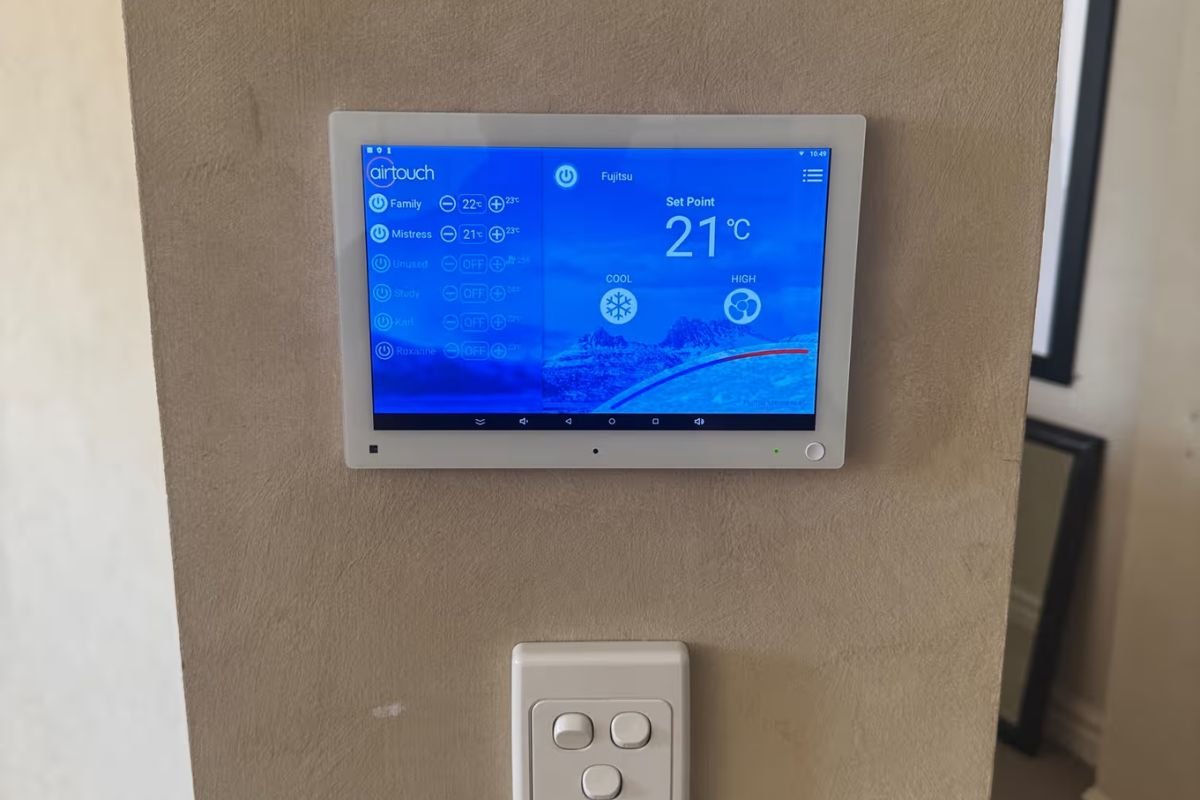
Wi-Fi and app control. Most modern Fujitsu and GENERAL systems with Wi-Fi let you control your aircon from your phone. You can set a weekly schedule, so it heats in the morning and cools in the afternoon automatically. Plus, you can switch on cooling 20 minutes before you get home. Left it running when you went out? Turn it off from the Pacific Fair car park.
As a Fujitsu Gold Coast dealer, we include Wi-Fi with every new installation. Our customers tell us it’s the feature they use most in spring and autumn.
Common mistakes that waste power
We see these every week. Thankfully, most are free to fix.
- Setting 16°C to cool faster. It doesn’t cool any faster. It just keeps running longer and costs more. Set your real target temperature from the start.
- Pointing louvres the wrong way. Heat pointed at the ceiling stays at the ceiling. Cool air pointed at the floor pools around your ankles.
- Heating with windows open. Sounds obvious, but it’s easy to forget on a mild morning.
- Leaving blinds open on west-facing windows. Afternoon sun can undo your cooling. Close them before 2pm.
- Skipping the filter clean after winter. September westerlies bring plenty of dust. A clogged filter makes your system work harder for less air. Rinse filters every few weeks during heavy use.
- Running a portable heater in the same room. Your aircon then thinks the room is warm enough, while you pay for two appliances.
- Switching it on and off every 20 minutes. Modern inverter systems run most efficiently when they hold a steady temperature. Let it settle.
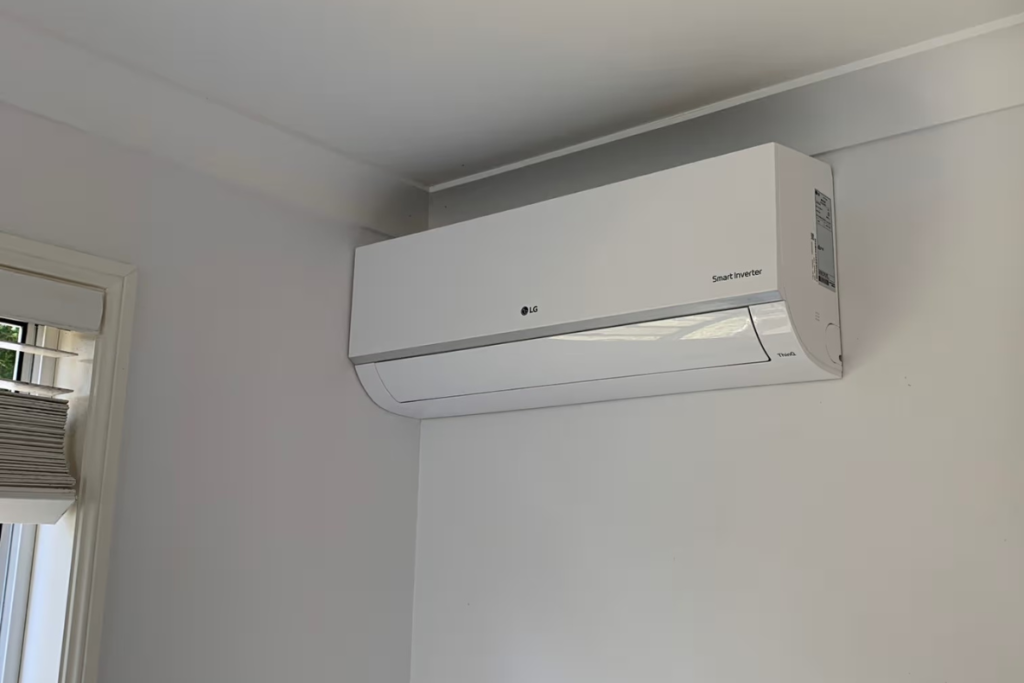
When your system struggles to keep up, and what that means
Spring is gentle weather for an aircon. So if your system struggles now, summer will be harder on it.
Watch for these signs:
- It takes more than 20 to 30 minutes to feel any difference
- Cool mode is blowing warm or room-temperature air
- A musty smell when you first switch it on after winter
- Water dripping from the indoor unit
- Ice forming on the pipes outside
- New rattles, buzzing or clicking sounds
- Your power bill has jumped, but your usage hasn’t changed
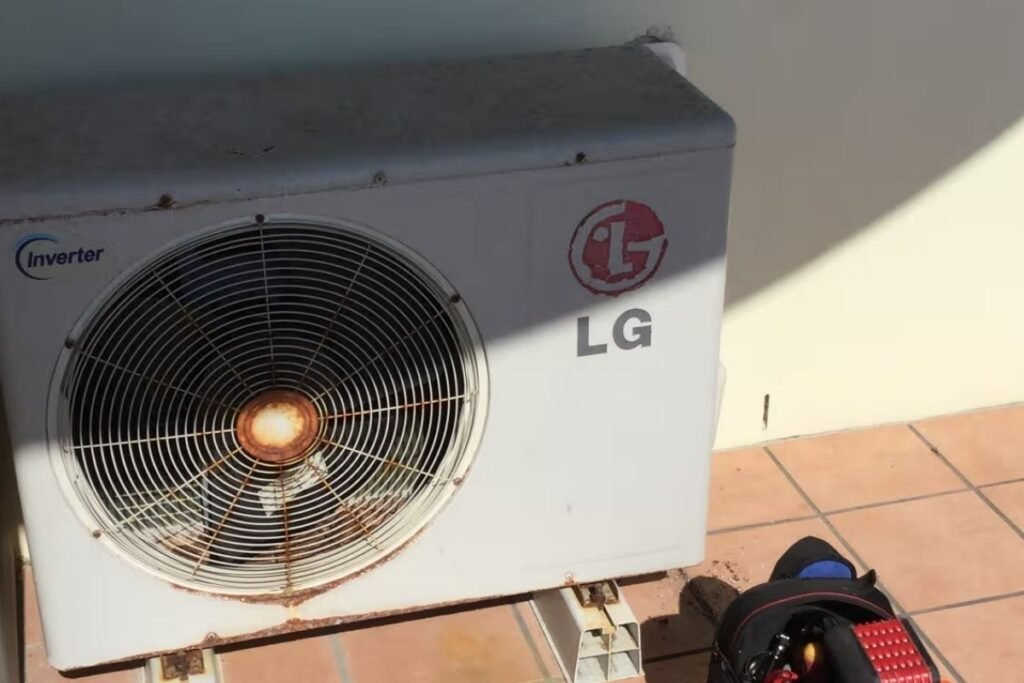
A musty smell usually means mould or bacteria has built up on the coil over the months it sat idle. Weak cooling can point to a dirty coil or a refrigerant leak. Refrigerant doesn’t get “used up”, so low gas always means a leak somewhere. On the Gold Coast, we also find geckos and insects nesting inside outdoor units more often than you’d think.
Sometimes the problem is age or size. A system over 12 to 15 years old, or one that was undersized for the room, will always fight a losing battle. If that’s you, upgrading before summer is worth considering. New split systems start from $1,610 inc. GST, with Wi-Fi included.
Book a service before summer
If a 25°C spring afternoon is challenging your aircon, a humid 34°C January day will be worse. Furthermore, December is the busiest month of the year for every aircon company on the Gold Coast.
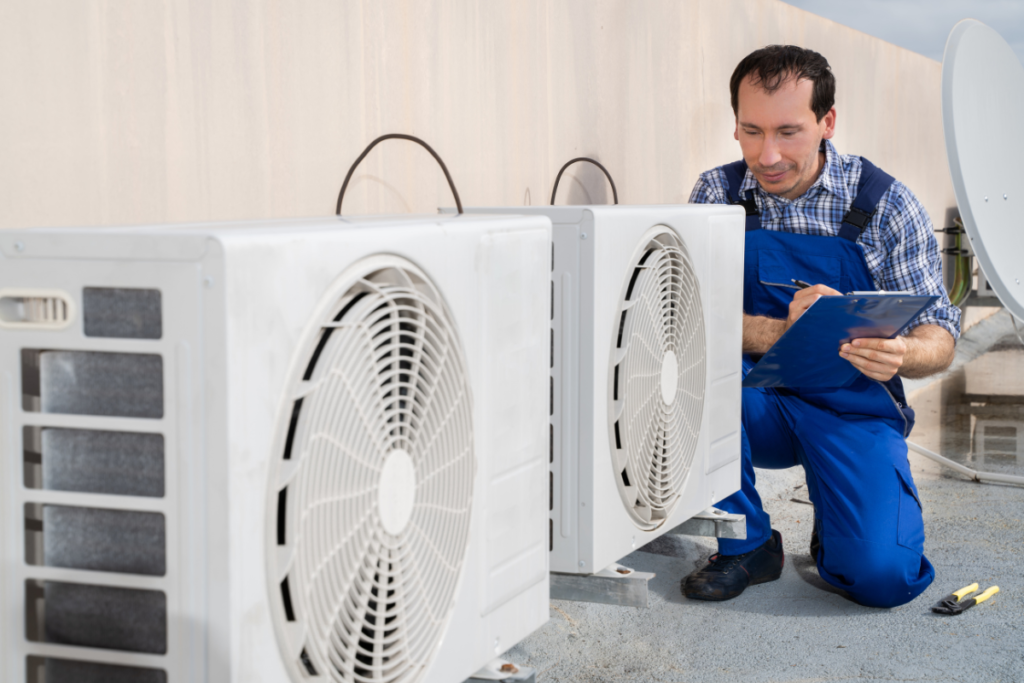
Late October and November is the sweet spot. Your system gets cleaned, checked and ready while the weather is still kind. That way, small problems get fixed before they become breakdowns in the middle of a heatwave.
DEEPCHILL has been servicing Gold Coast homes for 40 years. We’re also proud to be Fujitsu and GENERAL National Dealer of the Year for 2024 and 2025. Our Burleigh Heads team can recommend a maintenance plan that suits your home and how you use your aircon.