Every storm season on the Gold Coast, the same question comes up: if running your aircon in the rain will affect its lifespan. The short answer is no. Rain on its own won’t shorten the life of your air conditioning systems. However, the conditions that come with wet weather can, especially in a coastal city like ours. In this guide, we explain what actually causes rain damage to an air conditioner, and how to protect your system through storm season.
Table of contents
Does running your aircon in the rain affect its lifespan? The short answer: No
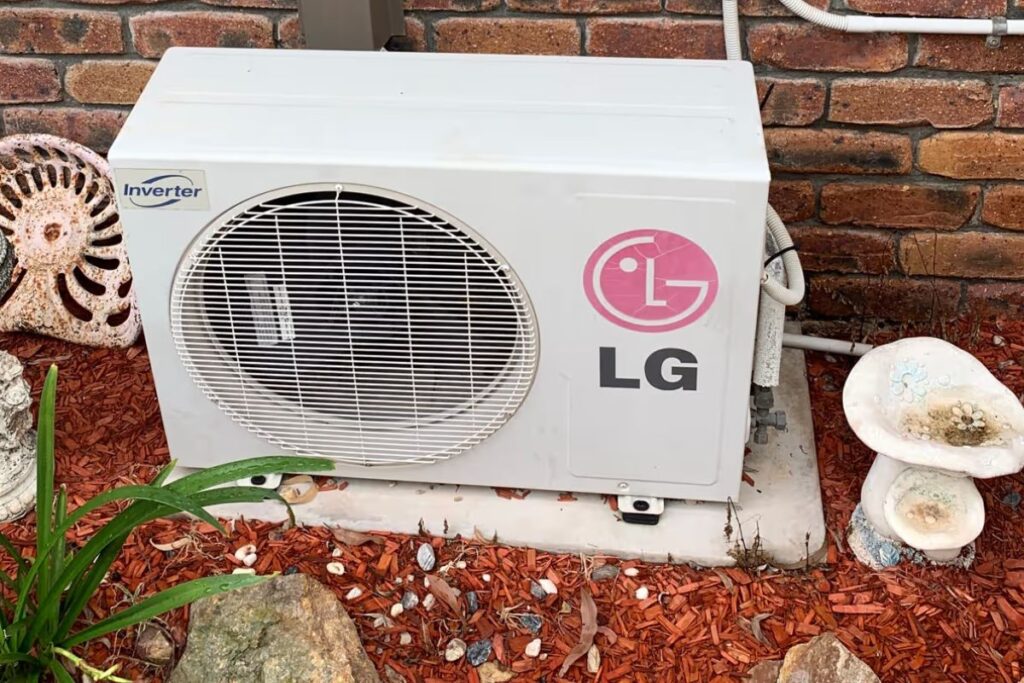
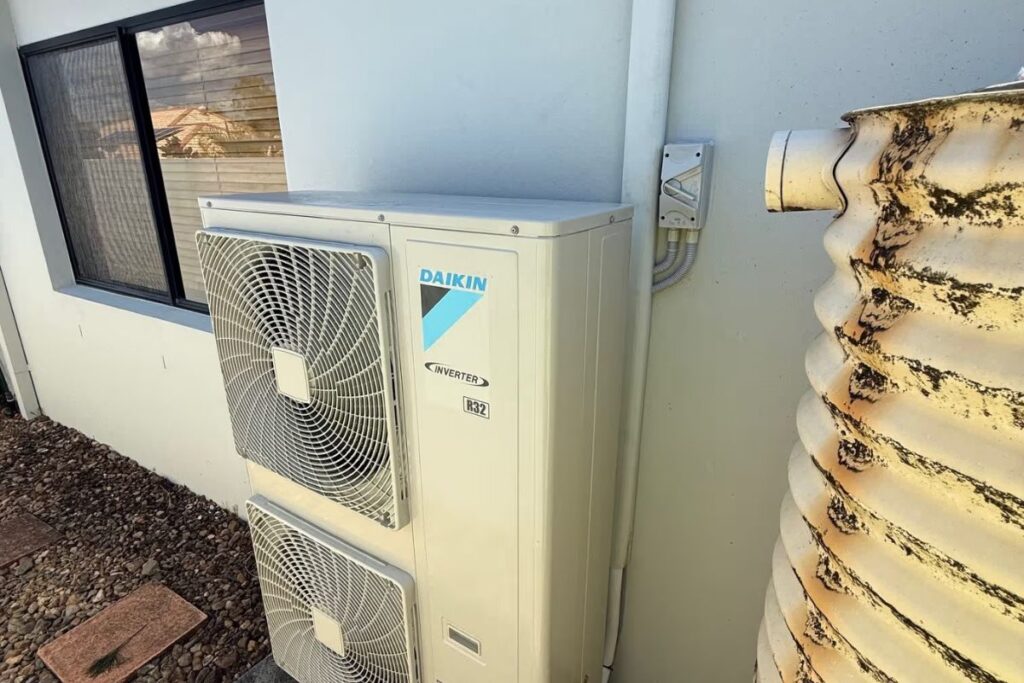
Your outdoor unit is built to live outside. Manufacturers design it to handle sun, wind and heavy rain all year round. The electrical parts sit inside covered, weather-protected compartments. The coil, meanwhile, is designed to get wet.
In fact, rain can be mildly helpful. In cooling mode, the outdoor unit releases heat through its coil. Rainwater on the coil can help it shed that heat a little faster.
Running your system indoors during wet weather is also a good idea. Air conditioners remove moisture from the air as they cool. On a sticky, rainy Gold Coast day, that helps keep mould, musty smells and damp linen at bay. Many systems also have a “dry” mode built for exactly these days.
So there’s no need to switch off every time it rains. In our 40 years servicing Gold Coast homes and businesses, we rarely see a unit fail because of rain alone. Instead, we see damage from what the rain brings with it.
What actually wears it down in wet weather
Corrosion from humidity and salt air
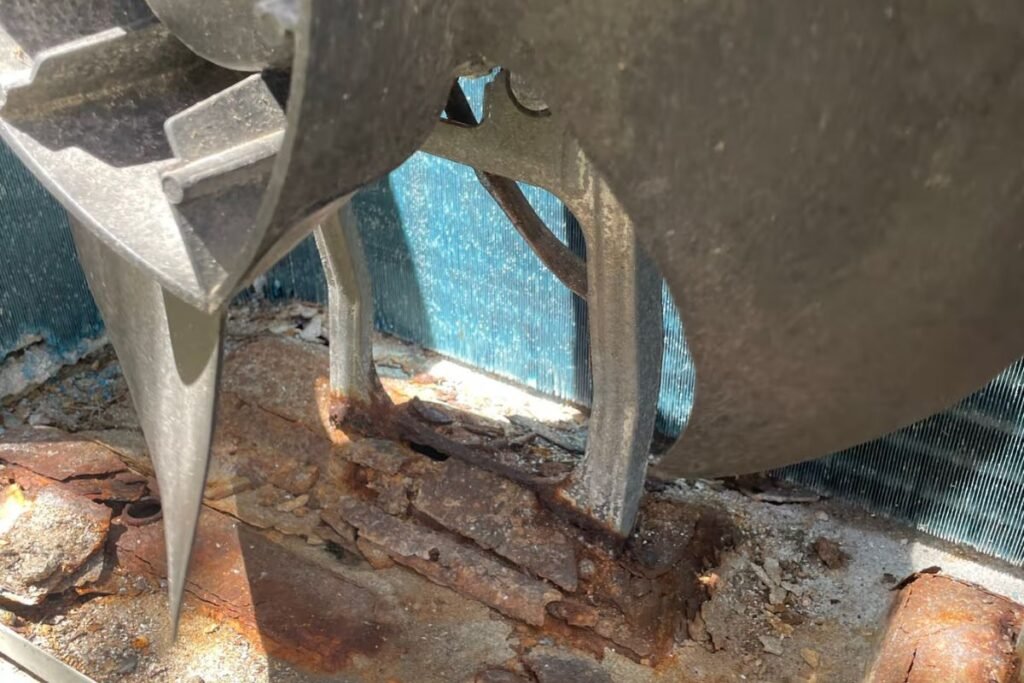
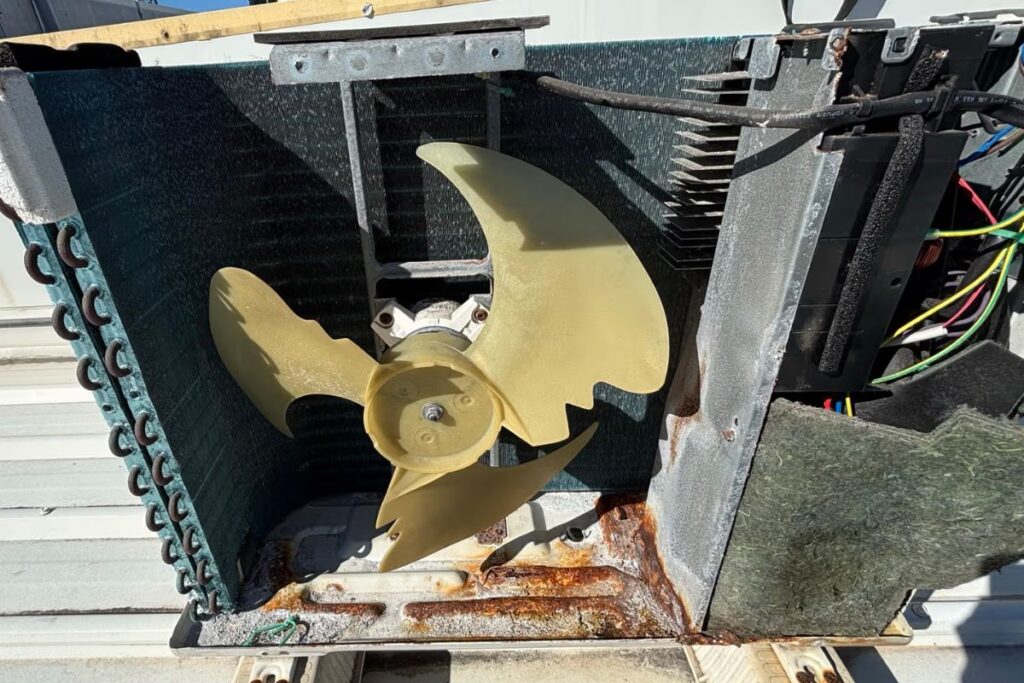
This is the big one for most air conditioning systems in Gold Coast. Sea breezes carry fine salt particles inland, and they settle on your outdoor unit. Moisture then turns that salt into a corrosive film on the coil fins, casing, screws and brackets.
Here’s the part most people don’t know. Rain can rinse salt off exposed surfaces, but sheltered spots stay salty. The back of the coil, the base pan and units tucked under eaves rarely get a proper rinse. After a storm, humid air keeps those spots damp for days. As a result, corrosion often starts where you can’t easily see it.
Watch for these early signs:
- White, powdery residue on the aluminium fins
- Rust spots on the casing, mounting brackets or screws
- Fins that crumble or flake when touched
Corroded fins can’t move heat efficiently, so the system works harder and costs more to run. Over time, corrosion can also lead to refrigerant leaks. Units close to the beach, in suburbs like Burleigh Heads, Palm Beach and Surfers Paradise, face this risk the most. Some manufacturers also set specific warranty conditions for coastal installs, so it’s worth checking yours.
Standing water and poor drainage
A unit that sits in a puddle after every storm will age faster. Standing water rusts the base pan and mounting hardware. If water rises high enough, it can reach electrical connections and the compressor.
Flooding is a different situation altogether. If your outdoor unit has been partly under water, don’t turn it back on. Switch it off at the switchboard and have a technician inspect it first.
Wet weather also affects the indoor unit. High humidity means your system pulls more water from the air. If the condensate drain is partly blocked, that extra water has nowhere to go. Consequently, many Gold Coast homes notice water dripping from the indoor unit during humid spells.
Debris after storms
Strong winds push leaves, palm fronds, sticks and garden mulch against the outdoor unit. When debris blocks the coil, the unit can’t breathe properly. It then runs hotter, works harder and puts extra strain on the compressor.
Hail adds another problem. It can bend the thin coil fins, which further reduces airflow. A quick check after each storm can prevent a much bigger repair later.
Power surges during storms
Electrical storms are a real risk for modern systems. According to Energex, lightning is the most common cause of power surges and spikes, and switching off and unplugging appliances during storms helps protect them.
Today’s inverter air conditioners rely on sensitive circuit boards. A surge can damage these boards, and replacing them isn’t cheap. Power cuts and the moment power returns can also cause spikes.
How to protect your system through storm season
Timing matters here. The Bureau of Meteorology says Queensland’s severe weather season runs from October to April, and southern Queensland faces its highest severe thunderstorm risk from October to December. That means now is the time to act.
1. Raise the outdoor unit. Mount it on a raised pad or wall brackets, well above any spot where water pools. If your unit sits directly on soil or a low slab, ask about relocating or raising it.
2. Fix drainage around the unit. Make sure the ground slopes away from it. Check that gutters and downpipes don’t dump water straight onto the unit. Also, keep the indoor condensate drain clear so humid weather doesn’t cause leaks.
3. Treat rust early. Anti-corrosion treatment protects the coil and casing from salt air. This matters most for properties near the beach. Our gecko and rust treatment catches corrosion before it spreads.
4. Keep a clear zone. Trim overhanging branches and secure loose outdoor items before storms. As a general guide, keep around half a metre clear around the unit, but check your manual for exact clearances.
5. Protect against surges. When a severe storm is close, turn the system off with the remote. If it’s safe, switch it off at the circuit breaker inside your switchboard. Never touch the outdoor isolator switch in wet conditions. Once power returns, wait a few minutes before restarting. For longer-term protection, ask a licensed electrician about surge protection at your switchboard. You can read more about protecting appliances from surges on the Energex website.
6. Book regular maintenance. A professional service before storm season peaks covers what you can’t do safely yourself. That includes a coil clean, drain flush, electrical checks and a corrosion inspection. Call DEEPCHILL – Air conditioning Gold Coast for advice on a maintenance plan that suits your home or business.
When to call a technician after a storm
Book an inspection or air conditioning repair if you notice any of the following:
- The outdoor unit was partly or fully under water
- Visible damage to the casing, fins or pipework
- The circuit breaker trips when you turn the system on
- Error codes, or the system won’t start
- A burning smell or unusual noises
- Water leaking from the indoor unit
Don’t try to open the unit or repair electrical parts yourself. Air conditioners carry high voltage and refrigerant under pressure.
Frequently asked questions
Should I turn off my aircon during a thunderstorm?
For a regular rain shower, no. However, if lightning is close, switching off reduces the risk of surge damage to the circuit boards.
Should I cover my outdoor unit when it rains?
No. Outdoor units are built for rain and need free airflow. Never run a covered unit, and never wrap it in plastic or a tarp.
Is it normal for my outdoor unit to drip or steam after rain?
Yes. In heating mode, the unit runs short defrost cycles that release water and sometimes steam. That’s normal operation, not damage.
Rain isn’t the enemy. Neglect is.
Running your aircon in the rain affect its lifespan? The answer is no. Running your aircon in the rain won’t shorten its life. Salt, standing water, storm debris and power surges will, if they’re left unchecked. Fortunately, a few simple steps and regular servicing keep your system running strong through every storm season.
DEEPCHILL has looked after air conditioning on the Gold Coast since 1986. We’re proud to be Fujitsu and GENERAL National Dealer of the Year in 2024 and 2025. From our base in Burleigh Heads, our technicians know exactly what coastal weather does to a system. Call DEEPCHILL today to get your air conditioner storm-ready.