You wake up and there’s a wet patch on the wall under your split system. Maybe there’s a slow drip landing on the carpet. Naturally, your first thought is: can I still use my AC if it’s leaking water? The short answer is that it depends on where the water is going and how much there is. Some leaks are minor. Others mean you should switch the unit off straight away. Here’s how to tell the difference, from a team that has fixed air conditioning on the Gold Coast since 1986.
Table of contents
- The short answer: It depends on where and how much
- Turn it off straight away if…
- When it’s probably okay short-term
- Common causes of water leaking from an aircon unit
- What to do while you wait for a technician
- The risks of ignoring a leaking aircon
- How to stop it happening again
- Why trust DEEPCHILL?
- Frequently asked questions
- Can I still use my AC if it’s leaking water overnight?
- Is aircon leaking water dangerous?
- Why is my aircon unit leaking water inside but not outside?
- Is water leaking from the aircon unit outside normal?
- Can I fix a leaking aircon myself?
- How much does it cost to fix an aircon leaking water on the Gold Coast?
The short answer: It depends on where and how much
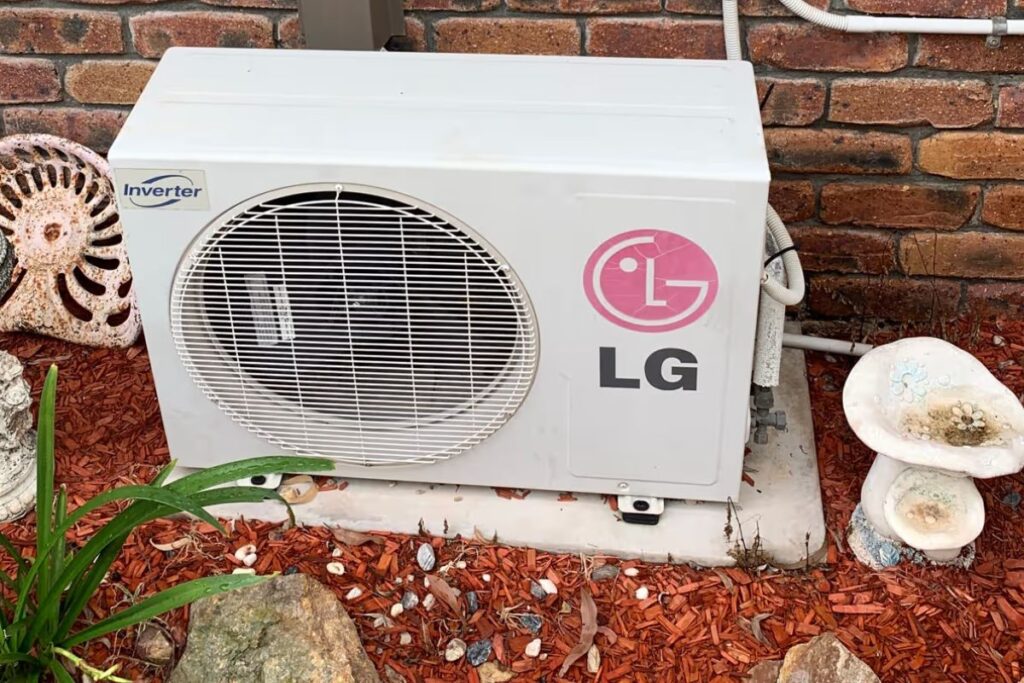
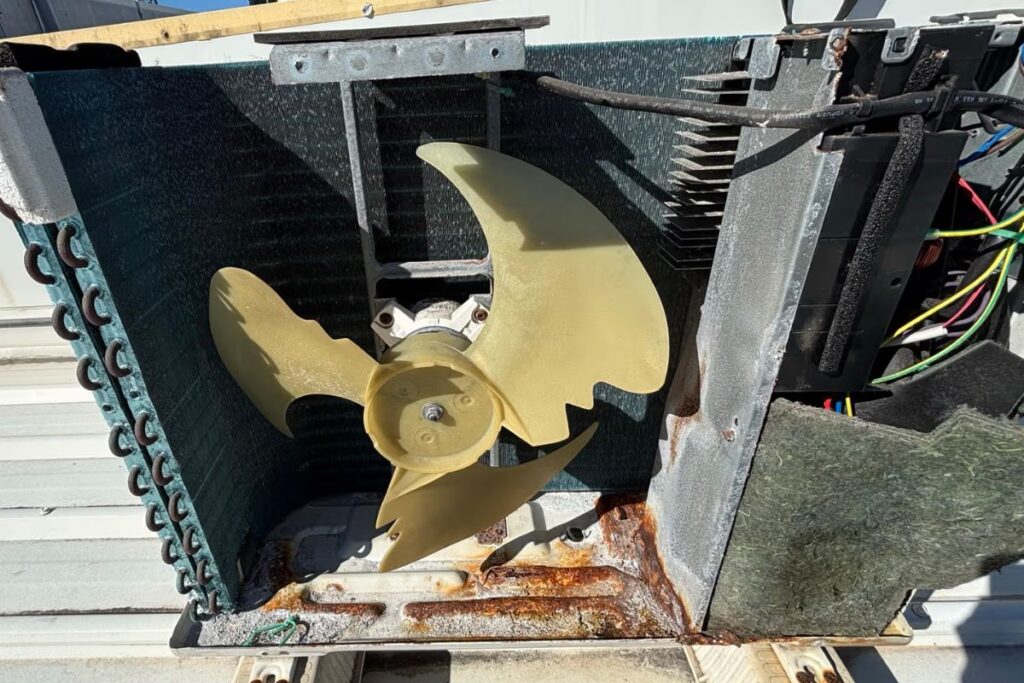
Every air conditioner makes water. As warm, humid air passes over the cold indoor coil, moisture condenses. That water then runs into a drip tray and out through a drain hose, usually to the outside of your home.
So water itself isn’t the problem. The problem is water ending up where it shouldn’t. For example, a few drops from the drain hose outside is normal. On the other hand, water running down your wall from the indoor unit is not.
In general, you should only still use your AC if it’s leaking water when the leak is tiny, stays well away from anything electrical, and has a clear, harmless cause. Below, we break that down.
Turn it off straight away if…
Switch the system off at the controller, then at the isolator switch or circuit breaker, if you notice any of the following:
- Water is near a power point, plug or wiring. Water and electricity are a dangerous mix, especially at head height on a wall.
- The aircon unit is leaking water inside steadily, not just a drop or two. A constant drip or trickle means water is overflowing the drip tray.
- You smell burning or see scorch marks. This can point to moisture reaching the unit’s electronics.
- The safety switch keeps tripping. Don’t keep resetting it. Instead, leave the system off and call a licensed technician.
- You can see ice on the indoor coil behind the front panel.
- Water is staining the ceiling or wall, or you notice a musty smell.
Queensland’s Electrical Safety Office lists water in and around an appliance, along with full or dirty filters, as warning signs that could lead to fire or electric shock. You can read their Electrical Safety at Home guide for more detail.
When it’s probably okay short-term
There are a few situations where you can usually keep running the system for a short time while you arrange a service:
- Just a few drops on a very humid day. Gold Coast summers and rainy spells push moisture levels right up. As a result, the system produces far more condensate than usual. A drop or two that stops once the weather clears is less urgent.
- Water dripping from the outdoor unit. This is normal, particularly in heating mode when the unit defrosts itself.
- Water dripping from the end of the drain hose outside. That’s exactly where it should go.
Even so, “probably okay” isn’t the same as “fixed”. If you still see water inside after a day or two, the cause is almost always a fault rather than the weather.
| What you see | What to do |
|---|---|
| Dripping from outdoor unit or drain hose outside | Normal – keep using it |
| A few drops inside on a very humid day | Use with care, watch it, book a check |
| Steady drip or trickle from the indoor unit | Turn it off and book a repair |
| Water near power, burning smell or tripping safety switch | Turn it off at the breaker and call a technician |
Common causes of water leaking from an aircon unit
After 40 years of service calls across the Gold Coast, our technicians see the same few culprits again and again.
1. Blocked drain line
This is the most common reason for aircon leaking water inside. Over time, dust, mould and slime build up in the drain line. In our humid climate, this happens faster than in drier parts of Australia.
Pests are another local problem. Geckos, ants and cockroaches often crawl into drain hoses and block them. Once the line is blocked, water backs up into the tray and spills out of the indoor unit.
2. Dirty filter or frozen coil
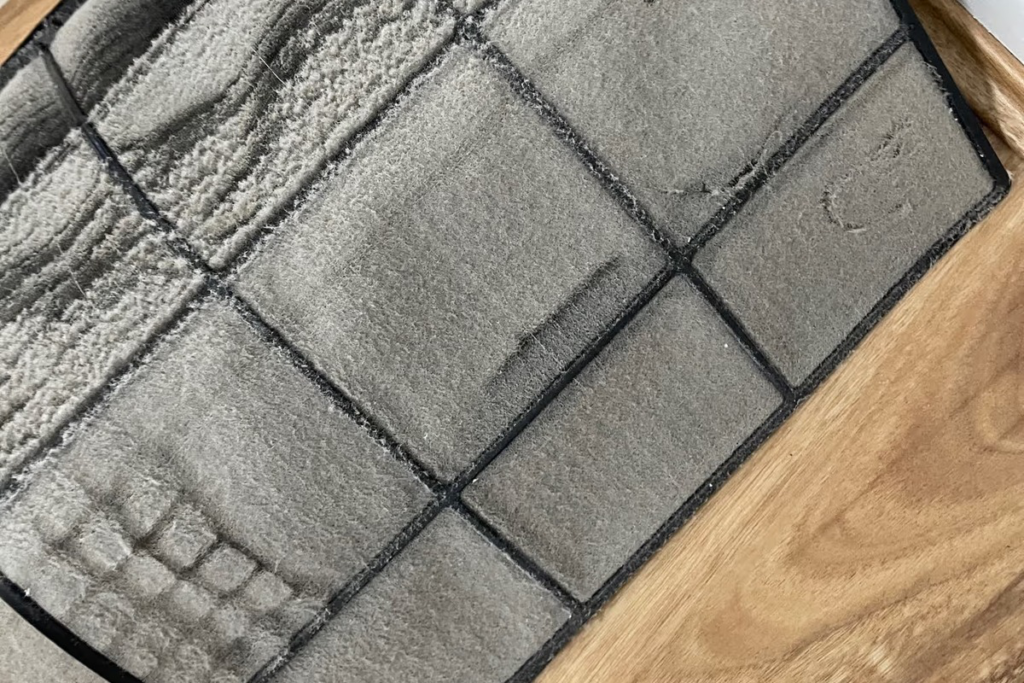
A clogged filter restricts airflow across the indoor coil. Consequently, the coil gets too cold and ice forms on it. When the ice melts, there’s suddenly more water than the drip tray can handle.
Frozen coils also happen when vents are blocked or the system runs very low temperatures for long periods.
3. Low refrigerant (Gas)
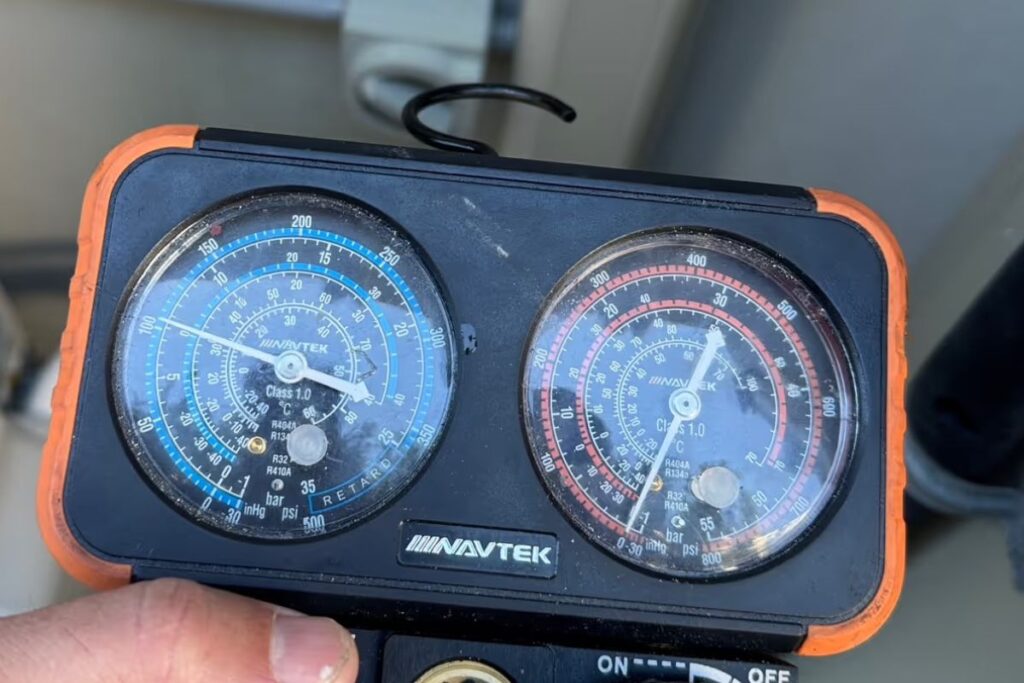
Low gas also causes the coil to freeze, which then leads to water leaking from the aircon unit. However, refrigerant doesn’t get “used up”. If the gas is low, there’s a leak somewhere in the system.
That’s why a simple top-up is never the full fix. In Australia, only technicians with a refrigerant handling licence from the Australian Refrigeration Council can find and repair gas leaks.
4. Installation problems
Sometimes the cause goes back to day one. For instance, an indoor unit that isn’t level can tip water out of the wrong side of the tray. Likewise, a drain hose without enough fall lets water sit and back up. We often see this on cheaper installs where the drainage wasn’t planned properly.
What to do while you wait for a technician
If your aircon is leaking water and you’ve booked a repair, these steps help limit the damage in the meantime:
- Turn the system off. First use the remote, then the isolator switch or breaker if water is near electrics.
- Catch the water. Put a bucket or tray under the drip and lay old towels along the skirting board.
- Dry the area. Wipe down walls and floors, and run a fan to help surfaces dry out.
- Check the filter. With the power off, lift the front panel and slide out the filters. If they’re grey and clogged, rinse them in lukewarm water. Then let them dry fully in the shade before refitting.
- Look at the drain hose outside. Make sure it isn’t kinked, crushed or sitting in a puddle. However, don’t poke wire or sticks up the hose, because you could damage it.
- Take a photo or short video. This helps our technician understand the problem before they arrive.
If the leak stops after cleaning the filter, great. Still, it’s worth booking a proper service, as a dirty filter is often a sign the whole system is overdue.
The risks of ignoring a leaking aircon
It’s tempting to put a towel down and carry on. But a small leak rarely fixes itself, and the costs grow over time.
Water damage. Water soaks into plasterboard, timber and carpet. Before long, you may need to replace sections of wall or flooring, which costs far more than a drain clean.
Mould. On the Gold Coast, damp walls and warm air are the perfect recipe for mould. In addition, a dirty drain tray inside the unit can grow mould and blow spores straight into the room. The Queensland Government notes that mould grows in damp, poorly ventilated spaces and can affect your health.
Electrical hazards. Indoor units hold circuit boards and wiring just centimetres from the drip tray. Water reaching those parts can cause short circuits, tripped safety switches, or a fire risk.
A bigger repair bill. For example, a frozen coil caused by low gas puts extra strain on the compressor. Left too long, that can turn a leak repair into a full system replacement.
How to stop it happening again
Most aircon leaks are preventable. Regular servicing keeps the drain line clear, the filters clean and the gas levels checked. During a service, our technicians also flush the drain, check the unit is level, and treat for geckos and pests where needed.
For most Gold Coast homes, we recommend a service at least once a year. Busy households, rentals near the beach, and commercial sites like restaurants or offices often need it more often. Not sure what suits your setup? Give us a call, and we’ll recommend a maintenance plan that fits your home or business.
Why trust DEEPCHILL?
DEEPCHILL has looked after air conditioning on the Gold Coast since 1986. We’re a family business based in Burleigh Heads, and we’re part of the Catalyst Air Group network. We were also named Fujitsu/GENERAL National Dealer of the Year in 2024 and 2025.
Our licensed technicians repair and service all major brands, from split systems to ducted and commercial systems. Whether it’s an aircon unit leaking water inside your home or a cooling fault at your business, we’ll find the cause rather than just mopping up the symptom.
Got water where it shouldn’t be? Book an annual service or contact our air conditioning repair team today.
Frequently asked questions
Can I still use my AC if it’s leaking water overnight?
If it’s only a few drops and nowhere near electrics, you can usually run it with a towel underneath. However, if the drip is steady or close to a power point, turn it off and call a technician in the morning.
Is aircon leaking water dangerous?
It can be. The main risks are electric shock, short circuits, water damage and mould. Water near wiring or a tripping safety switch should always be treated as urgent.
Why is my aircon unit leaking water inside but not outside?
Usually, this means the drain line is blocked. As a result, water backs up into the indoor unit’s tray and spills out inside instead of draining outdoors.
Is water leaking from the aircon unit outside normal?
Yes, in most cases. Water from the drain hose, or from the outdoor unit in heating mode, is a normal part of how the system works.
Can I fix a leaking aircon myself?
You can safely clean the filters and check the outside drain hose. However, clearing blocked drain lines properly, repairing gas leaks and checking electrical parts need a licensed technician.
How much does it cost to fix an aircon leaking water on the Gold Coast?
It depends on the cause. A blocked drain is usually a quick fix, while a gas leak takes more work. Call DEEPCHILL for advice and a clear quote before any work starts.