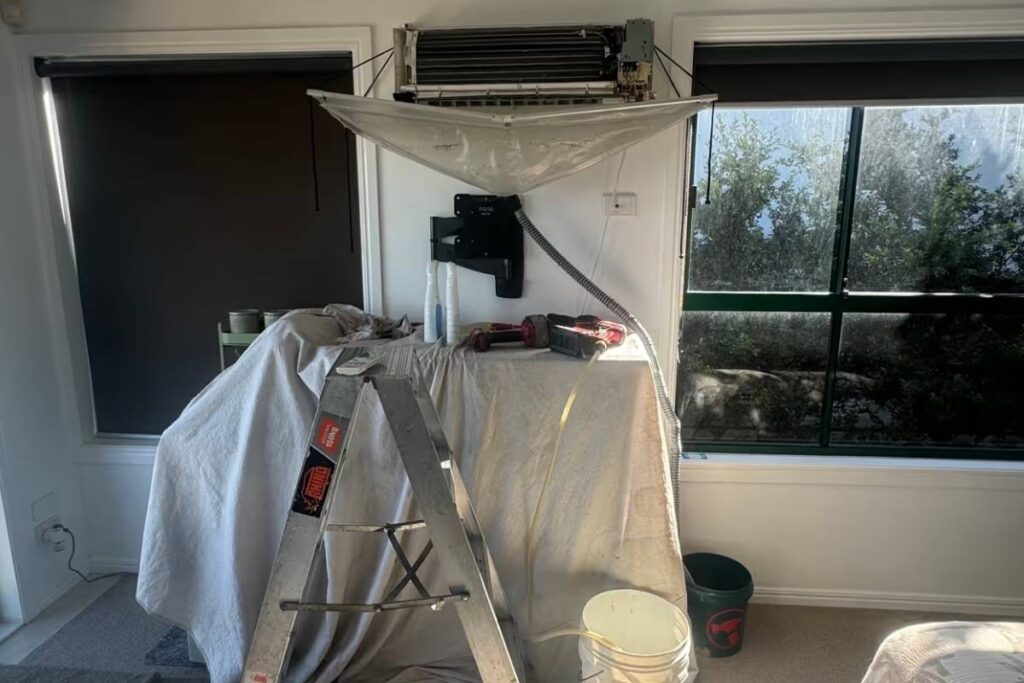
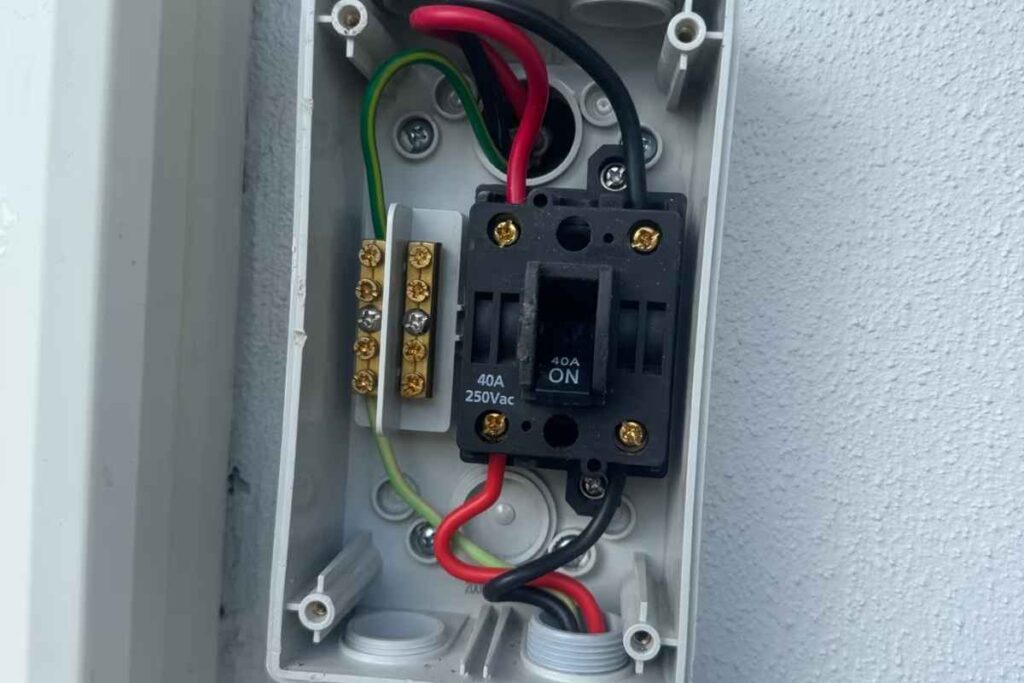
Your Gold Coast split air conditioning system is running all day, the power bill is creeping up, and the air coming out of the vents just isn’t cold anymore. Somewhere along the way someone has probably told you it’s “low on gas” and needs a re-gas. That’s often true – but it’s only half the story, and the half most people miss is the part that actually costs them money. Here’s what being low on refrigerant really means for your air conditioner, why it happens, and what to do about it properly (not just a quick top-up that leaves you back where you started in six months).
Table of contents
What “low on refrigerant” actually means
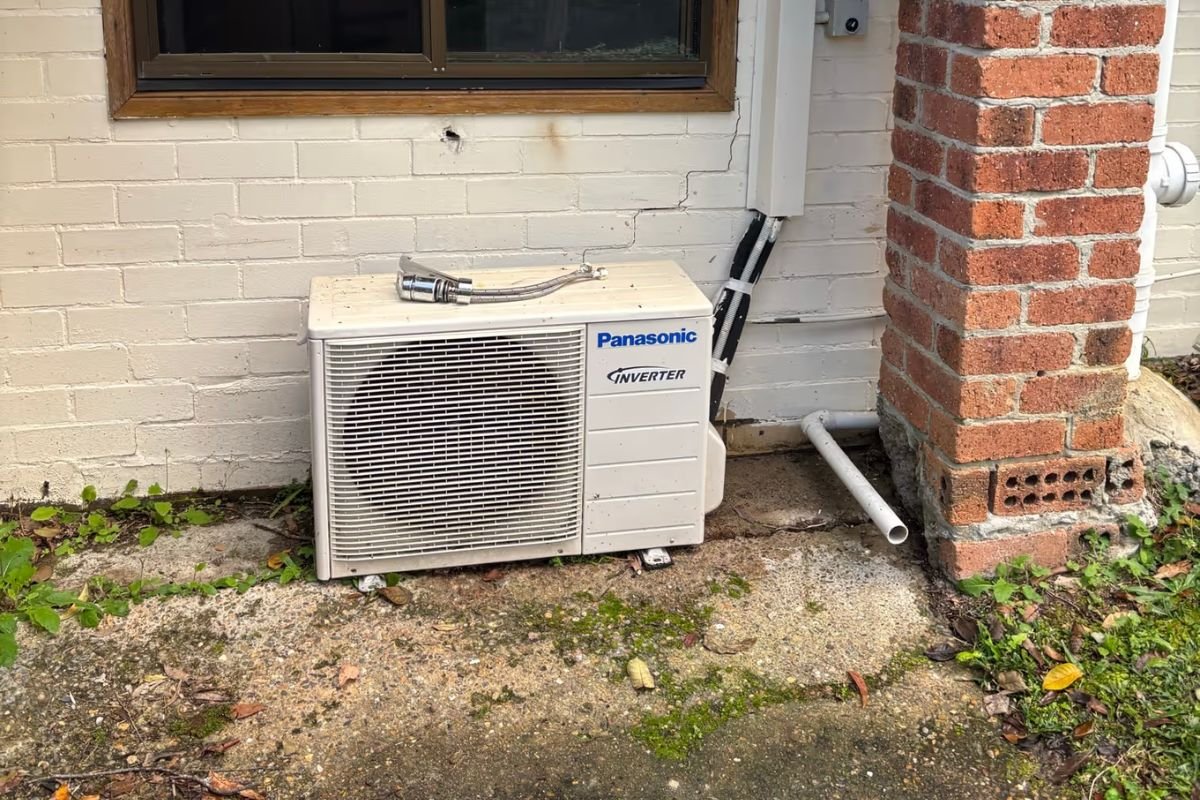
Refrigerant – the “gas” – is the working fluid your air conditioner pumps around in a sealed loop to move heat out of your home. It isn’t fuel, and it isn’t consumed. A correctly installed, healthy system should hold the same charge for its entire life.
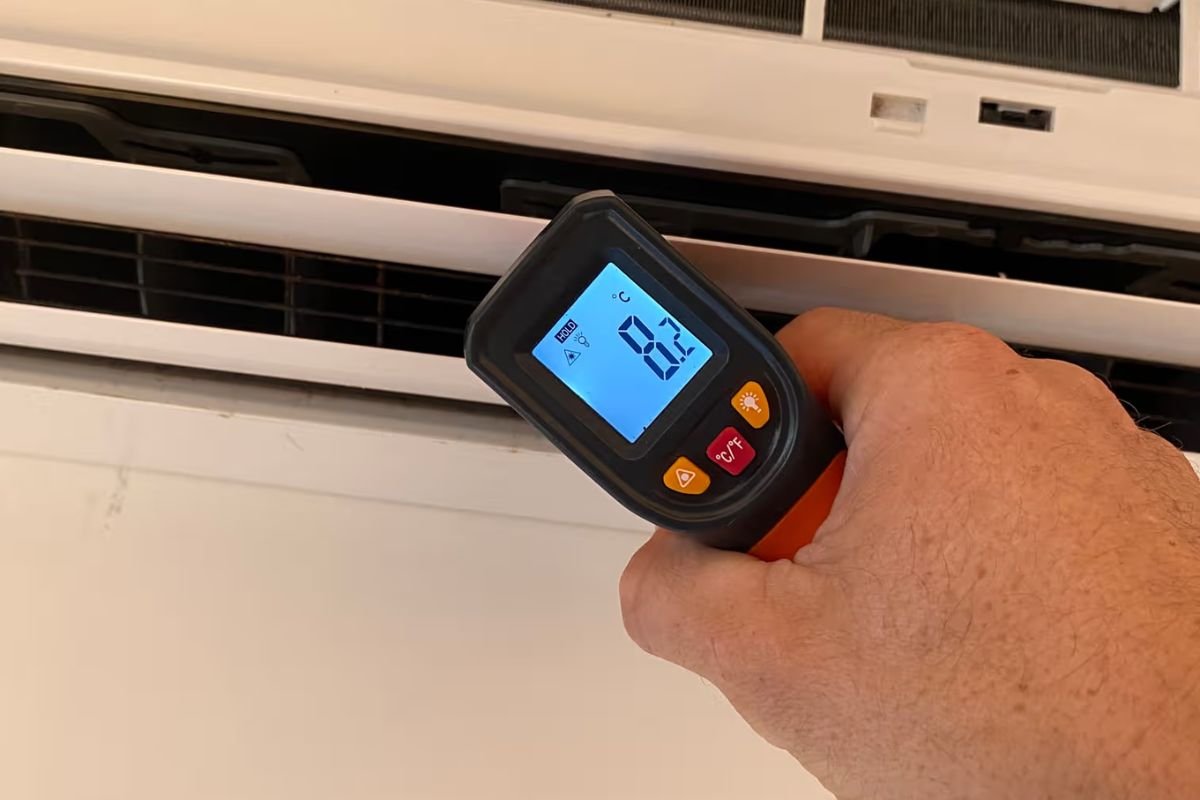
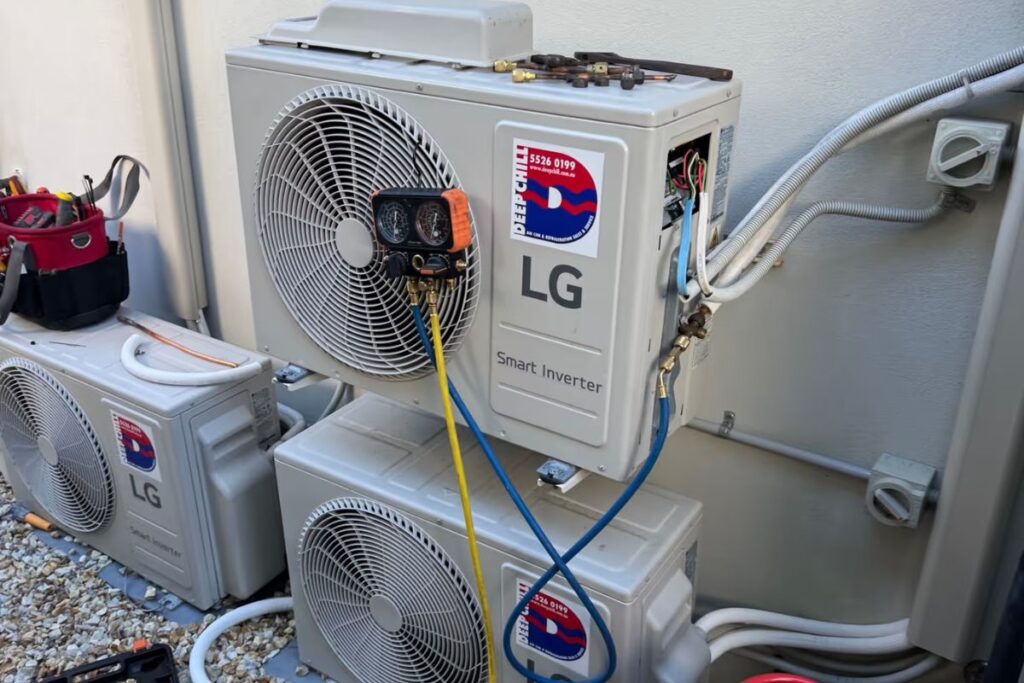
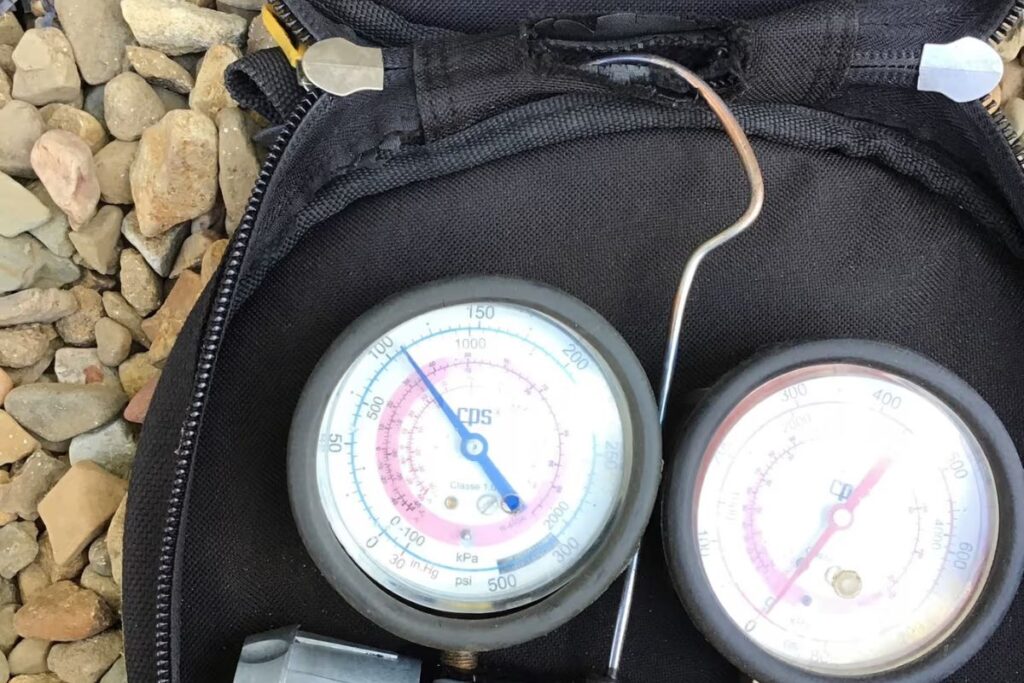
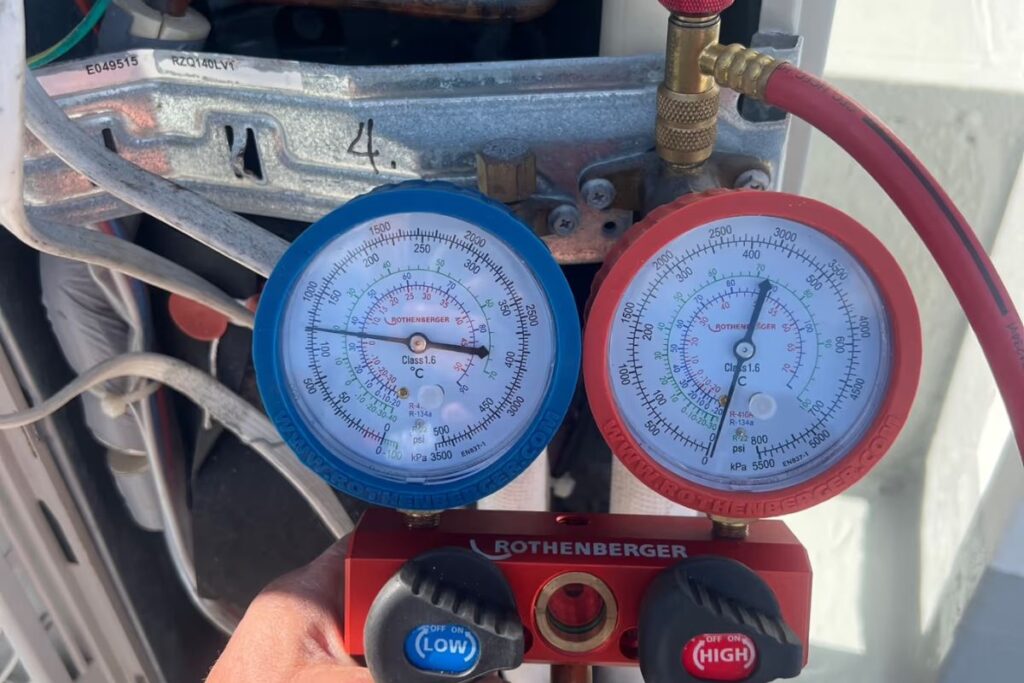
The amount of refrigerant in the system shows up as pressure on a technician’s gauges. A healthy split system running R410A typically sits around 120 psi on the low (suction) side when it’s cooling. When we hook up the gauges and see something like 60 psi, the system is running seriously undercharged. That low pressure is why the air feels weak, why the coil can ice over, and why the compressor is working far harder than it should.
The signs, in brief
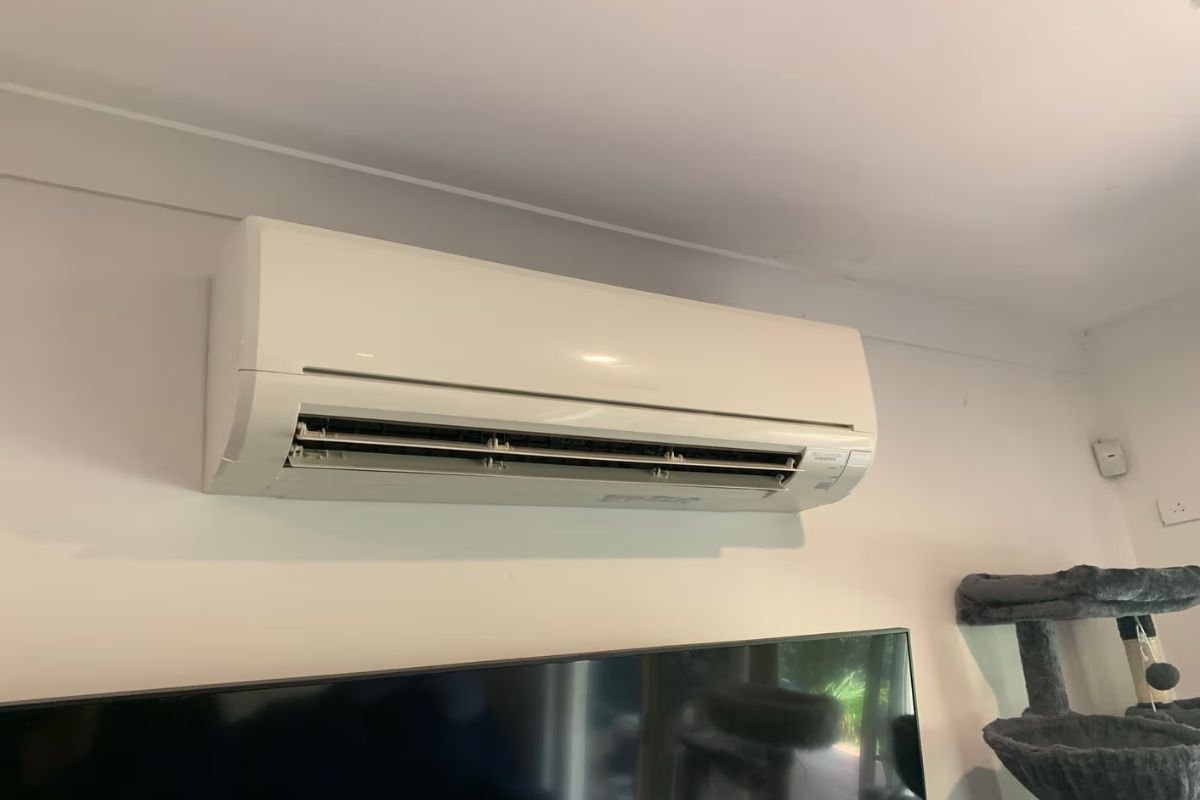
You’ll usually notice a combination of weak or warm airflow, a system that runs non-stop without hitting the set temperature, ice forming on the indoor coil or pipes, a jump in your power bill, and sometimes a faint hissing or bubbling. We’ve broken all of these down – including a real job where a unit was found running dangerously low – in our full guide to the signs your air conditioner is low on gas. If you’re trying to diagnose what you’re seeing right now, start there.
The more important question isn’t whether you have the signs – it’s why.
Why low gas almost always means a leak
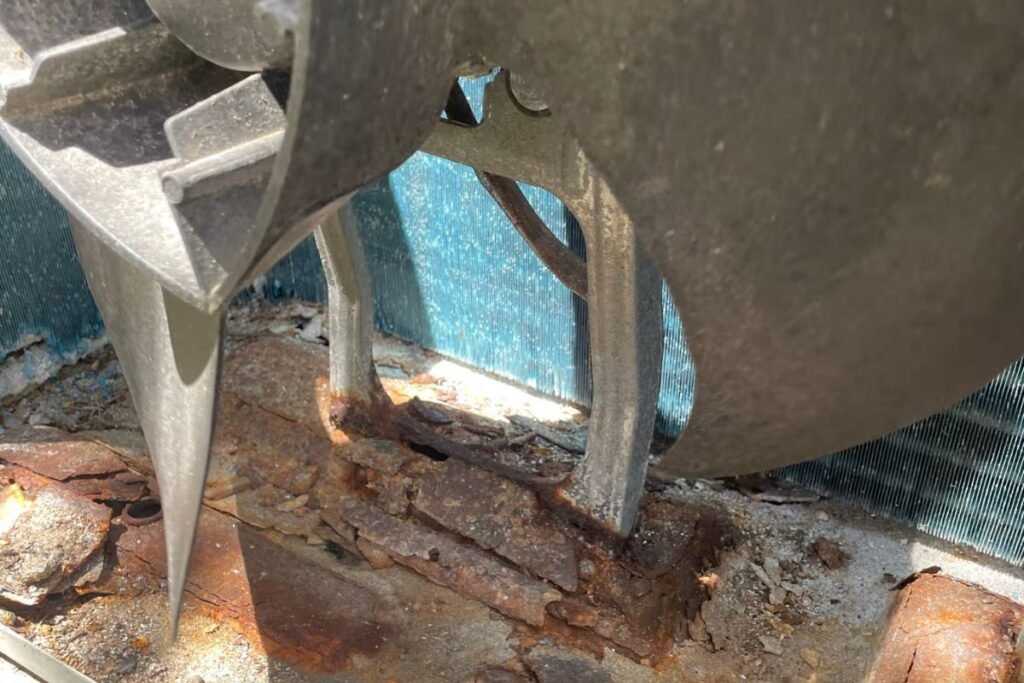
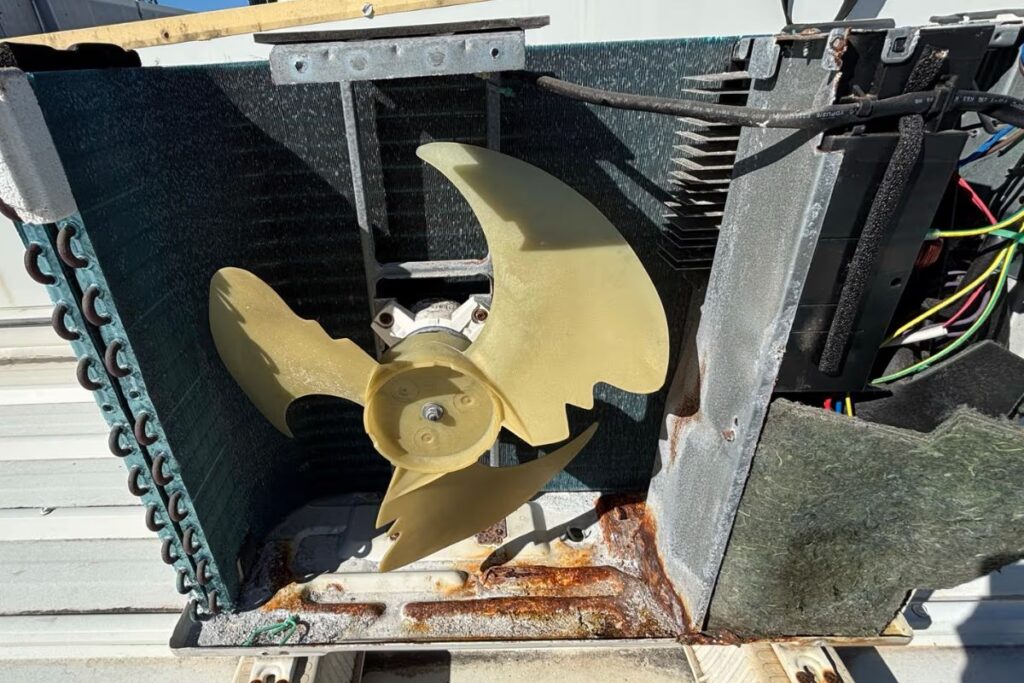
Because refrigerant lives in a sealed loop and isn’t used up, there is really only one reason a system ends up low: it’s leaking out somewhere. Common culprits are vibration and wear on the copper lines, corrosion on the evaporator or condenser coil, loose or poorly done flare connections from the original install, and physical damage.
This is the point most “cheap re-gas” offers quietly skip over. If a technician just refills the gas without finding the leak, you’re paying to top up a system that is going to lose that charge again – the only question is how fast. A slow leak might buy you a season; a bigger one might be gone in weeks.
What low refrigerant is really costing you
Running low on gas isn’t just an inconvenience, it’s an expense on two fronts.
First, your power bill. An undercharged system can’t cool efficiently, so it runs longer and harder to try to reach the temperature – and often never gets there. You pay for all that extra runtime.
Second, and more expensive, your compressor. The compressor is the heart (and the priciest part) of the system, and it relies on refrigerant flow to stay cool and lubricated. Run it low for long enough and you risk overheating and premature failure – turning what could have been a small leak repair into a major bill or a full replacement.
Why a top-up alone isn’t a fix
A re-gas without leak detection and repair is a band-aid. The right sequence is: locate the leak (nitrogen pressure testing and electronic leak detection), repair or replace the faulty component, evacuate the system, and only then recharge it to the manufacturer’s exact specification. Done properly, that’s a repair that lasts. Skip the middle steps and you’re just refilling a bucket with a hole in it.
This is exactly the kind of diagnostic work our air conditioning repair team does across the Gold Coast, and it’s why regular air conditioning maintenance matters – catching a small leak early is far cheaper than replacing a compressor.
Why DIY re-gassing is illegal in Australia
It’s tempting to grab a top-up kit online and do it yourself. Don’t – and not just because you’ll likely miss the leak.
In Australia, handling refrigerant is regulated under the Ozone Protection and Synthetic Greenhouse Gas Management Act. You must hold a Refrigerant Handling Licence (ARCtick) issued by the Australian Refrigeration Council to buy, handle or install refrigerant. Doing it without one is an offence that can carry significant fines for both individuals and businesses. Beyond the legal side, refrigerant is handled under high pressure and can cause serious cold burns and injury if mishandled. This is genuinely a licensed-technician job.
When to call a licensed tech
If you’re seeing weak cooling, ice-up, or a rising power bill, get a licensed technician to test the system properly rather than reaching for a top-up. A proper diagnosis tells you where the gas is going – and fixes it, so you’re not paying for the same problem twice.
DEEPCHILL is a licensed team servicing residential and commercial air conditioning across the Gold Coast. Whether it’s a single split that’s stopped cooling or a larger system that needs gas leak detection and repair, we find the cause first and fix it properly.
Noticed a strange smell rather than weak cooling? That’s a different problem — here’s what a burning smell from your air conditioner means.
Frequently asked questions
Does my air conditioner need re-gassing?
- Only if it’s actually leaking. Refrigerant isn’t consumed, so a system that’s low has lost gas somewhere. A licensed technician should leak-test and repair before recharging – a top-up alone is a temporary fix.
Why is my aircon not cooling but still running?
- Low refrigerant is a common cause, but so are dirty filters, a faulty compressor or capacitor, or a frozen coil. Low gas typically comes with weak airflow, ice-up and a rising power bill.
Can I re-gas my air conditioner myself?
- No. In Australia you need an ARCtick Refrigerant Handling Licence to handle refrigerant. DIY re-gassing is illegal, can attract heavy fines, and is dangerous.
How much does an aircon re-gas cost on the Gold Coast?
It varies with the fault and refrigerant type, but the real cost is in finding and fixing the leak – not just the gas. A proper repair is cheaper than repeatedly topping up or replacing a burnt-out compressor.