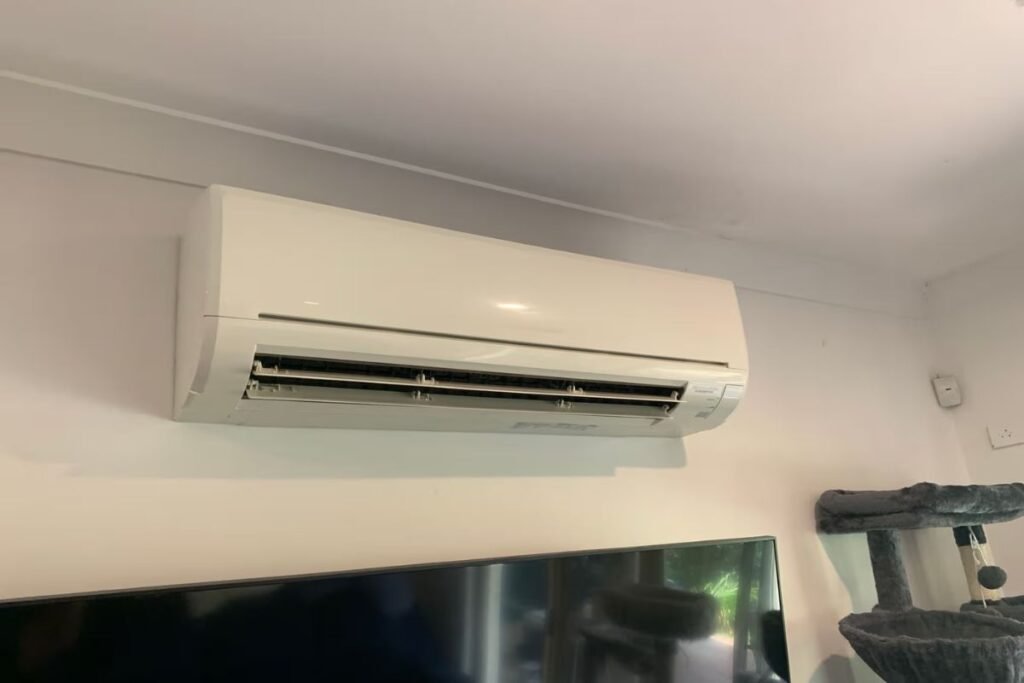
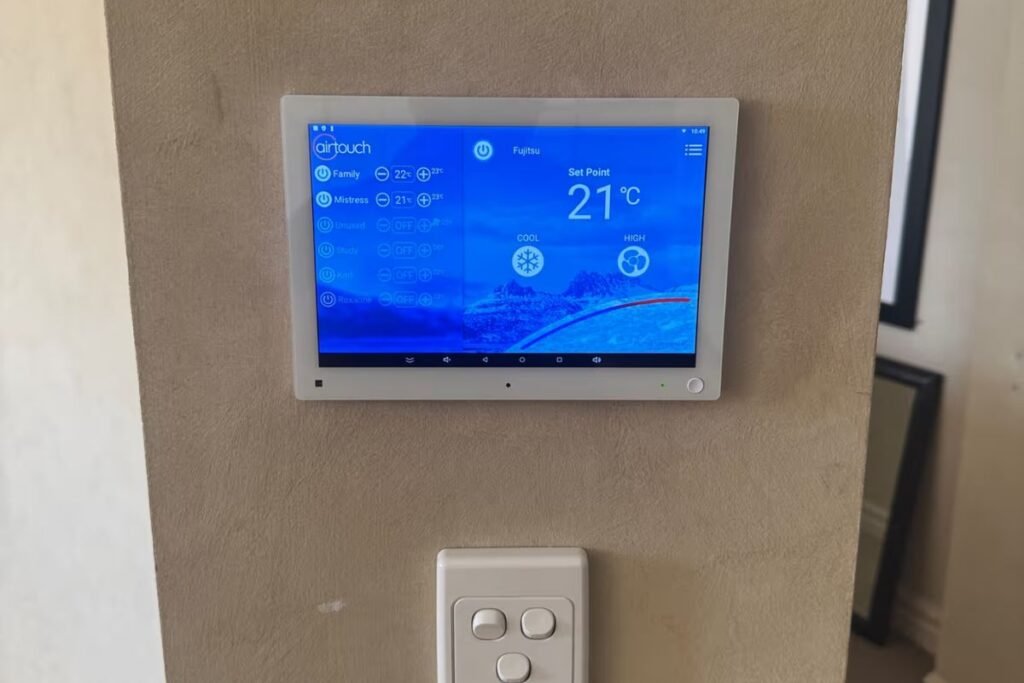
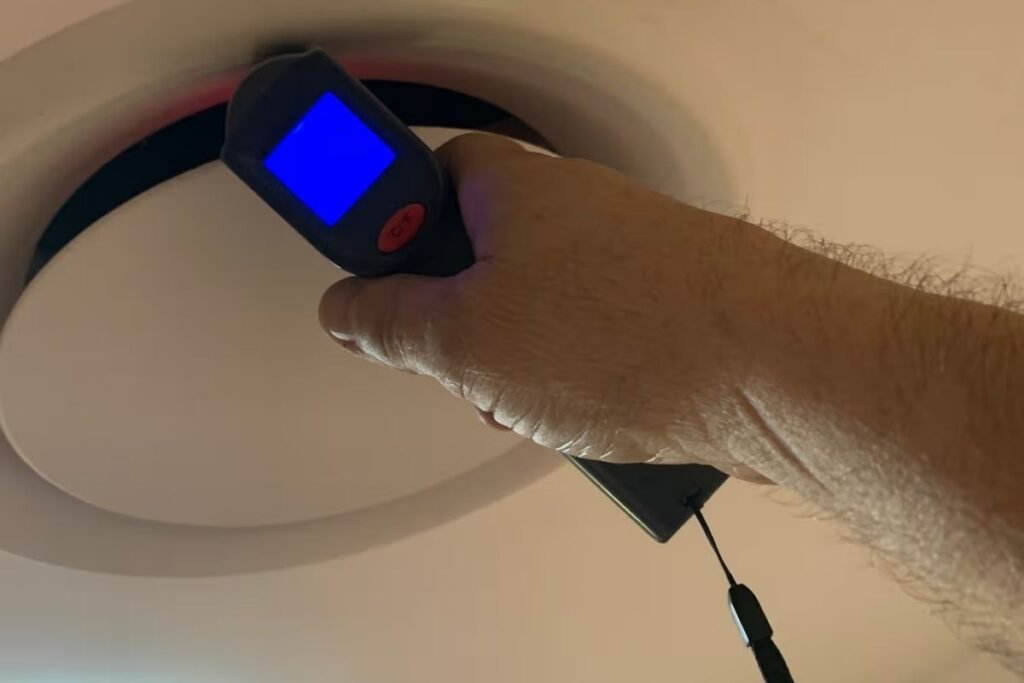
Is your aircon not cooling after heavy rain? You’re not alone. When a big Gold Coast storm rolls through, many homeowners turn the aircon on afterwards and find it’s not blowing cool air. In most cases, the rain itself didn’t break anything. Instead, the storm exposed a small problem that was already there, or tripped a simple safety feature. At DEEPCHILL, we’ve looked after air conditioning on the Gold Coast since 1986. So we know what storm season does to aircon systems. This guide covers five common causes, what you can safely check yourself, and when to call a licensed technician.
Table of contents
- Why is your aircon not cooling after heavy rain
- Safety first: Stop and call a professional if…
- Check 1: Outdoor unit blocked by leaves, mud or debris
- Check 2: Tripped breaker or power surge after the storm
- Check 3: Blocked drain line triggering the safety switch
- Check 4: Dirty filter plus humid air freezing the indoor coil
- Check 5: An existing gas leak showing up
- What you can check yourself vs when to call a tech
- How to prepare your aircon for the next storm
- Frequently asked questions
- Need help? Call DEEPCHILL – Air Conditioning Gold Coast
Why is your aircon not cooling after heavy rain
First, it helps to understand what your aircon actually does. An air conditioner doesn’t just cool air. It also pulls moisture out of it.
After heavy rain, the air inside your home holds a lot more water. Your aircon has to remove that moisture before the room starts to feel cool. As a result, the system works harder and the room can feel clammy, even when the unit runs normally.
That’s why some “not cooling” issues after rain are really humidity issues. However, if the air from the vents feels warm, or the system stops cooling completely, one of the checks below is more likely the cause.
Quick tip: On muggy days, try Dry mode for 30–60 minutes. It focuses on removing moisture, so the room often feels more comfortable faster.
Safety first: Stop and call a professional if…
Before you check anything, look for these warning signs. If you notice any of them, switch the system off and don’t touch the outdoor unit:
- Water is pooling around or inside the outdoor unit
- You can smell burning, or see scorch marks or sparks
- The circuit breaker trips again straight after you reset it
- The unit hums or buzzes loudly but the fan doesn’t spin
Queensland’s Electrical Safety Office advises having a licensed electrician check any hard-wired appliance that has been affected by a storm or flood. You can read their full storm safety advice here.
Check 1: Outdoor unit blocked by leaves, mud or debris
Heavy rain and wind often push leaves, palm fronds and mud against the outdoor unit. This blocks airflow through the coil. When that happens, the unit can’t release heat properly, so your aircon is not blowing cool air inside.
What you can do:
- Turn the aircon off at the remote first
- Remove loose leaves and branches by hand
- Gently rinse mud off the coil with a garden hose (never a pressure washer)
- Trim back plants so air can move freely around the unit
If mud has built up deep inside the coil fins, a professional coil clean or hydro clean will restore airflow safely.
Check 2: Tripped breaker or power surge after the storm
Lightning and power flickers during storms can trip the aircon circuit. Your system may look dead, or the indoor unit may run while the outdoor unit stays silent.
What you can do:
- Check your switchboard for a tripped breaker labelled “A/C” or “Air Con”
- Check the isolator switch near the outdoor unit is still on
- Reset the breaker once only, and only if everything is dry
- After power returns, wait about 3–5 minutes. Many units delay the compressor restart to protect it
If the breaker trips again, stop there. A repeat trip usually points to a damaged component or moisture in the wiring. That needs a licensed technician.
Check 3: Blocked drain line triggering the safety switch
Your Gold Coast air conditioning system produces water as it removes moisture from the air. After heavy rain, it produces a lot more than usual. So if the drain line is even partly blocked by dust, mould or insects, it can’t keep up.
Many ducted systems have a float switch in a safety tray. When water rises, the switch cuts the cooling to prevent leaks through your ceiling. Split systems, on the other hand, often show the problem as water dripping from the indoor unit.
Signs to look for:
- Water dripping from the indoor unit or a ceiling vent
- Fan runs, but no cool air comes out
- An error code on the display or remote
What you can do: Check that the drain pipe outside isn’t sitting in a puddle or blocked by mud. Beyond that, clearing internal drain lines and safety trays is a job for a technician.
Check 4: Dirty filter plus humid air freezing the indoor coil
This one surprises many people. Your aircon can actually freeze up in humid weather.
Here’s how it happens. A dirty filter reduces airflow over the indoor coil. Meanwhile, humid air carries extra moisture onto that coil. With too little warm air passing over it, the coil gets too cold and the moisture turns to ice. That ice then blocks airflow even more.
Signs to look for:
- Weak airflow from the vents
- Ice or frost on the indoor coil or copper pipes
- Water dripping as the ice melts
What you can do:
- Switch the aircon to Fan only or turn it off for a few hours to thaw
- Clean the filters with warm water and let them dry fully
- Turn the system back on once all the ice has gone
If the coil freezes again within a day or two, the cause is likely deeper. Low refrigerant or a dirty coil are the usual suspects.
Check 5: An existing gas leak showing up
Let’s be clear: rain doesn’t cause refrigerant (gas) leaks. However, a humid storm puts extra load on your Gold Coast air conditioning system. So a small leak that went unnoticed for months often shows up suddenly after heavy rain.
Signs of low refrigerant:
- The aircon runs non-stop but the room never gets cool
- Ice on the copper pipes at the outdoor unit
- A hissing or bubbling sound
- Higher power bills than usual
What you can do: Nothing, and that’s important. In Australia, only technicians with an ARC refrigerant handling licence (ARCtick) can legally work on refrigerant. You can check this on the Australian Refrigeration Council website. Also, a proper repair means finding and fixing the leak, not just “topping up” the gas.
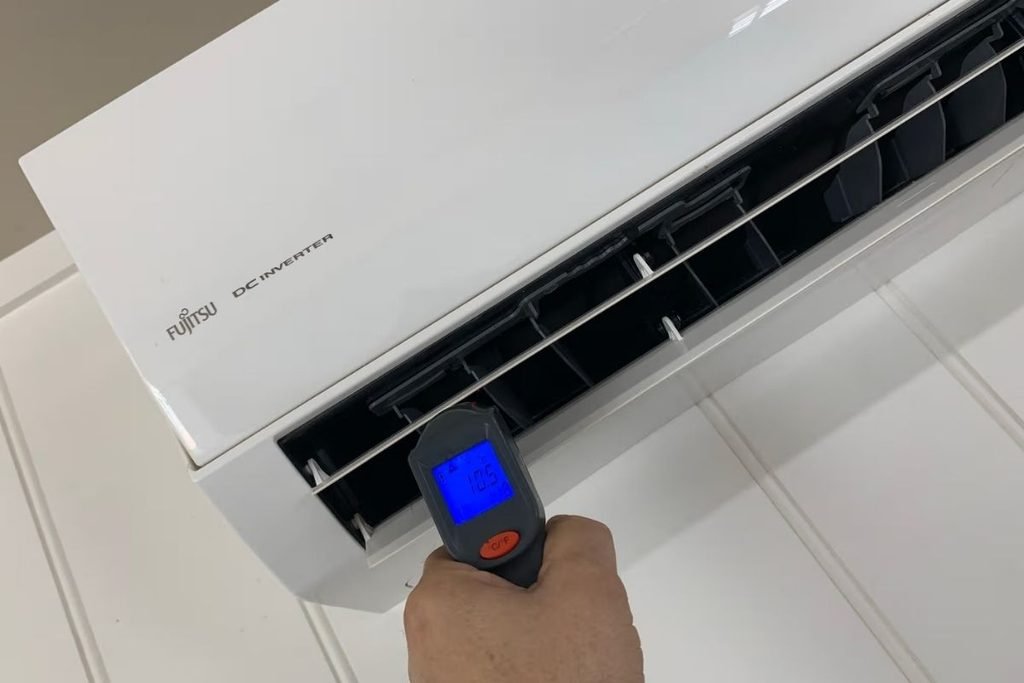
What you can check yourself vs when to call a tech
| Problem | Safe to check yourself? | Call a technician if… |
|---|---|---|
| Debris on outdoor unit | Yes, with power off | Mud is packed deep in the coil |
| Tripped breaker | Reset once, if dry | It trips again |
| Blocked drain line | Check outside pipe only | Water leaks or error code shows |
| Frozen indoor coil | Thaw and clean filters | It freezes again |
| Gas leak | No | Any signs appear |
As a simple rule, you can look, clear and reset. But anything involving electrics, refrigerant or the inside of the unit belongs with a licensed professional.
How to prepare your aircon for the next storm
Gold Coast storm season usually runs from late spring through summer. A little preparation now can save you a hot, sticky night later:
- Book a service before summer. A technician can clear drains, clean coils and check refrigerant levels before the heavy rain starts. Book your annual service here.
- Clean filters every few weeks during high-use months.
- Keep the outdoor unit clear of plants, garden beds and loose items.
- Turn the aircon off during lightning storms to reduce surge risk.
If your system is old and struggles every storm season, it may be time to look at a new, more efficient system.
Frequently asked questions
Can heavy rain damage my aircon?
- Outdoor units are built to handle rain. However, flooding, storm debris and power surges can cause problems. Rain also exposes existing faults like blocked drains or small gas leaks.
How long should I wait to turn my aircon back on after a storm?
- Wait until the storm has passed and there’s no standing water near the unit. Then allow 3–5 minutes after power returns before expecting cool air.
Why is my aircon not cooling after heavy rain but the fan is running?
- An aircon not blowing cool air is one of the most common problems after winter. It usually comes down a blocked outdoor unit, a tripped outdoor circuit, a float switch cutting the cooling, a frozen coil or low refrigerant.
Is it safe to hose down my outdoor unit?
- Yes, gently, with the system turned off. Avoid pressure washers, because they can bend the coil fins and push water into electrical parts.
Need help? Call DEEPCHILL – Air Conditioning Gold Coast
If your aircon is still not cooling after heavy rain, or not blowing cool air, our licensed technicians can find the cause quickly. DEEPCHILL has served Gold Coast homes and businesses since 1986. We’re also the Fujitsu/GENERAL National Dealer of the Year for 2024 and 2025.
Whether you need a quick repair, a drain clear or a full service, we’ll explain what’s wrong in plain English before any work starts. Call DEEPCHILL today to book a technician.