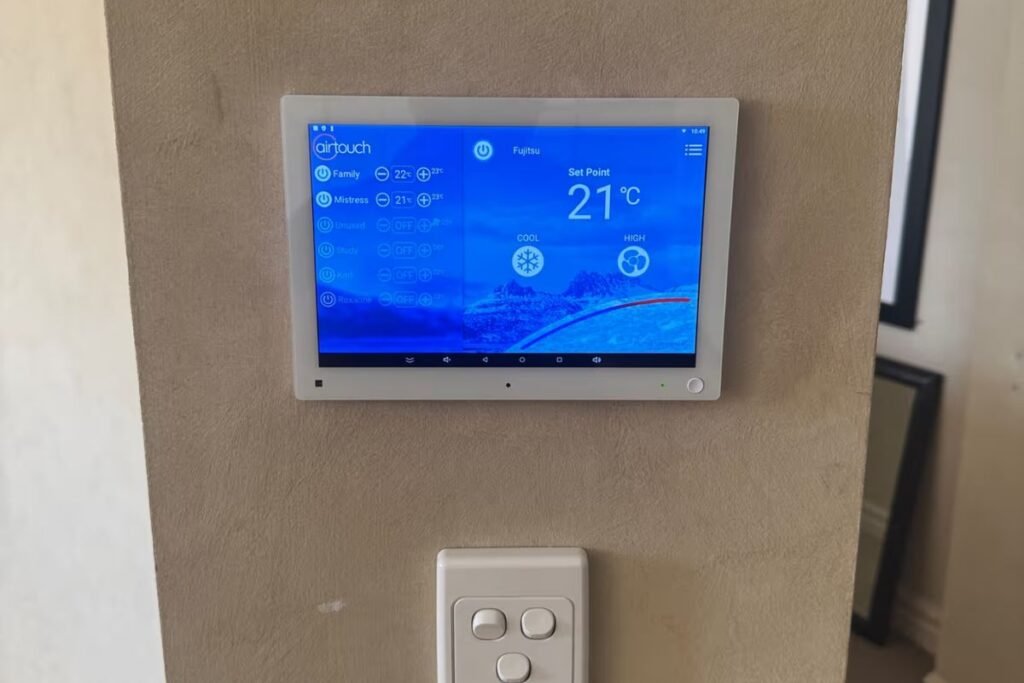
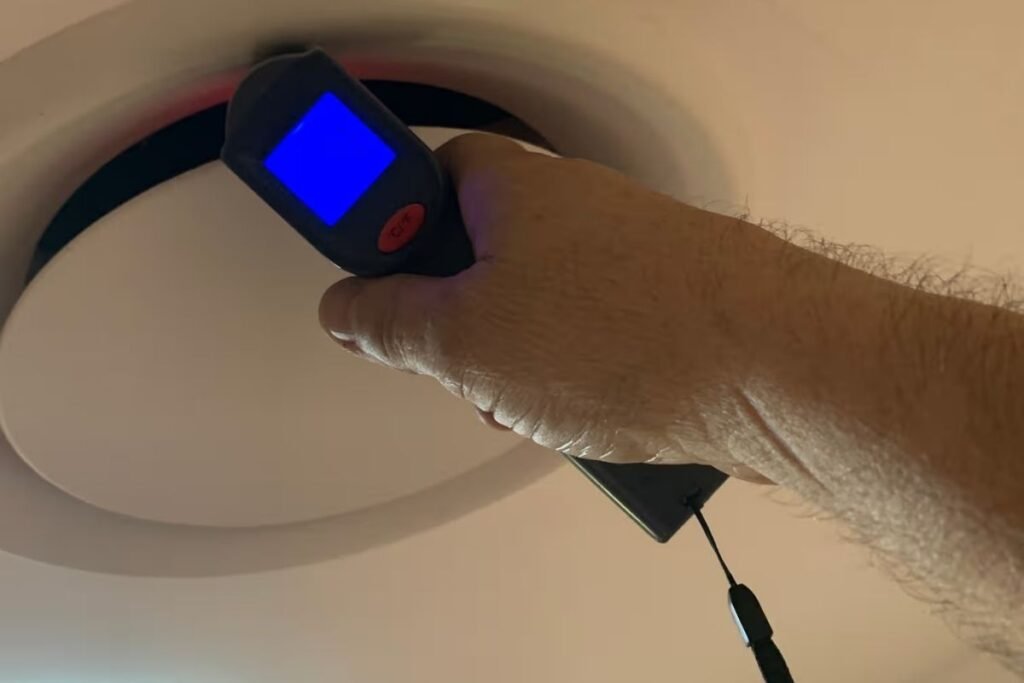
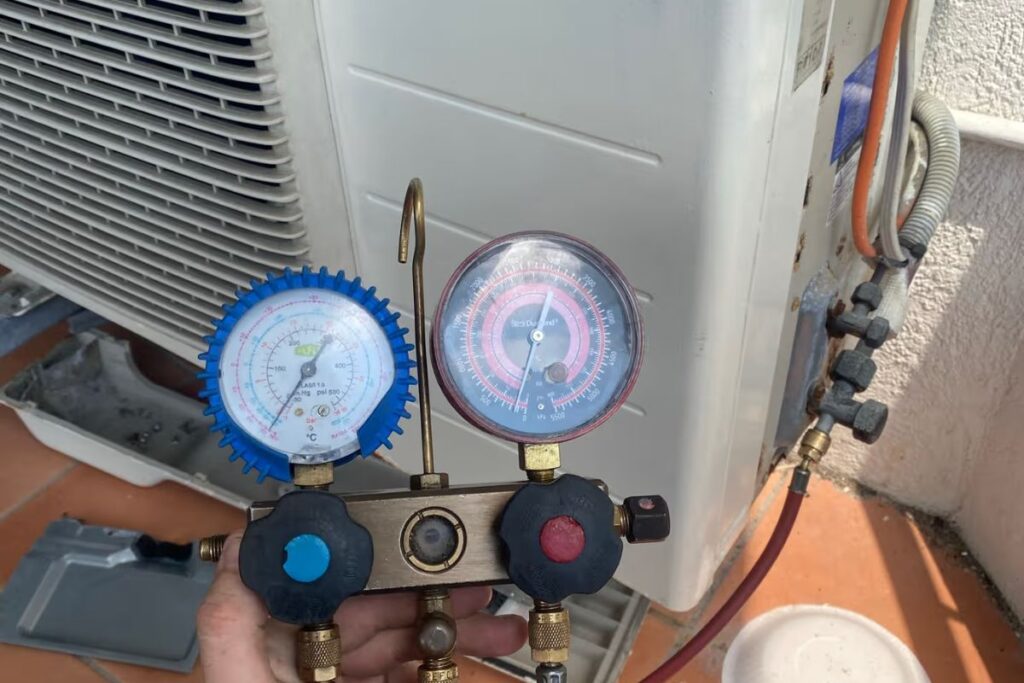
A Gold Coast split system leaking water inside usually means the drain pipe is blocked, the unit is dirty, the pipe was poorly installed, or low gas is making the unit freeze. An occasional drip is the early warning sign. If you leave it, water can run into your walls and cause mould, damaged plasterboard and electrical risks. For both homes and businesses, the fastest and cheapest fix is a leak inspection before the problem spreads.
Table of contents
- First, why does an air conditioner make water at all?
- Occasional drip vs steady leak: What each one tells you
- Common causes of a split system dripping water
- The hidden risk: Leaking water inside your walls
- What a technician does on site
- Multi-head systems: Why one head can leak while the others are fine
- Can i fix a leaking air conditioner myself?
- Why choose DEEPCHILL for air conditioning repair on the Gold Coast
- Book a leak inspection today
This week, our technicians went to two jobs on the Gold Coast. Both were about the same problem: a split system leaking water inside. At the first home, the owner said the air conditioner “drips occasionally”. A few drops landed on the floor now and then. It didn’t seem like a big deal. At the second property, the water had nowhere to go, so it ran down inside the bedroom wall. By the time anyone noticed, the plasterboard was soft and stained. Both jobs started the same way. The difference was time. An occasional drip is an early warning, and a leak into the wall is what happens when nobody acts on it.
Here’s what’s going on, and what to do about it. This applies to homes and to businesses like cafés, hotels, offices and medical clinics.
First, why does an air conditioner make water at all?
Every air conditioner makes water. That’s normal.
Think of a cold glass of water on a hot Gold Coast day. Droplets form on the outside of the glass. Your air conditioner does the same thing. Behind the front cover sits a set of thin metal fins called the coil. When warm, humid air passes over these cold fins, moisture turns into water.
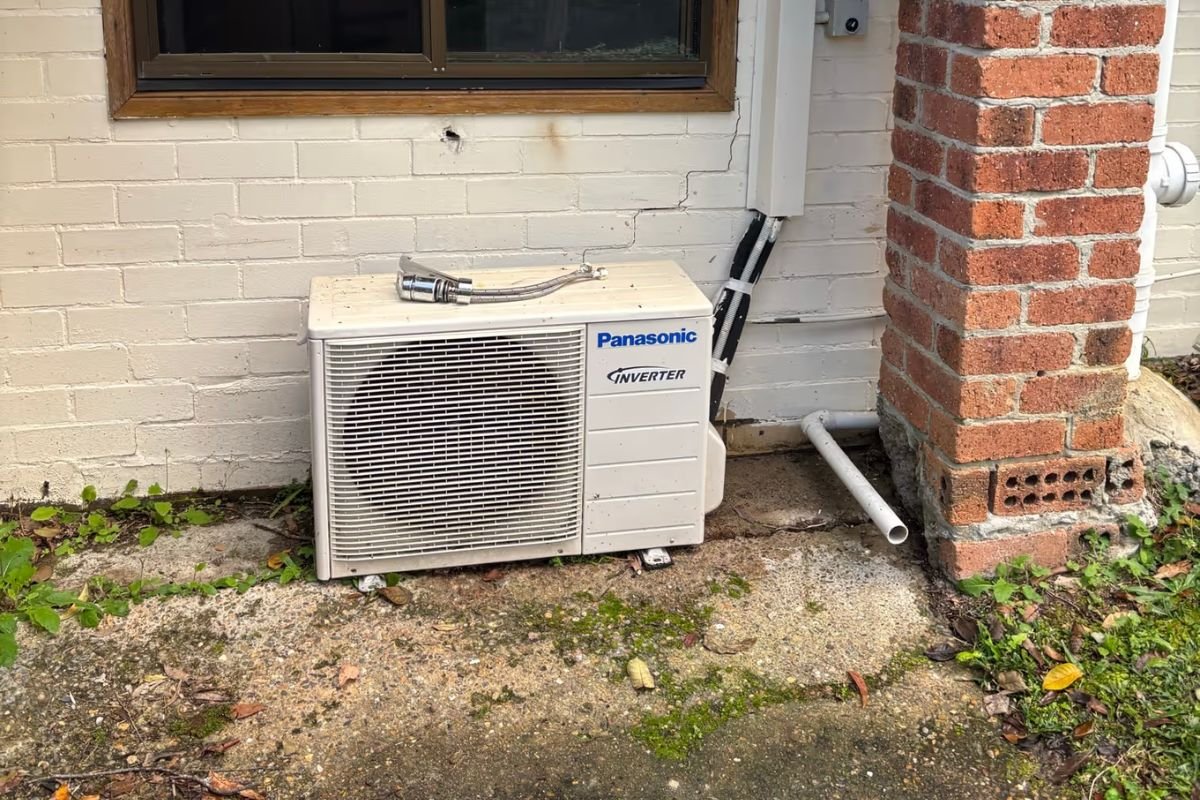
That water drips into a small tray. From there, a thin pipe called the drain line carries it outside. You may have seen it dripping near your outdoor unit or down an outside wall.
When everything works, you never see this water indoors. When something goes wrong, the water has to go somewhere. Usually, that’s your floor, your furniture or your wall.
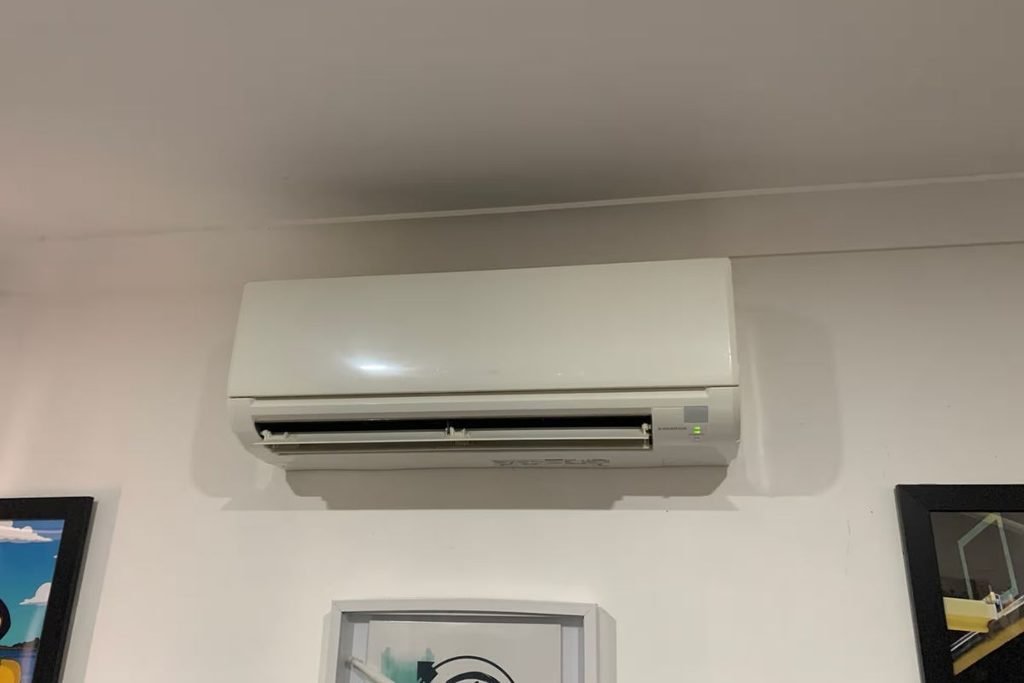
Occasional drip vs steady leak: What each one tells you
Not every leak looks the same. The type of leak gives you a clue about what’s happening.
An occasional drip usually means the drain is starting to block. Dust, mould or slime is building up in the tray or pipe. Water still gets out most of the time. However, on humid days, the system makes more water than the drain can handle, so some spills over.
A steady leak means the drain is badly blocked, or something else has gone wrong. Water is now overflowing every time the system runs.
Water you can’t see is the most worrying one. Sometimes the water runs behind the unit and down inside the wall. There may be no drip at all. Instead, you might notice a damp smell, bubbling paint or a brown stain below the unit.
In other words, a small drip is the cheapest time to fix the problem. It only gets more expensive from there.
Common causes of a split system dripping water
Most leaks come down to one of four causes.
1. A blocked drain line
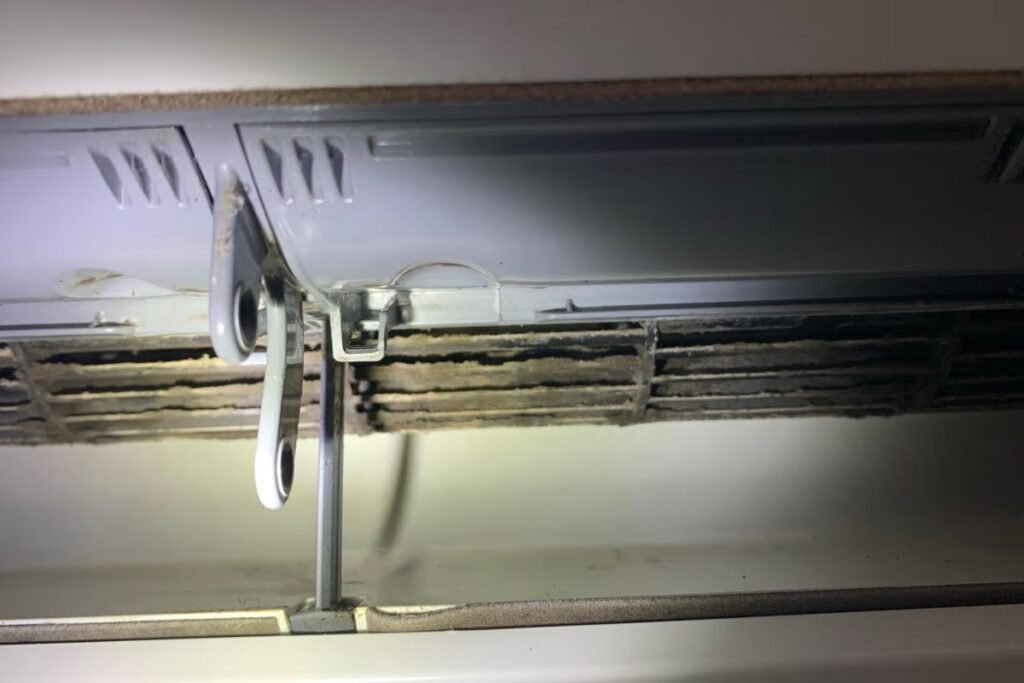
This is the most common cause by far. Over time, dust and mould grow inside the drain pipe and the tray. On the Gold Coast, our humid climate speeds this up. Eventually, the gunk blocks the pipe and the water backs up.
2. A dirty coil
When the metal fins behind the filter get coated in dust, water doesn’t run off them cleanly. Instead, it can drip in the wrong places or splash past the tray. A dirty coil also makes your system work harder, so it uses more power.
3. Poor installation (the pipe doesn’t slope downhill)
Water only flows downhill. The drain pipe needs a steady downward slope, which technicians call the fall. If the pipe is flat, or it rises at any point, water sits in it and eventually flows back towards the unit. We often see this on rushed or budget installs.
4. Low gas freezing the coil
Your air conditioner uses a special gas (called refrigerant) to move heat. If there’s a gas leak and the level drops, the coil gets too cold and turns to ice. When the system switches off, that ice melts all at once. The tray can’t hold that much water, so it overflows.
A tell-tale sign: you might see frost on the pipes or the unit blowing weak, less-cold air.
The hidden risk: Leaking water inside your walls
A wet floor is annoying. Water inside a wall is a much bigger problem, for three reasons.
Mould. Walls are dark and stay damp. That makes them perfect for mould. Once mould takes hold behind plasterboard, it can spread well beyond the leak. It also affects the air you breathe. (External link suggestion: healthdirect or Queensland Health page on mould and health.)
Damaged plasterboard. Plasterboard soaks up water like a sponge. It goes soft, sags and stains. Often, it needs to be cut out and replaced, then repainted. That’s a builder and a painter, not just an aircon tech.
Electrical danger. Many split systems have power cables running in the same wall cavity. Water and electricity don’t mix. A leak near cables or power points is a safety risk and should be checked straight away.
What this means for business owners
For a business, the cost isn’t just repairs. It’s disruption.
- In a hotel, one leaking unit can take a room offline, and a guest complaint can end up in an online review.
- In a restaurant or café, water near food areas raises hygiene concerns.
- In a medical clinic, damp walls and mould are a serious issue for patients and for compliance.
- In an office, stained ceiling tiles and musty smells don’t make a good impression on clients or staff.
Catching a leak early keeps the problem small, quick and quiet.
What a technician does on site
When you book a leak inspection, here’s what our technician will usually do. We explain each step as we go, so you know exactly what you’re paying for.
- Find where the water is going. First, we check the tray, the drain pipe and the wall around the unit. We look for stains, soft plaster and damp smells.
- Flush the drain line. Next, we clear the blockage and push clean water through the pipe. We confirm it flows freely to the outside.
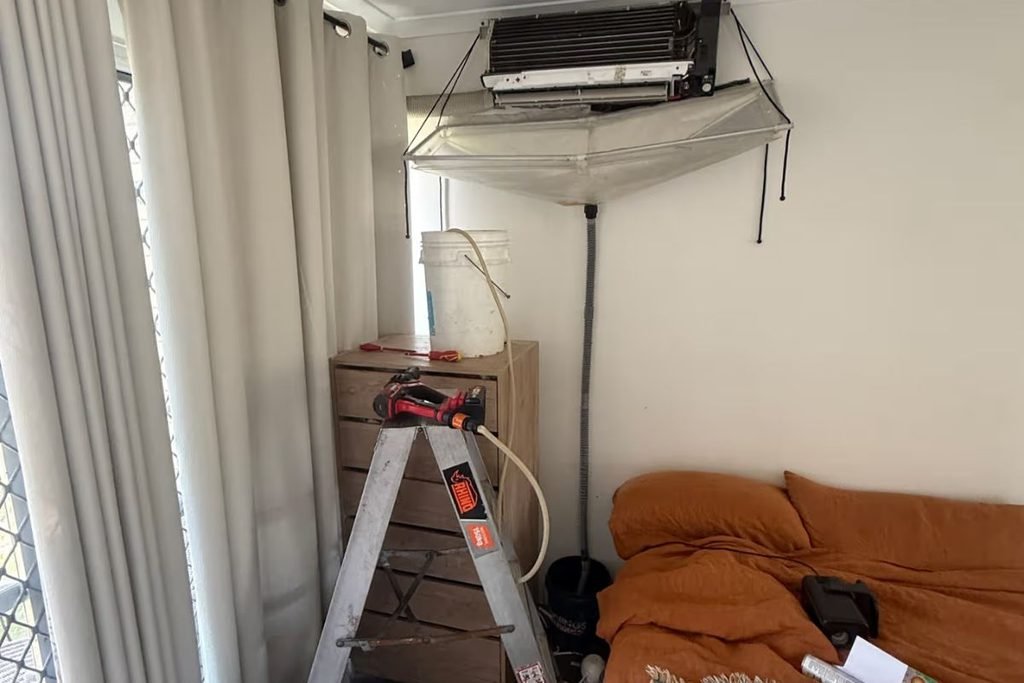
- Hydro clean the indoor unit. This is a deep wash of the coil, tray and fan using a special cover and water spray. It removes the dust and mould that caused the blockage in the first place.
- Check the fall. We check that the drain pipe slopes downhill all the way. If it doesn’t, we’ll explain the fix before doing anything.
- Inspect for gas and ice problems. If we see signs of freezing, we test the system for a gas leak.
Finally, we’ll tell you in plain language what we found, what we fixed and whether anything else needs attention.
Multi-head systems: Why one head can leak while the others are fine
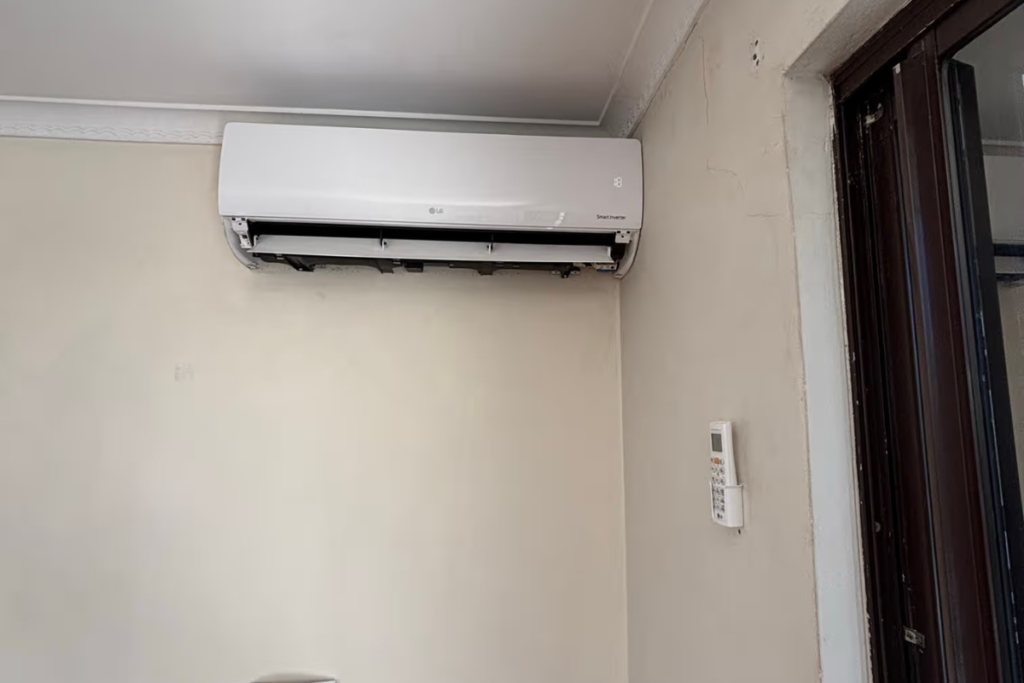
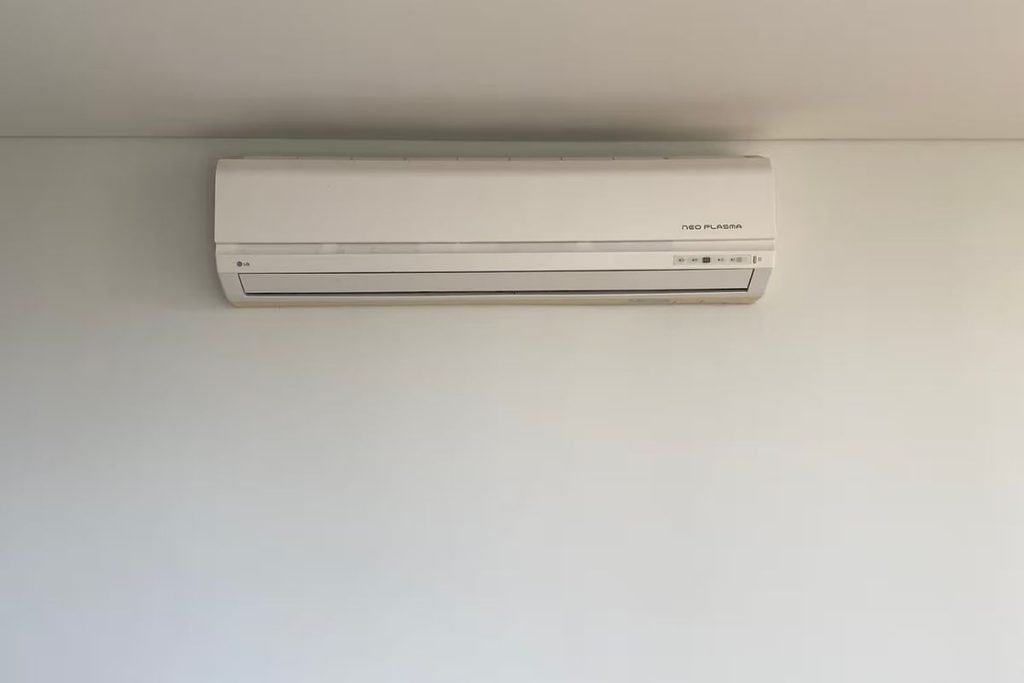
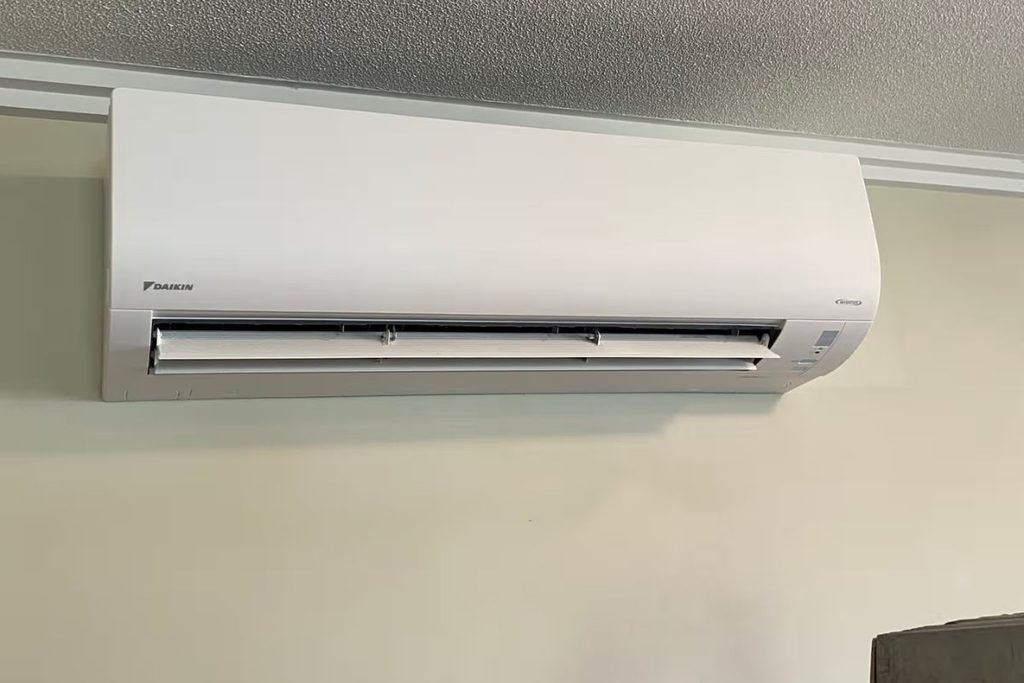
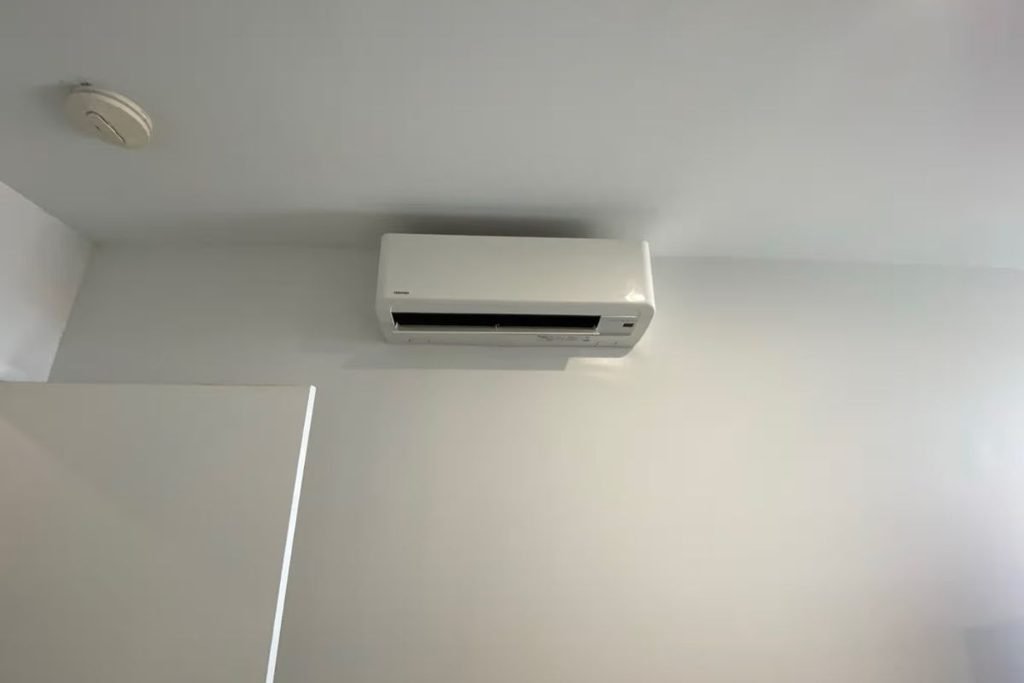
Some homes and businesses have one outdoor unit connected to several indoor units. Each indoor unit on the wall is called a head. This setup is called a multi-head (or multi-split) system.
Owners often ask us: “If the system has a problem, why is only one room leaking?”
The answer is simple. Each head has its own tray and its own drain pipe. So, one drain can block while the others stay clear. The head in a busy room, like a bedroom or a dining area, often runs longer. As a result, it collects more dust and makes more water, so it tends to block first.
That’s why it pays to service every head, not just the one that’s leaking. If one has blocked, the others are often not far behind.
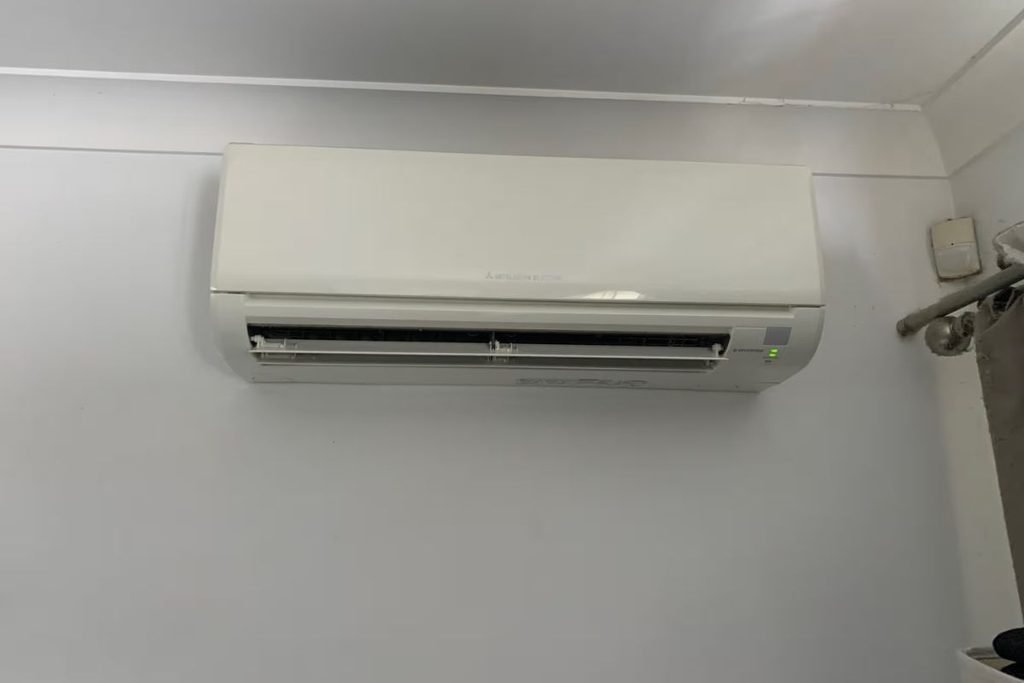
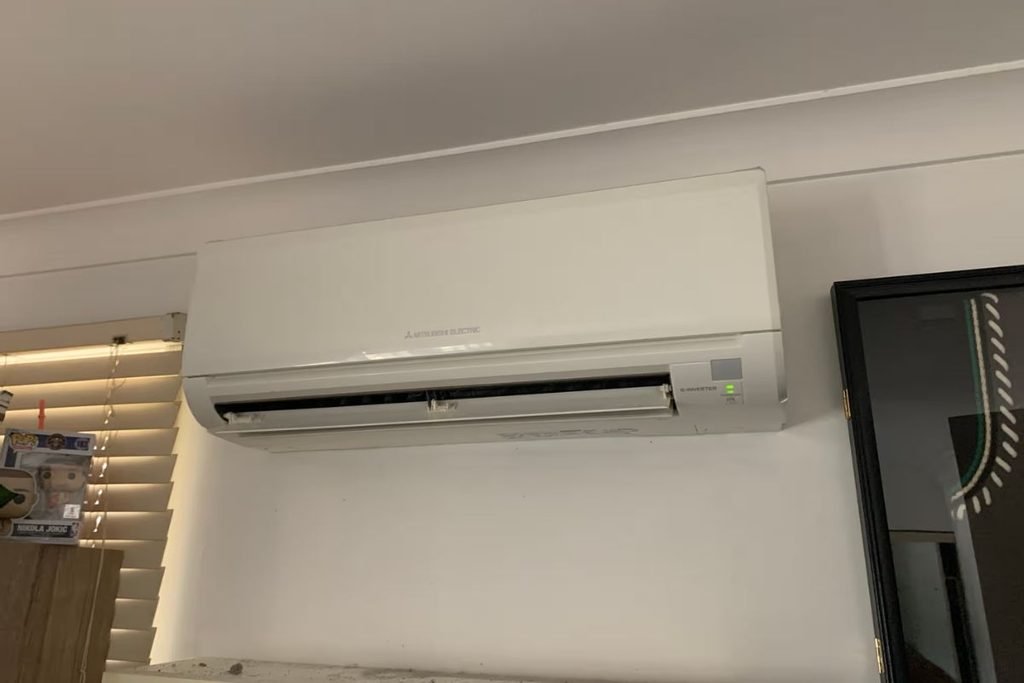
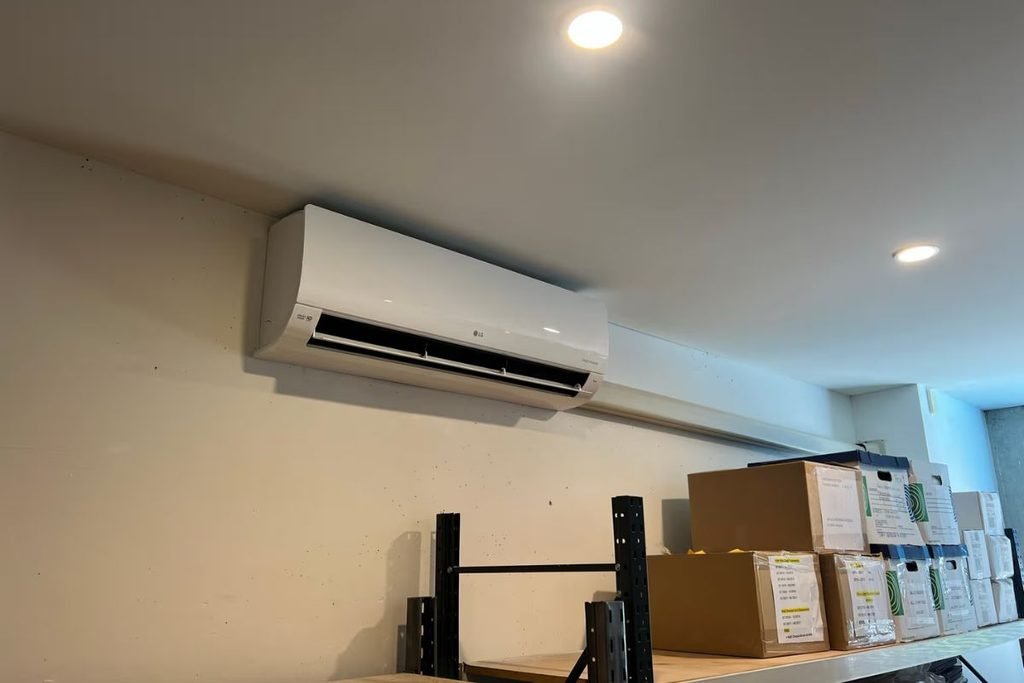
We service all major brands, including Mitsubishi Electric, Fujitsu, GENERAL, Daikin, LG, Panasonic and Hisense. If you’re looking for a Mitsubishi Electric Gold Coast technician for a multi-head system, we can help.
Can i fix a leaking air conditioner myself?
You can do a few simple things safely:
- Turn the system off if water is leaking near power points or into a wall.
- Clean the front filters (most lift out easily).
- Put a towel or bucket under the drip.
- Check that the drain pipe outside isn’t crushed or blocked by garden beds.
However, don’t open the unit or poke wires into the drain. The parts inside are fragile and connected to power. A blocked drain usually comes back if the coil and tray aren’t properly cleaned.
Why choose DEEPCHILL for air conditioning repair on the Gold Coast
DEEPCHILL is a Gold Coast family business, established in 1986. For 40 years, we’ve installed, serviced and repaired air conditioning across the Gold Coast, for homes and businesses alike.
We’re also the Fujitsu/GENERAL National Dealer of the Year for 2024 and 2025. Our technicians see leaking units every week, so we know where to look and how to fix the cause, not just the symptom.
Book a leak inspection today
If your Gold Coast split system is dripping water, even occasionally, now is the time to act. A small drip is a quick fix. A leak into the wall is a renovation.
Book a leak inspection and our team will find the cause, fix it and explain everything in plain English.
Want to stop leaks before they start? Regular servicing keeps the drain clear and the coil clean. See our annual service plans for homes and businesses. If your system is old or was poorly installed, you can also explore a new installation.