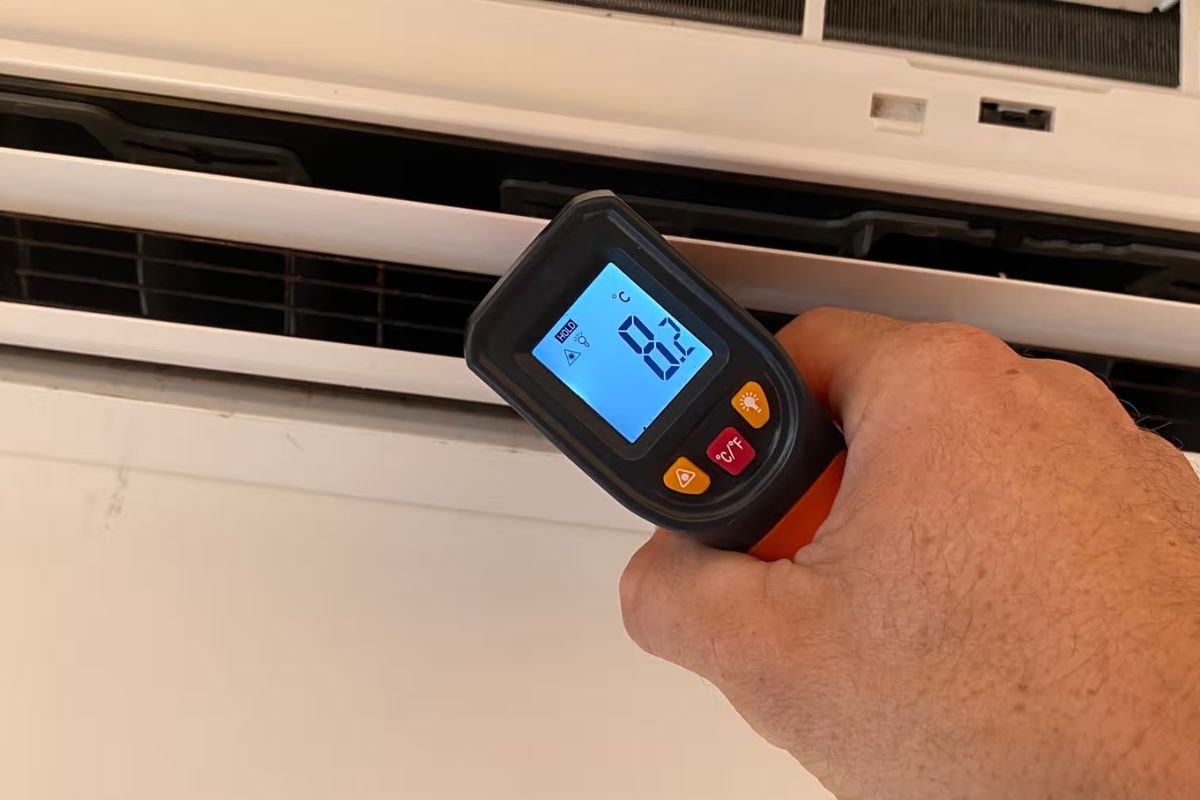
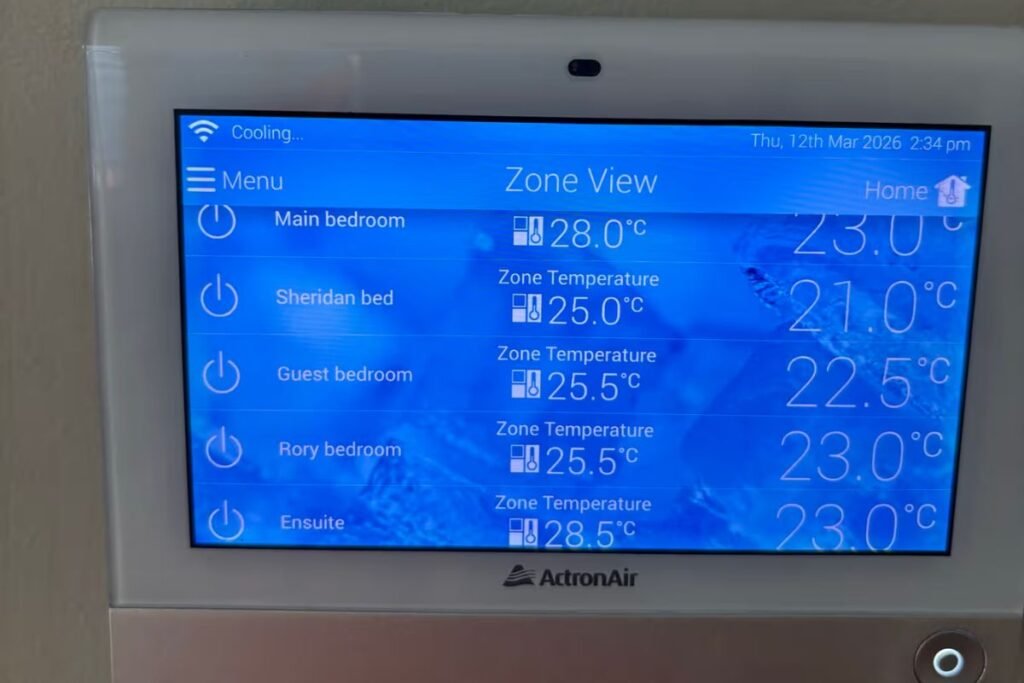
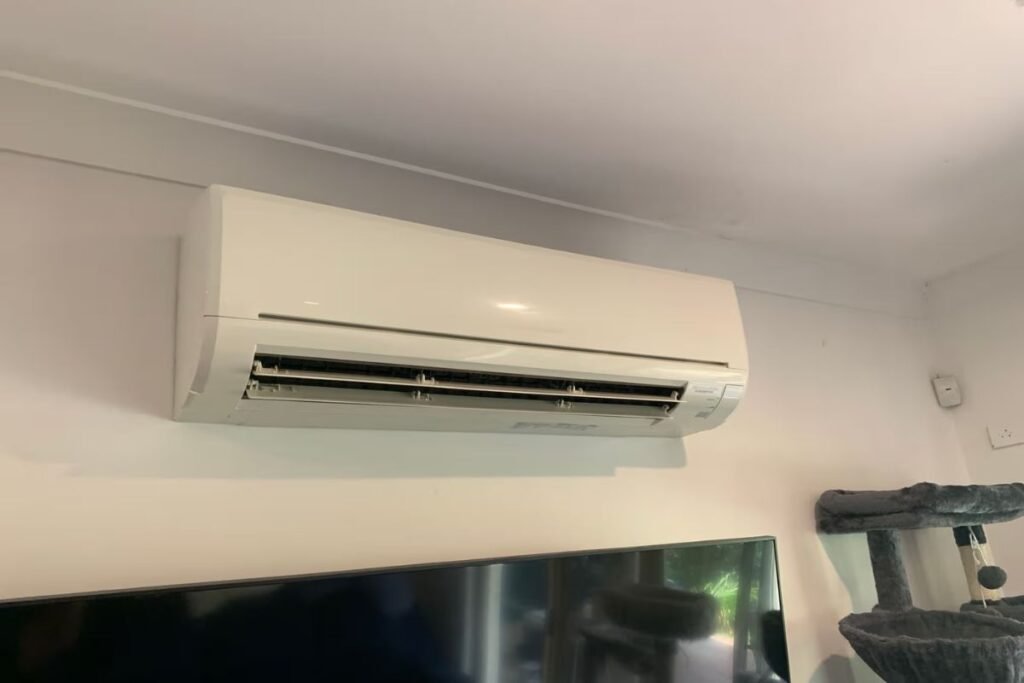
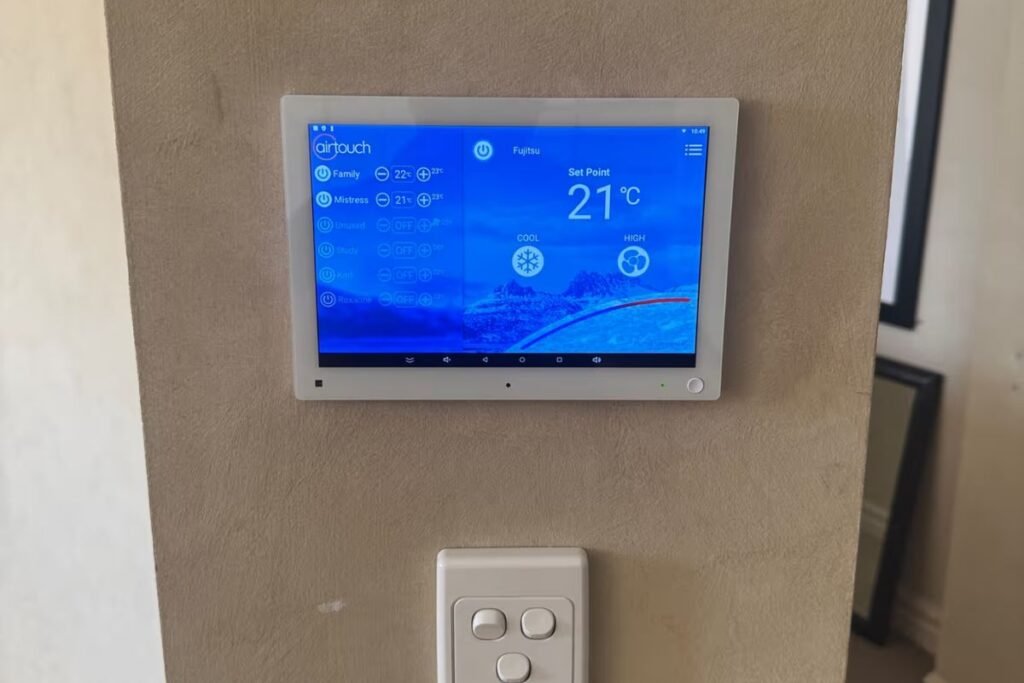
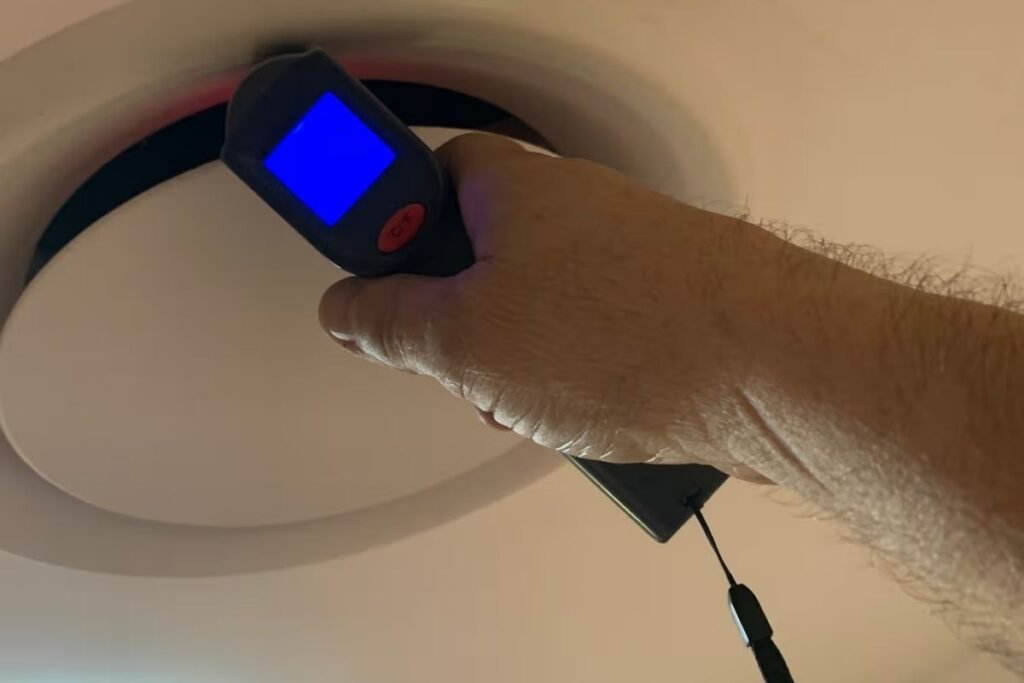
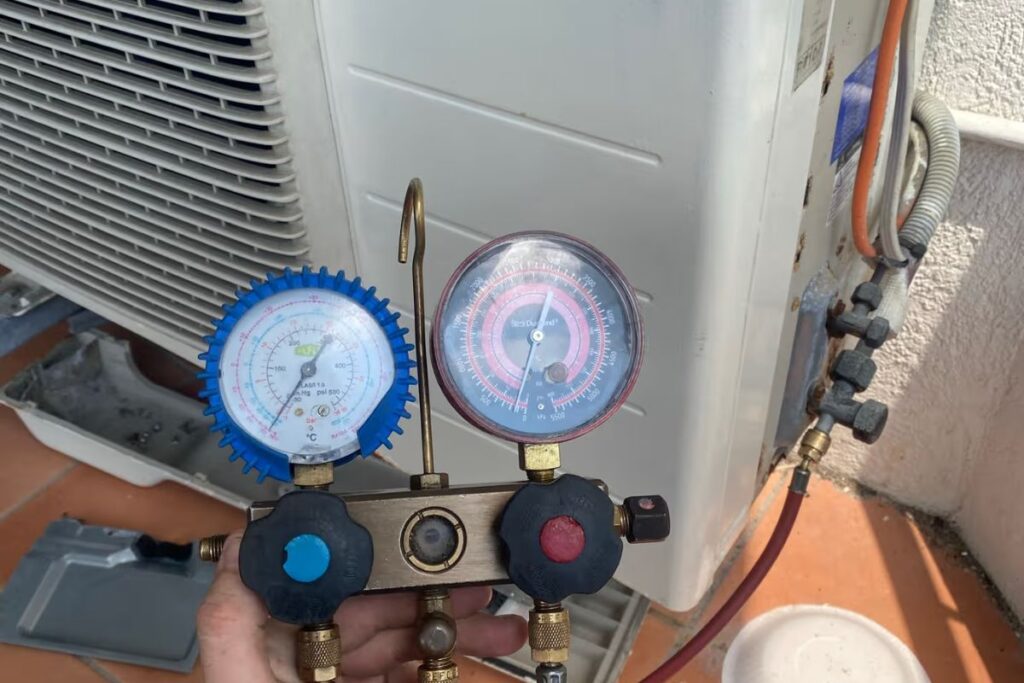
It’s a hot Gold Coast afternoon. Your air conditioner turns off by itself after half an hour, and the room is still warm. You switch it back on, and 30 minutes later it does the same thing again. Sound familiar? You’re not alone. This is one of the most common calls our technicians get every summer. Sometimes it’s a simple setting. Other times, a small part inside the unit has failed. In this guide, we explain the difference so you know what to check and when to call for help.
Table of contents
- A real case: “It cuts out after 30 minutes and won’t cool”
- First, is it a fault or normal behaviour?
- Faulty temperature sensors (Thermistors)
- Control board faults
- Dirty filters and overheating protection
- Why fixing the root cause costs less than resetting
- When to call a technician straight away
- How regular maintenance prevents shutdowns
- Frequently asked questions
- Get an accurate diagnosis from DEEPCHILL – Air conditioning Gold Coast
A real case: “It cuts out after 30 minutes and won’t cool”
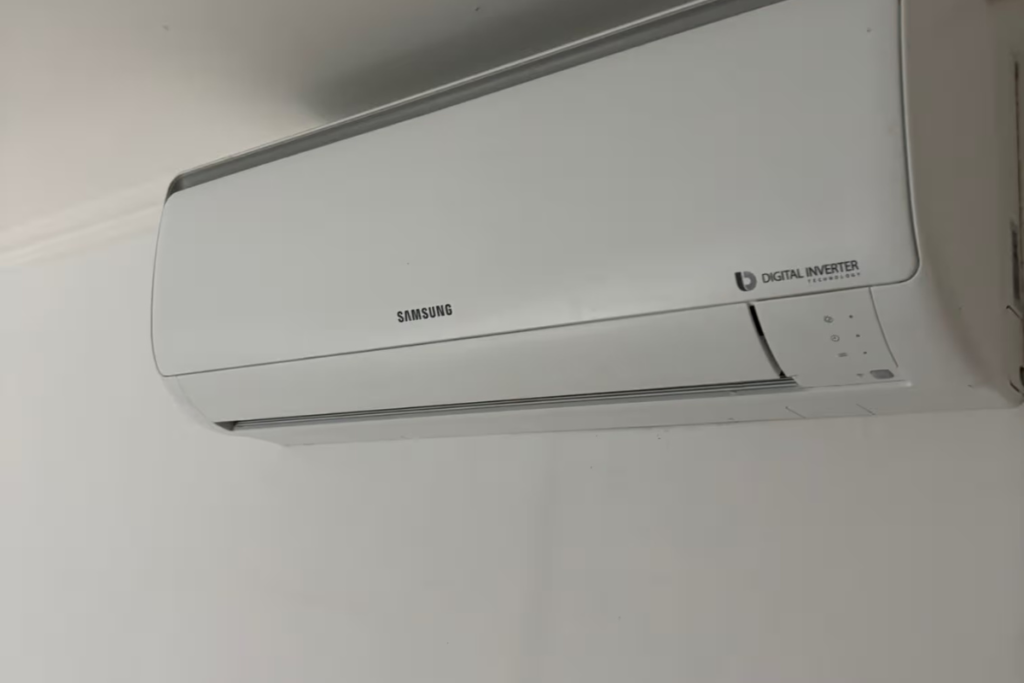
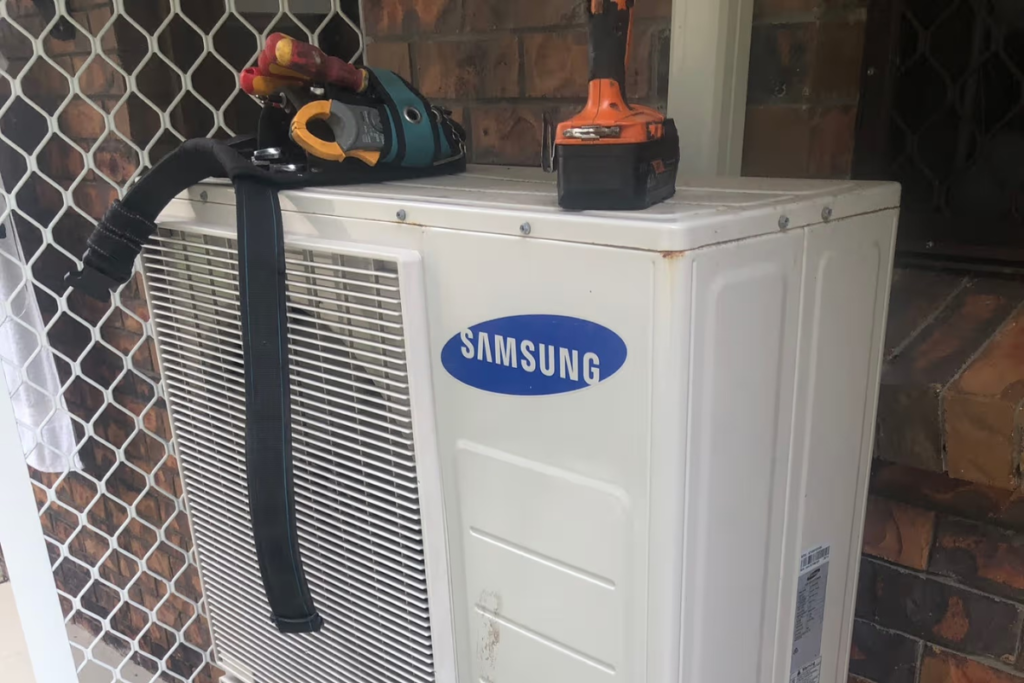
Recently, a Gold Coast homeowner called us about a Samsung split system. The unit started normally, blew cool air for a while, then shut down after about 30 minutes. Each time it restarted, the room got warmer.
The owner had already cleaned the filter and checked the remote. Nothing helped. So our technician tested the unit’s temperature sensors. One of them was giving the wrong reading. It told the air conditioner the room was already cool, so the unit switched itself off, even though the room was still hot.
First, is it a fault or normal behaviour?
Before you worry, rule out the simple things. Your air conditioner might be doing exactly what it was told to do.
Thermostat cycling (it reached your temperature)
Your AC aims for the temperature you set. Once the room gets there, the cooling part (the compressor in the outdoor unit) slows down or pauses. The indoor fan may keep running quietly. When the room warms up again, cooling starts back up.
This is normal. However, it should take a while, and the room should actually feel cool. If the unit stops while the room is still hot, that’s not normal.
Timer settings
Many remotes have an “Off Timer”. If someone in the house set it, the unit will shut down at that time every day. Check the remote display for a clock or timer icon.
Sleep mode and eco modes
Sleep mode slowly raises the temperature overnight to save power. Some eco or “auto” modes also reduce cooling. To you, it can feel like the air conditioner has stopped working.
Quick self-check list
Before calling anyone, try these safe steps:
- Check the remote for timer, sleep or eco icons, and turn them off.
- Replace the remote batteries.
- Make sure the set temperature is lower than the room temperature.
- Check the air filter behind the front panel of the indoor unit.
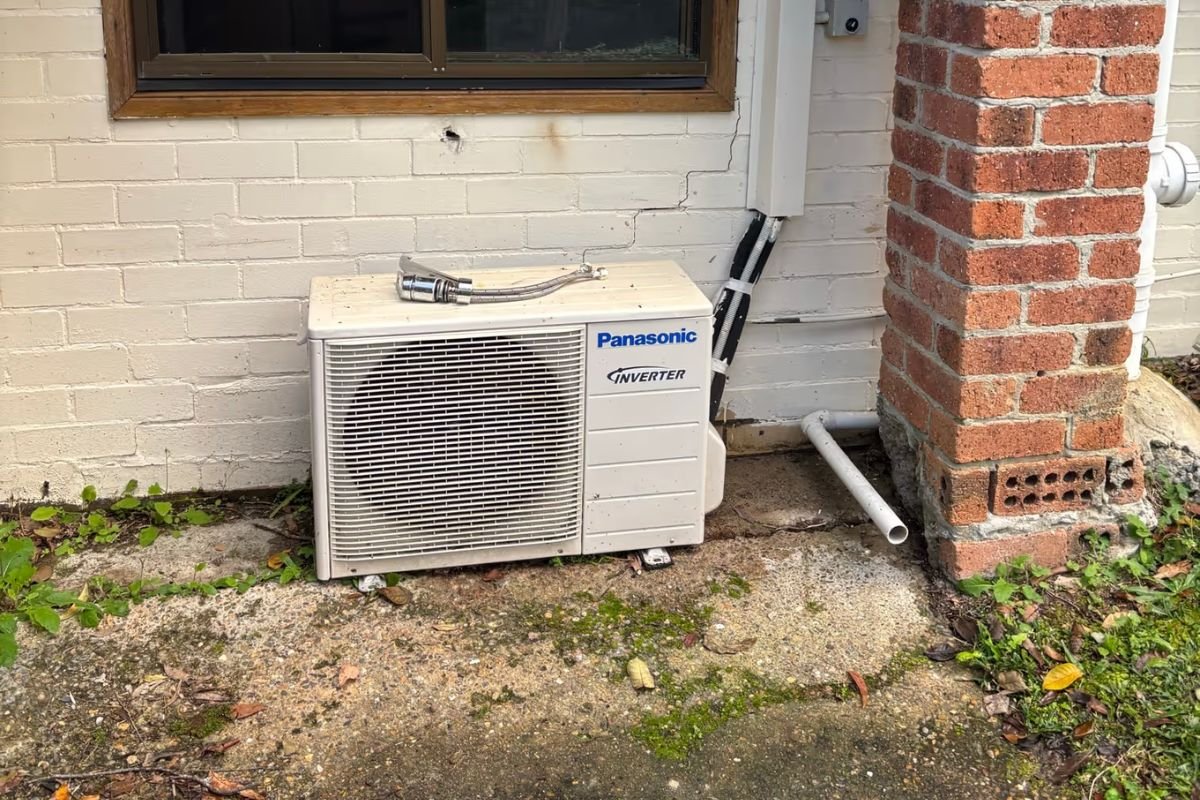
- Look at the outdoor unit. Is it blocked by plants, boxes or a fence?
- Check your switchboard. Has a circuit breaker tripped?
If the breaker trips again after you reset it, stop there. Don’t keep resetting it. Call a licensed technician.
Faulty temperature sensors (Thermistors)
This is the cause in our real case, and it’s more common than most people think.
What is a thermistor?
A thermistor is simply the temperature sensor that tells your AC when to stop. Your air conditioner has several of them. One measures the room air. Others check the temperature of the pipes and coils inside the indoor and outdoor units.
The AC uses these readings to decide what to do. Is the room cool enough? Is a part getting too hot or too cold? Should it keep running or switch off to protect itself?
What happens when a sensor fails?
A faulty sensor sends the wrong information. For example, it might tell the AC the room is already cold. Or it might warn that a coil is freezing when it isn’t. Either way, the unit switches off, even though your room is still hot.
Common symptoms of a faulty sensor
- The unit turns off after a similar amount of time, again and again.
- It blows air, but the air isn’t cold.
- The room never reaches the set temperature.
- A light on the indoor unit flashes, or an error code appears.
- The problem stays the same after cleaning the filter.
The good news is that a temperature sensor is usually a small, low-cost part. The key is finding the right one, because a technician needs to test each sensor to confirm which one has failed.
Control board faults
What is the control board?
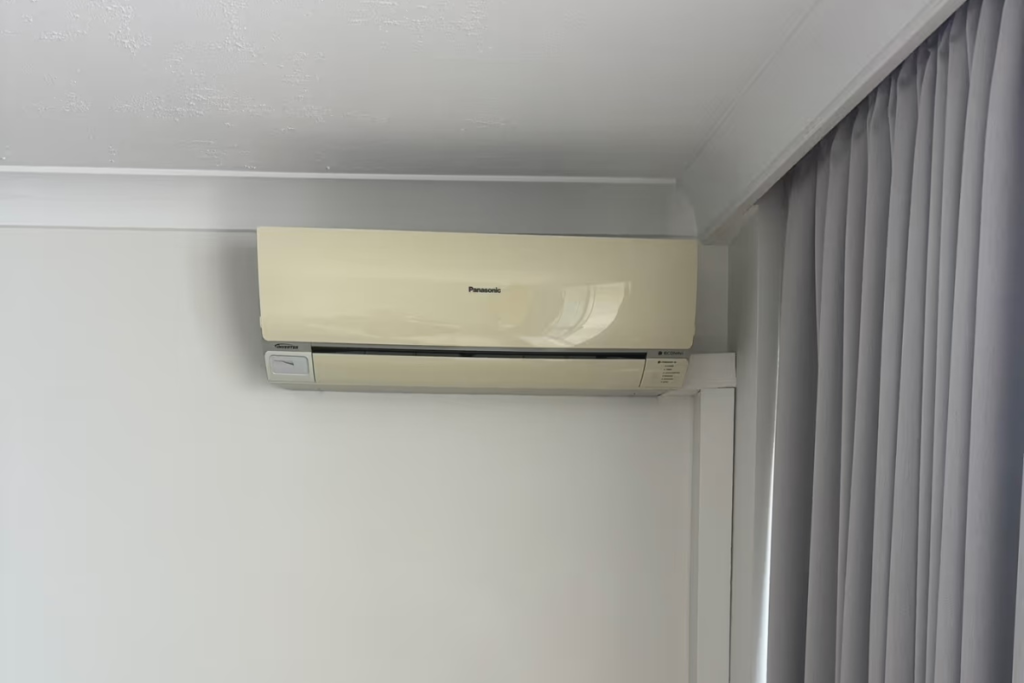
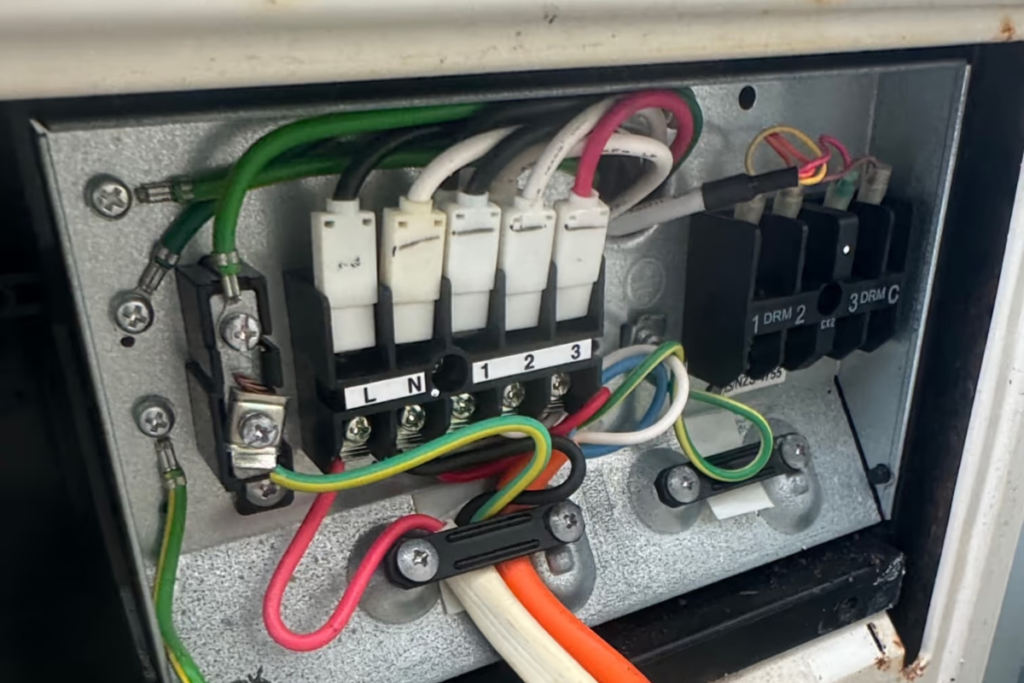
The control board is the AC’s brain. It’s a circuit board that receives signals from the sensors and the remote. Then it tells the fan, the compressor and everything else what to do.
How it causes shutdowns
When the brain has a problem, the instructions get mixed up. The unit may shut down at random times. It may ignore the remote. It may also turn on and off in a pattern that makes no sense.
Control boards can be damaged by power surges, storms, moisture or simply age. On the Gold Coast, salty, humid coastal air can also speed up corrosion on electrical parts.
Signs it might be the control board
- The unit doesn’t respond, or responds randomly, to the remote.
- The display lights behave strangely or stay off.
- The AC turns off at different times, with no clear pattern.
- The problem started after a storm or power outage.
A control board repair or replacement costs more than a sensor. That’s exactly why an accurate diagnosis matters. You don’t want to replace an expensive board when a small sensor was the real problem.
Dirty filters and overheating protection
Modern air conditioners protect themselves. When something gets too hot or too cold, the unit switches off to avoid damage. Dirt is one of the biggest triggers.
Dirty indoor filters
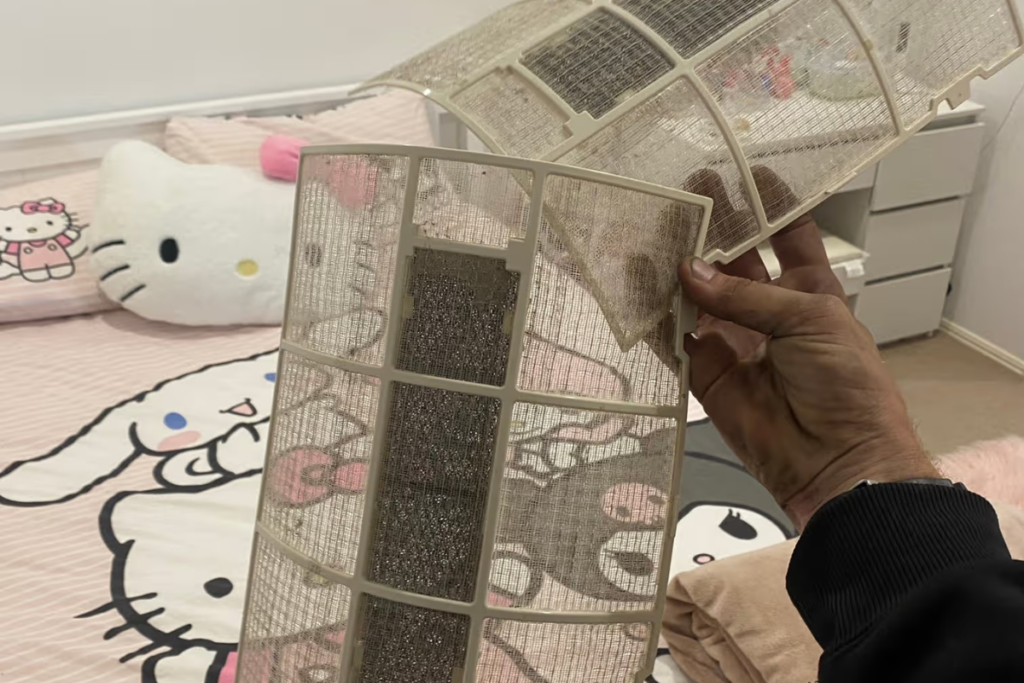
The filter catches dust before it reaches the inside of your unit. When it’s clogged, less air moves across the cold coil. The coil can then get so cold that ice forms on it. As a result, a sensor detects the problem and the AC shuts down to protect itself.
You can usually clean the filter yourself. Check your owner’s manual, and give it a rinse every few weeks during heavy use.
Blocked or dirty outdoor unit
The outdoor unit needs to release heat. If it’s crammed behind plants, covered in leaves or sitting in full afternoon sun, it can overheat. Inside, the coil can also get clogged with dirt, salt or even gecko droppings. When it gets too hot, the unit switches off until it cools down.
Why this matters
Each overheating shutdown puts stress on your compressor, which is the most expensive part of the system. So a dirty filter is not just an annoyance. Over time, it can lead to a much bigger repair bill.
Why fixing the root cause costs less than resetting
When an air conditioner turns off by itself, it’s tempting to just switch it back on. Many people do this for weeks. Unfortunately, this usually makes things worse.
Here’s why:
- More wear and tear. Constant stopping and starting is hard on the compressor and fan motors.
- Higher power bills. Starting up uses more energy than running steadily. Meanwhile, your room never quite gets cool.
- Small faults become big faults. A cheap sensor problem can lead to a frozen coil, water leaks or a burnt-out compressor.
- Lost comfort. On a 35°C day, a unit that keeps cutting out simply isn’t doing its job.
In our experience, one proper diagnosis almost always costs less than months of resetting followed by a major repair. Find the cause once, fix it once, and move on.
When to call a technician straight away
Call a licensed air conditioning technician if you notice any of these:
- A burning smell or smoke from either unit
- The circuit breaker trips more than once
- Water leaking from the indoor unit
- Ice on the pipes or outdoor unit
- A flashing light or error code that won’t clear
- The problem continues after you’ve cleaned the filter and checked the settings
Please don’t open the unit yourself. Air conditioners contain high-voltage electrical parts and refrigerant gas, and only licensed technicians should work on them.
How regular maintenance prevents shutdowns
Many shutdowns come from dirt, corrosion and parts slowly wearing out. A regular service catches these problems early. During a service, a technician cleans the filters and coils, checks the sensors and electrical connections, and makes sure the outdoor unit can breathe.
For most Gold Coast homes, an annual service before summer is a smart move. Call DEEPCHILL for advice on a maintenance plan that suits your home and how often you use your air conditioning.
Frequently asked questions
Why does my AC keeps shutting off after 30 minutes?
- It often points to a faulty temperature sensor, a dirty filter causing the coil to freeze, or the outdoor unit overheating. If the room isn’t cool when it stops, it’s likely a fault rather than normal cycling.
Is it normal for my air conditioner to turn off by itself?
- Yes, if the room has reached your set temperature, or a timer or sleep mode is active. No, if it switches off while the room is still hot.
Can I keep using my AC if it keeps turning off?
- You can, but it’s not a good idea. Repeated shutdowns put extra strain on the compressor and can turn a small repair into a big one.
Do you repair Samsung air conditioners?
- Yes. Our technicians diagnose and repair all major brands, including Samsung split systems. See our air conditioning repair service here.
How much does it cost to fix an AC that keeps shutting off?
- It depends on the cause. A sensor is usually a small part, while a control board costs more. That’s why we diagnose first, so you only pay for the repair you actually need.
Get an accurate diagnosis from DEEPCHILL – Air conditioning Gold Coast
DEEPCHILL has looked after Gold Coast homes since 1986. That’s 40 years of finding and fixing problems like this one. We’re also a Fujitsu/GENERAL National Dealer of the Year for 2024 and 2025.
If your air conditioner turns off by itself, don’t keep guessing. Our technicians find the actual cause and explain it clearly before any work starts.