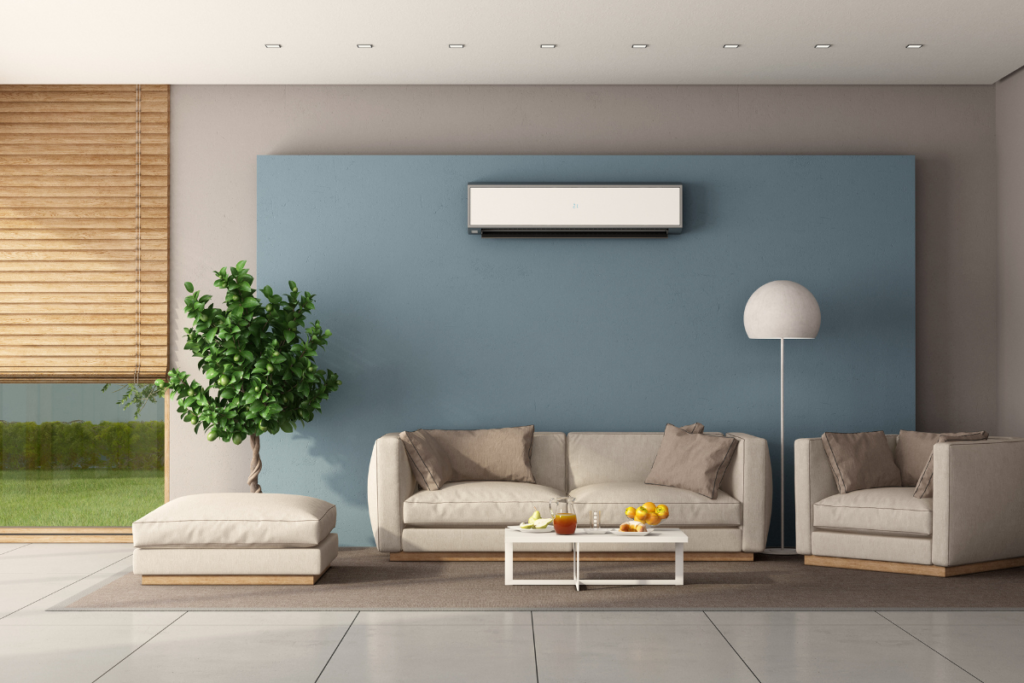
One in nine Australians lives with asthma – around 2.8 million people, or 11% of the population, according to the National Asthma Council Australia. Spring is when many of them notice it most. Grass pollen climbs, windows open, and symptoms follow. Your air conditioner sits right in the middle of that. Run well, it quietly reduces what you breathe indoors. Neglected, it becomes part of the problem. Here are five ways it shapes the air in your home, and three habits worth starting this month.
Table of contents
- 1. The filter is your first line of defence
- 2. It lets you keep the windows shut
- 3. Humidity control reduces dust mites and mould
- 4. A neglected unit spreads what it collects
- 5. Steady airflow beats cold blasts
- Three habits that cut indoor pollen this season
- What an air conditioner cannot do
- Frequently asked questions
- Talk to us before the season peaks
1. The filter is your first line of defence
Every split system pulls room air across a filter before pushing it back out. That filter is the only part of the system that actually removes anything from your air.
Standard mesh filters catch lint, hair and coarse dust. They do very little for pollen, which is far finer. This is where filter technology matters for anyone managing asthma.
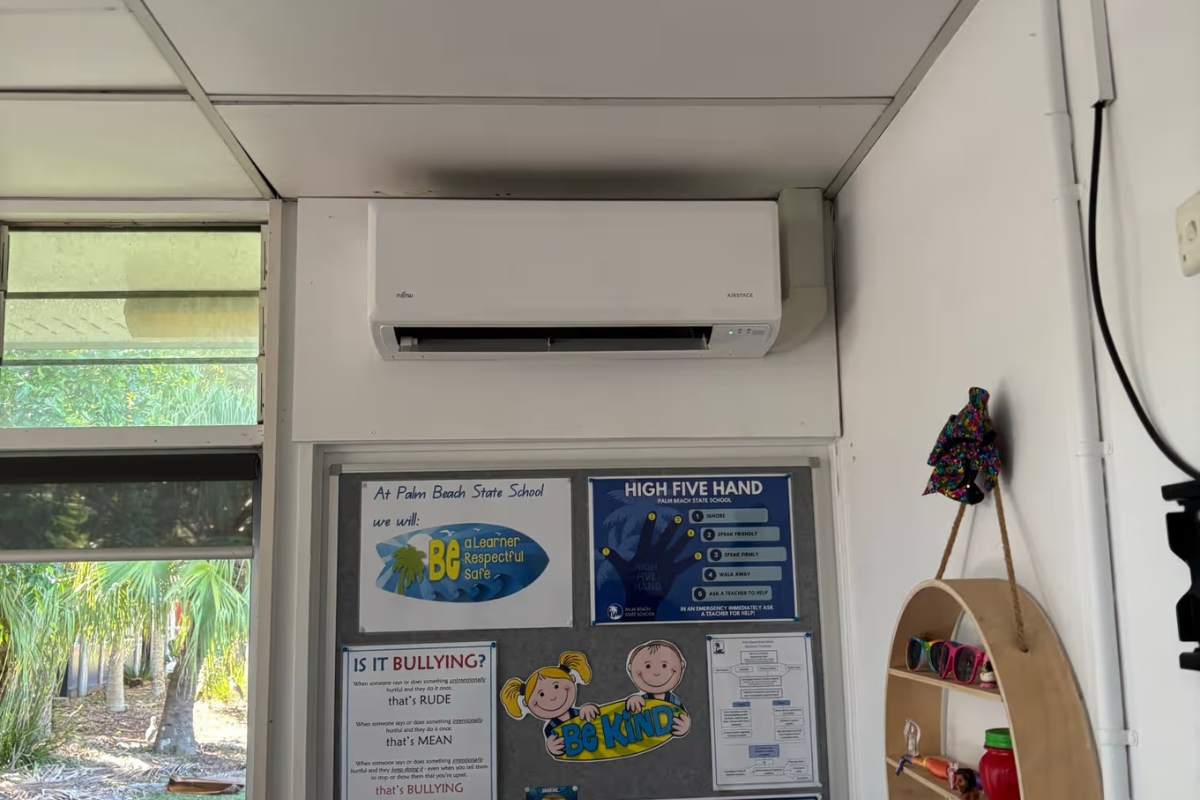
The Apple-Catechin filter fitted to the GENERAL (Fujitsu) Lifestyle range uses a polyphenol derived from apples, held on the filter surface by static electricity. It absorbs fine dust, mould spores and micro-organisms, and works to inhibit their growth rather than simply trapping them.
In March 2024 it received Sensitive Choice approval from the National Asthma Council Australia – the blue butterfly mark given to products assessed as suitable for people with asthma and allergies. Very few air conditioning components carry it.
As Fujitsu/GENERAL National Dealer of the Year in both 2024 and 2025, DEEPCHILL installs this range across the Gold Coast, so we see the difference a proper filter makes in real homes.
2. It lets you keep the windows shut
This one sounds obvious, and it is the most underrated benefit of the lot.
On a warm spring afternoon most households open up for a breeze. That breeze carries grass pollen straight into the living room, where it settles on soft furnishings and stays. A working air conditioner removes the reason to open the windows at all.
Split systems recirculate indoor air rather than drawing it in from outside. Consequently, every hour the unit runs with the house closed is an hour that outdoor pollen is not entering.
Wind and approaching storm fronts matter most. Asthma Australia notes that thunderstorm asthma occurs when storm conditions break grass pollen into fragments small enough to reach deep into the airways. Closed windows and a running unit are simple protection during those hours.
3. Humidity control reduces dust mites and mould
Cooling removes moisture from the air as a by-product. That matters more than most people realise.
Dust mites – one of the most common indoor asthma and allergy triggers in Australia – need humidity to survive. They thrive in humid air and struggle once indoor humidity drops below roughly 50%. Mould behaves the same way.
The Gold Coast makes this a genuine issue. Our summer humidity regularly sits above 70%. Bedrooms with the door shut and no airflow sit higher again.
Running the system through the humid months does more than make the room comfortable. It changes the conditions two major triggers depend on.
4. A neglected unit spreads what it collects
Here is the part nobody selling air conditioners likes to mention.
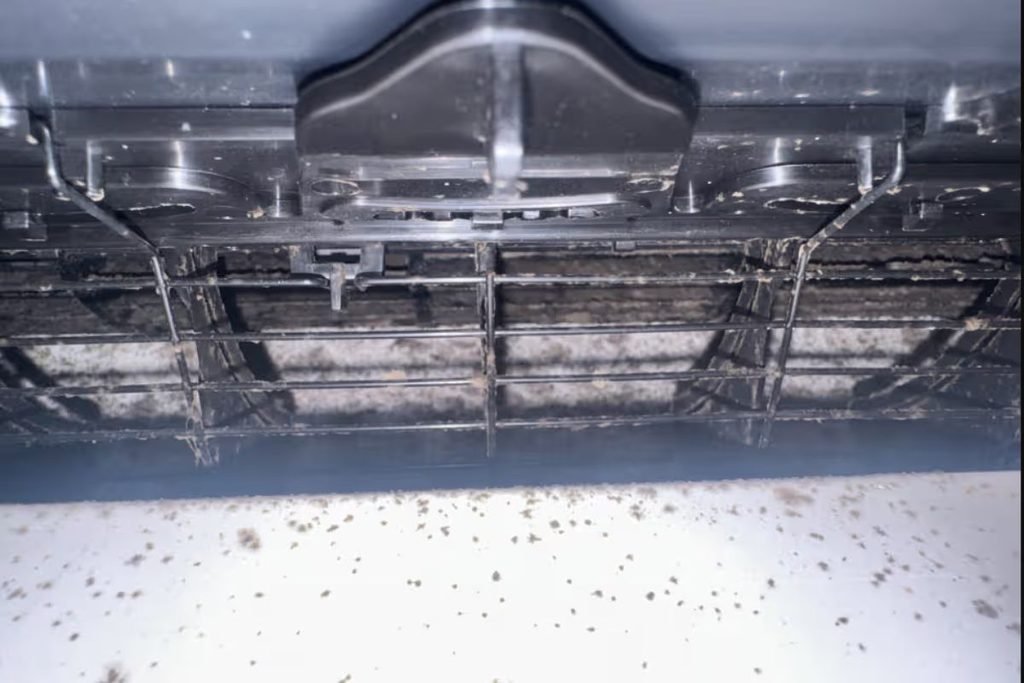
An indoor unit takes room air, passes it across a cold, damp coil, and pushes it back out at speed. If mould has taken hold on that coil or the barrel fan, the unit distributes spores around the room every hour it runs. For someone with asthma, that is worse than no air conditioning at all.
The warning signs are simple. A musty smell in the first minute after start-up. Dark speckling visible through the outlet louvres. An odour that returns days after a filter clean.
We cover this in detail in our guide to mould in air conditioner units. The short version: a clogged or mouldy system is a distributor, not a filter.
5. Steady airflow beats cold blasts
Sudden temperature change and cold draughts are recognised asthma triggers for many people.
A unit that is undersized, poorly positioned, or struggling with a dirty coil tends to cycle hard – blasting cold air, shutting off, then blasting again. A correctly sized system holds a steady temperature with gentler airflow.
Aim the louvres up rather than directly at seating or beds. Set a moderate temperature and let the system hold it, instead of dropping the thermostat and chasing the cold. Steady beats fast, particularly overnight.
Three habits that cut indoor pollen this season
Rinse your filters fortnightly through spring
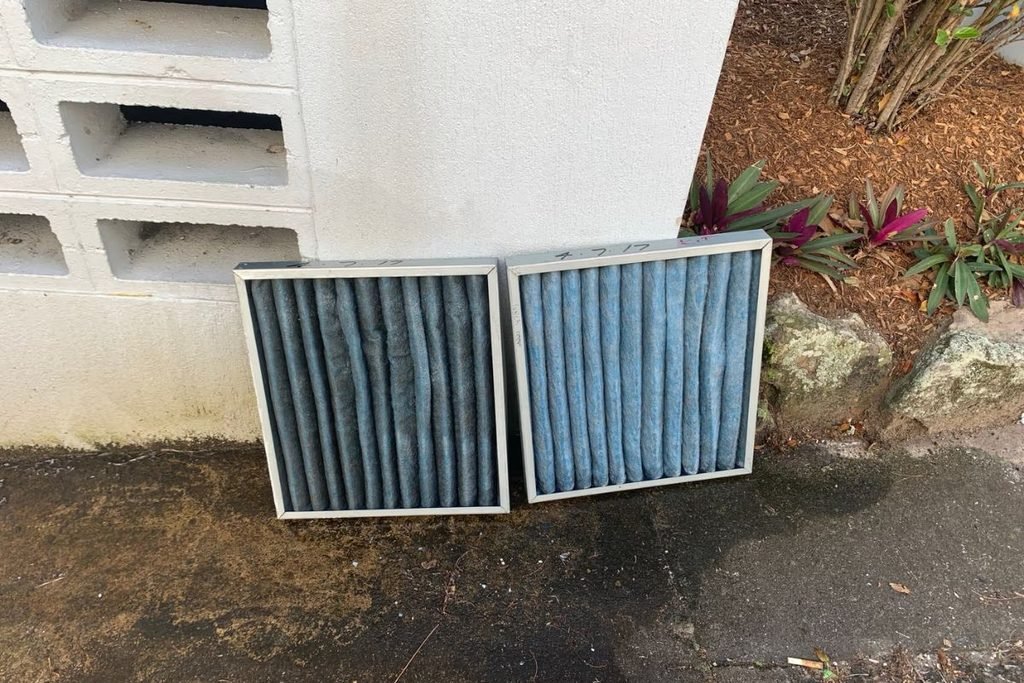
Monthly is enough for most of the year. During peak pollen months, fortnightly is better. A filter loaded with pollen stops catching new pollen, and the trapped load sits directly in the airstream.
Slide the filters out, rinse under cool water, dry fully in the shade, and refit. It takes five minutes per unit. Never refit a damp filter – that creates the moisture problem described above.
Run the unit before you open up
If you want fresh air, open the house late morning rather than at dawn. Pollen counts are typically highest in the early morning and on windy afternoons. Close up again before an approaching storm and let the system run.
Dry the washing indoors during peak pollen weeks
Pollen sticks to damp fabric on the line, then comes inside on sheets and clothing. It is one of the most common indoor pollen sources people never think about. Use a drying rack in a well-ventilated room, or the dryer, through the worst weeks.
What an air conditioner cannot do
Being straight about this matters more than a sales pitch.
An air conditioner is not a medical device. It does not treat asthma, replace a preventer inhaler, or substitute for the asthma action plan your GP has written. No filter – Sensitive Choice approved or otherwise – removes every allergen from a home.
What a well-maintained system does is reduce the allergen load in the air you breathe indoors. That is a supporting role, and a worthwhile one, but it is a supporting role.
If your symptoms are worsening, speak to your GP or pharmacist. The National Asthma Council Australia publishes free, evidence-based resources for patients and carers.
Frequently asked questions
Does air conditioning make asthma worse?
- A clean, well-maintained system generally helps by filtering air and lowering humidity. A dirty or mouldy one makes things worse. Maintenance decides which one you have.
Can I retrofit an Apple-Catechin filter to my existing unit?
- It is designed for specific GENERAL/Fujitsu models rather than as a universal retrofit. Ask us which filter options suit the unit you already own.
How often should filters be cleaned for someone with asthma?
- Fortnightly during pollen season, monthly the rest of the year, plus a professional service annually.
Is ducted or split better for allergies?
- Both work well when maintained. Ducted systems have a larger return-air filter and cover the whole house, but ductwork needs its own cleaning schedule.
Will running the air conditioner dry the air out too much?
- On the Gold Coast this is rarely a problem. Our baseline humidity is high, so cooling usually brings indoor levels into a comfortable range rather than below it.
Talk to us before the season peaks
DEEPCHILL – Air conditioning Gold Coast has looked after Gold Coast homes since 1986 – 40 years locally, and Fujitsu/GENERAL National Dealer of the Year in 2024 and 2025.
If someone in your household manages asthma or allergies, book a service before pollen season peaks. We will check the filter, coil and drain, and tell you honestly whether your current system is helping or hindering.