Home > AC Servicing > Pre-Summer Air Conditioning Service Checklist: What A Full Service Includes
Pre-Summer Air Conditioning Service Checklist: What A Full Service Includes
October 2, 2026
Summer on the Gold Coast is only weeks away. A proper pre-summer air conditioning service is what keeps your system running on the hottest afternoon of the year. This checklist shows exactly what a full service should include, step by step.
Many people never see what happens during a service. The technician arrives, the unit gets opened up, and an hour later there’s an invoice. So when one quote is much cheaper than another, it’s hard to tell why.
Usually the answer is what gets left out. A quick filter rinse and a “she’ll be right” can look like a service. Then the system stops in January and you pay for a second visit. Here’s what a complete service looks like, so you know what you’re paying for.
Why six-monthly servicing matters on the Gold Coast
The Gold Coast is hard on air conditioners. There are three local reasons for that.
Humidity. Your air conditioner doesn’t just cool the air. It also pulls moisture out of it. On a sticky Gold Coast day, a split system can drain several litres of water. All that dampness inside the unit is ideal for mould, much like a bathroom with no exhaust fan.
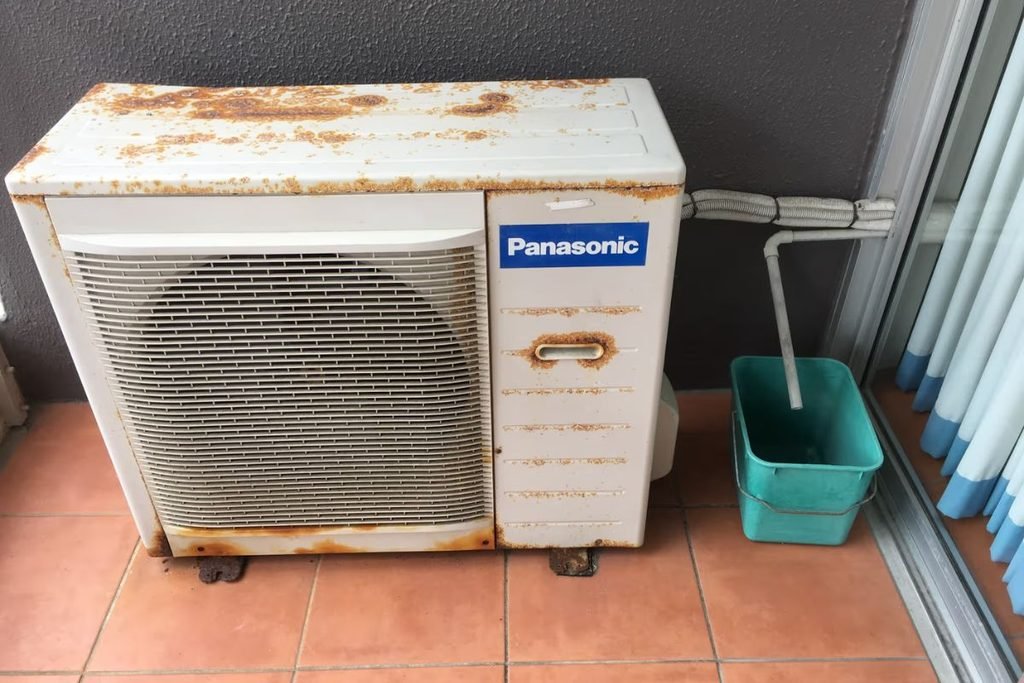
Salt air. If you live or work anywhere near the beach, from Coolangatta to Main Beach, salt lands on your outdoor unit every day. Over time it eats into the metal fins and parts, the same way it rusts a car parked by the beach.
Summer load. In December and January, your system may run 10 to 14 hours a day. Think of it like your car. You’d service it before a long road trip, not after it breaks down on the highway.
That’s why we recommend a service every six months, ideally in spring and autumn. Busier commercial sites, such as restaurant kitchens or hotels running units around the clock, may need checks more often.
Split system checklist: What gets checked and why
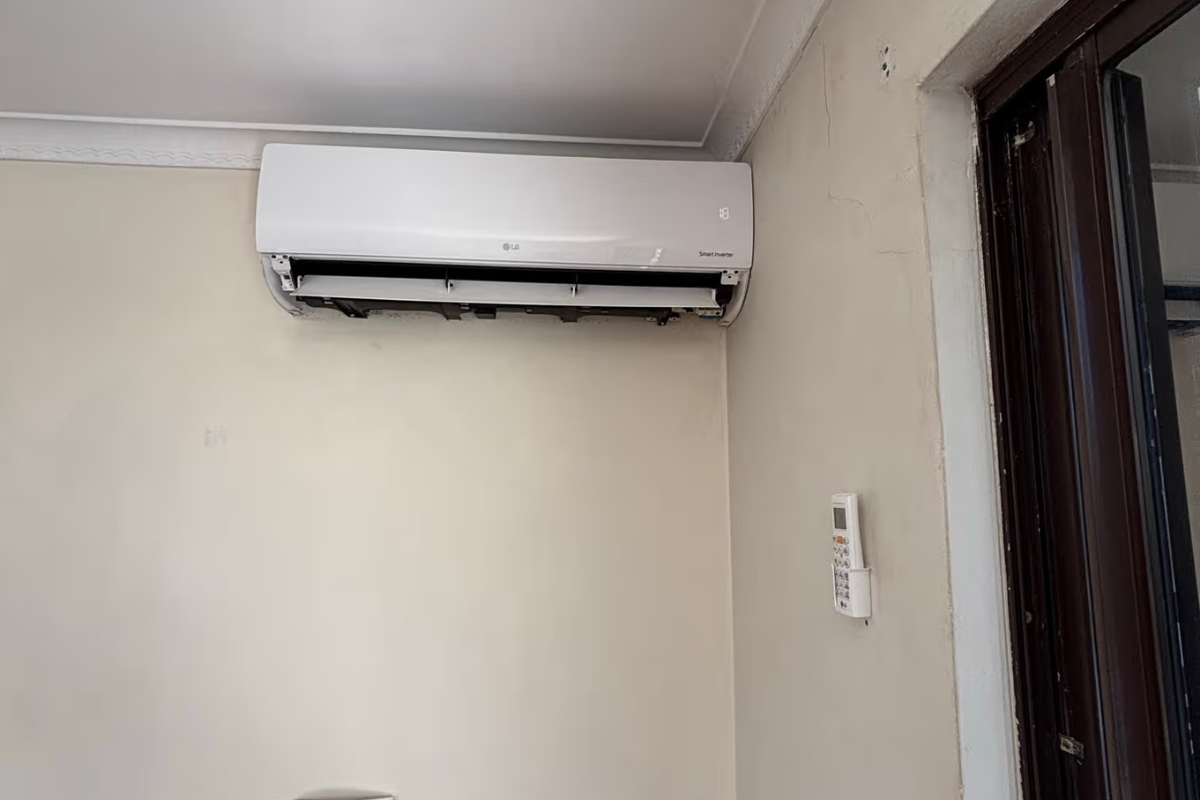
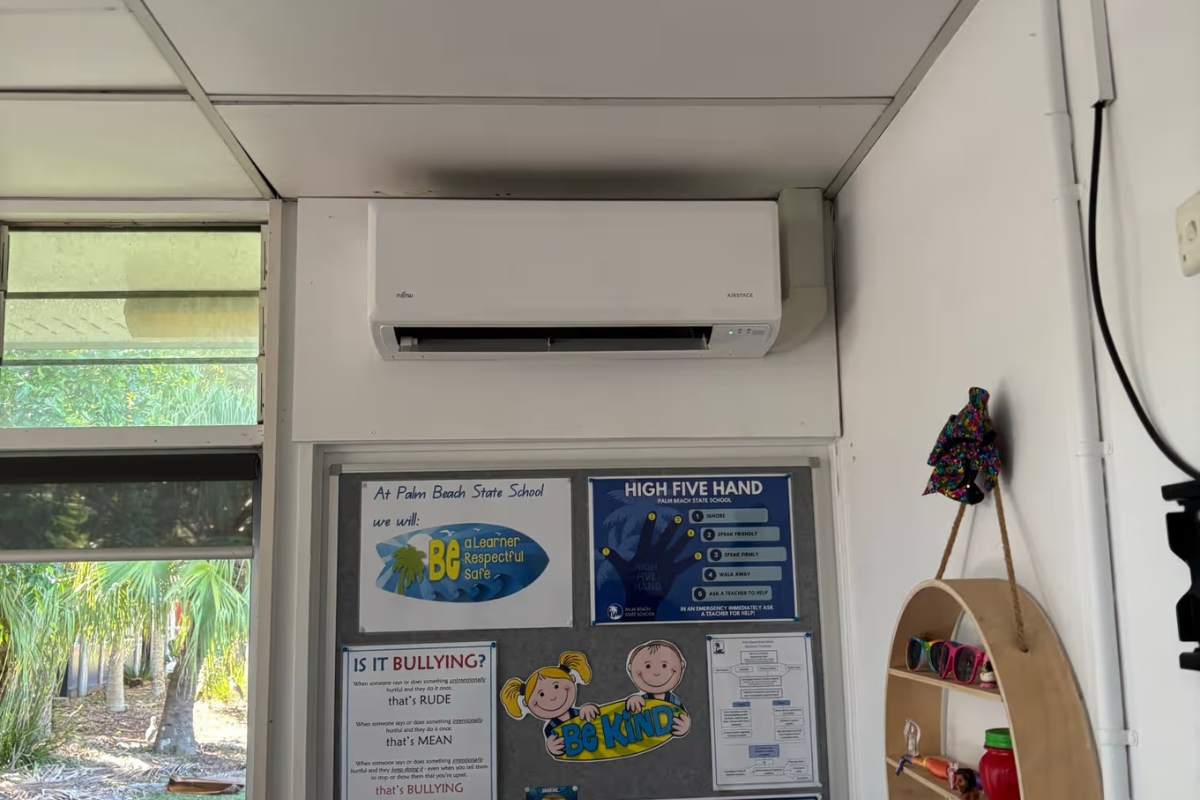
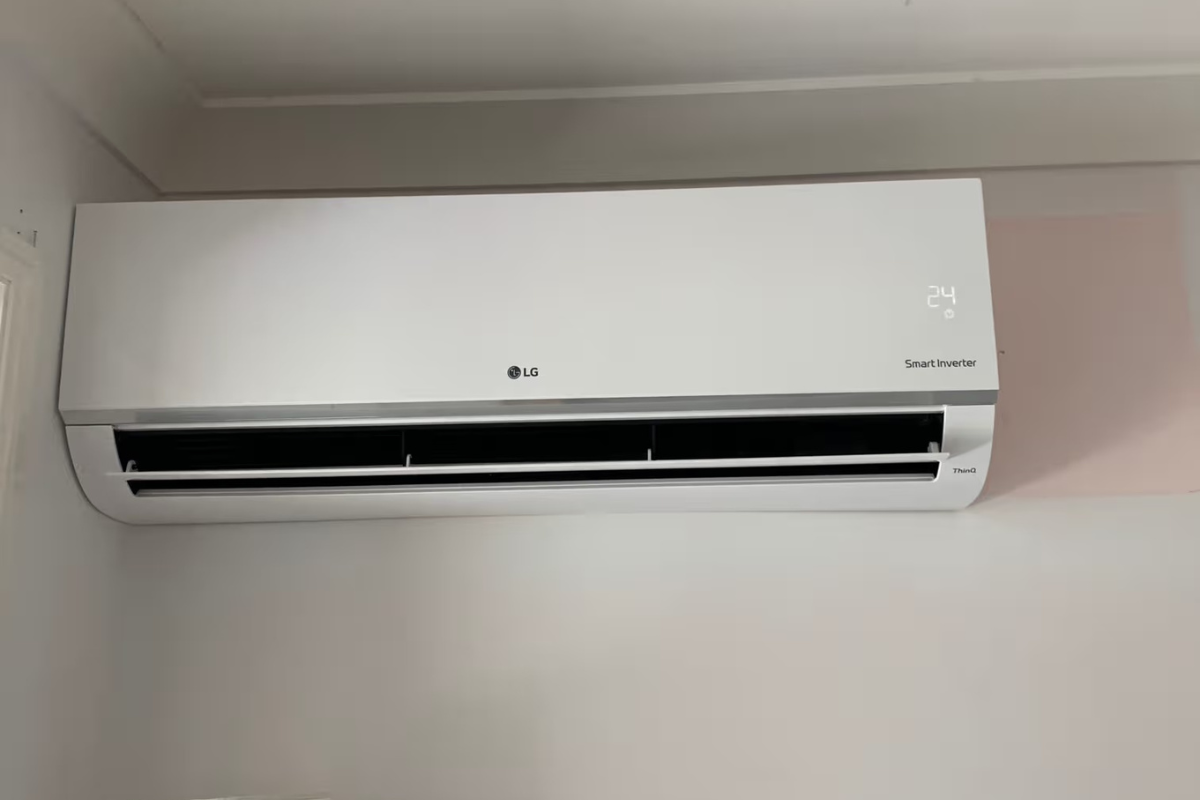
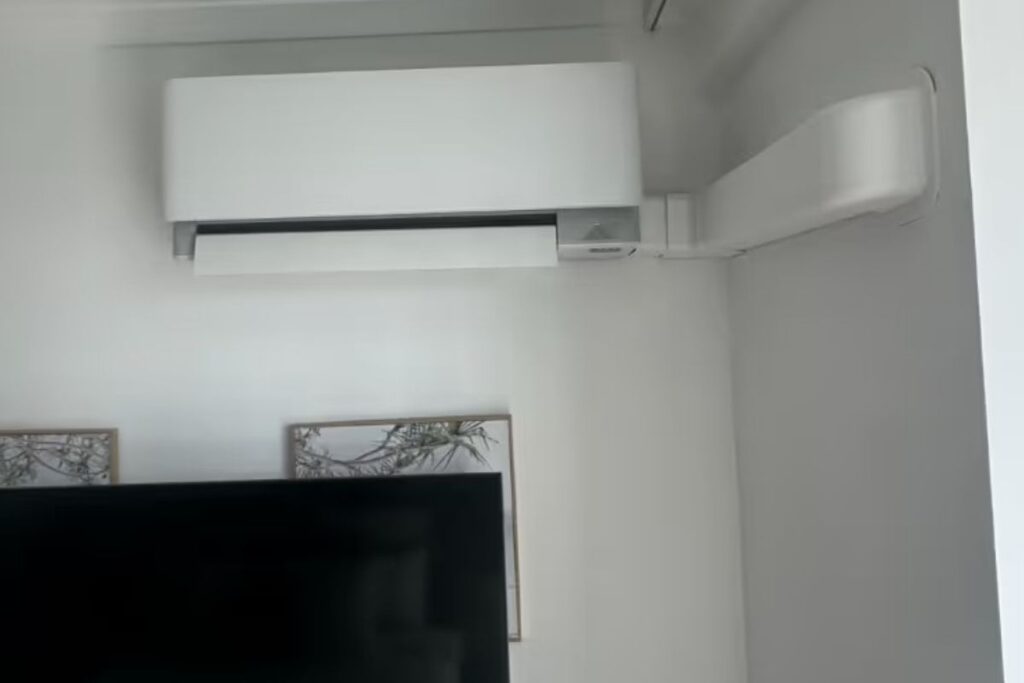
A split system is the most common setup in Gold Coast homes, units, offices and shops. It has a wall-mounted indoor unit and an outdoor unit outside. A full service should cover every item below.
1. Filters cleaned or checked
The filters sit just behind the front cover. They work like the filter in your rangehood or vacuum cleaner. Once they’re blocked, the unit has to work much harder for the same amount of cooling. It’s the easiest step, but it’s only the start.
2. Indoor coil inspected and cleaned
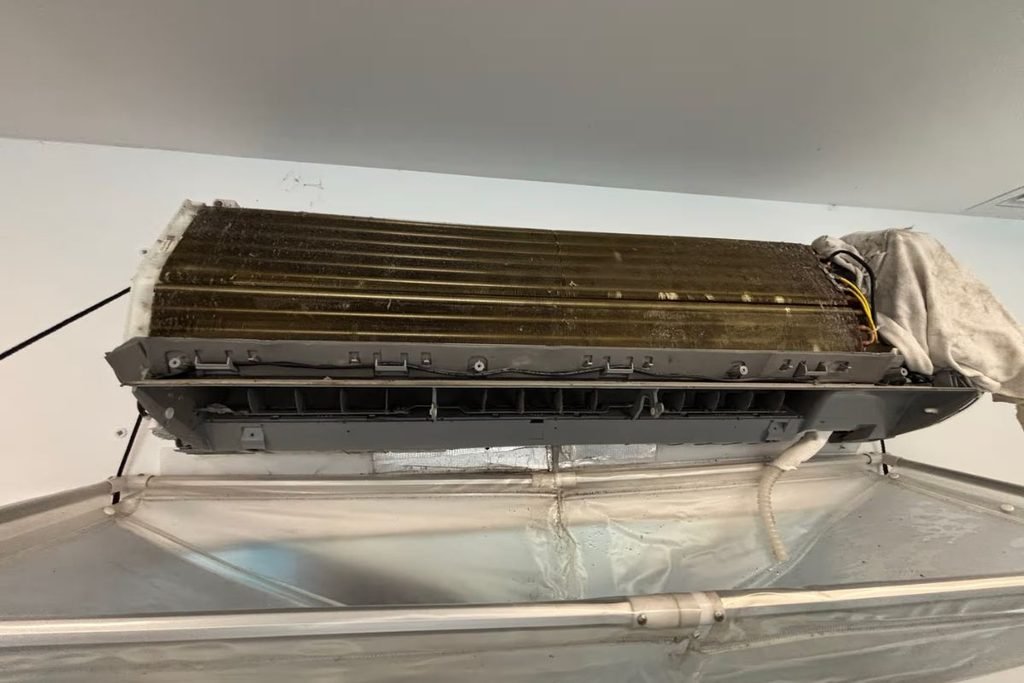
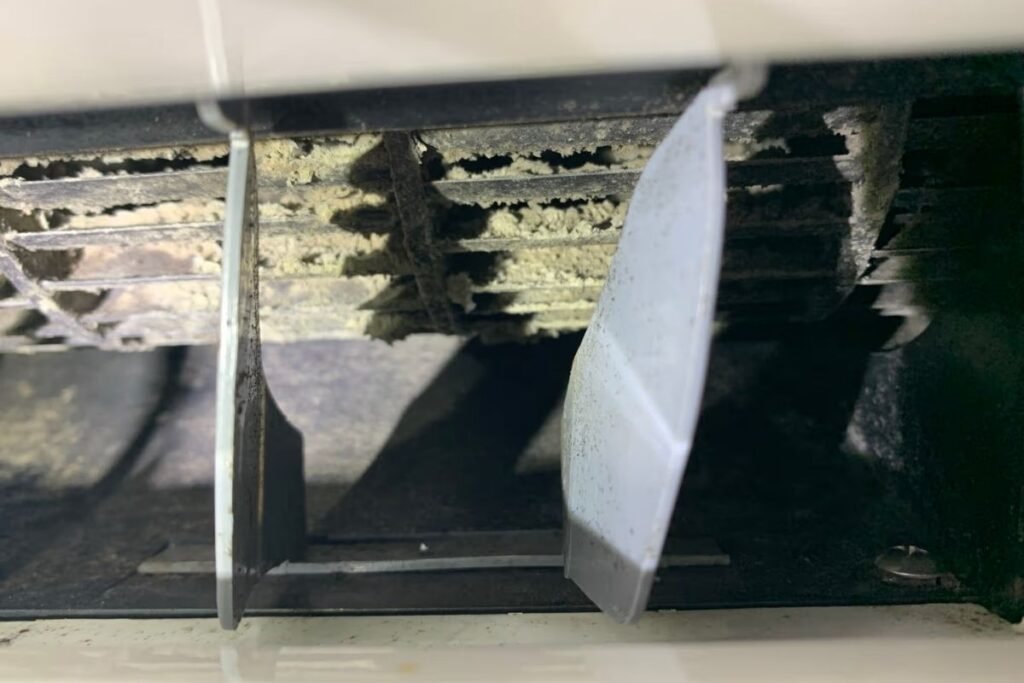
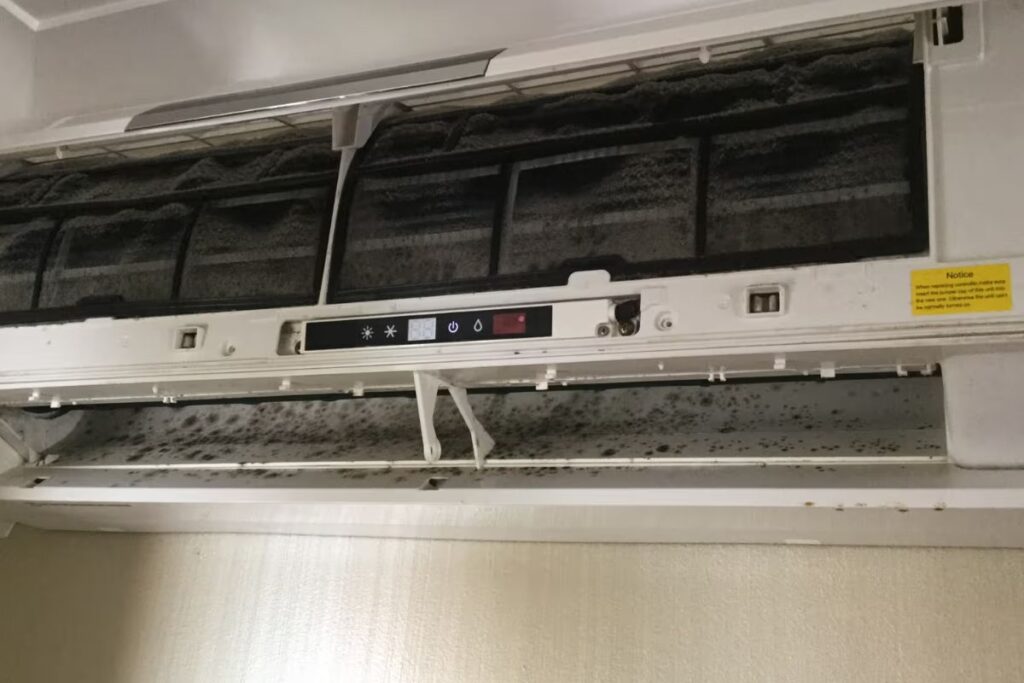
Behind the filters are thin metal fins called the coil. This is where the air actually gets cold. Dust that gets past the filter sticks to these damp fins and builds up into a grey mat. As a result, cooling drops and power bills climb.
3. Fan barrel checked (and hydro cleaned if needed)
The fan is a long, round barrel that pushes cold air into the room. When black specks build up on it, you’ll usually notice a musty smell. If the fan is dirty, a hydro clean is usually the right fix (more on that below).
4. Drain line and tray cleared
Remember the litres of water we mentioned? It drains away through a small pipe. If slime or debris blocks it, water overflows and drips down your wall. In a café or shop, that means a wet floor right where customers walk.
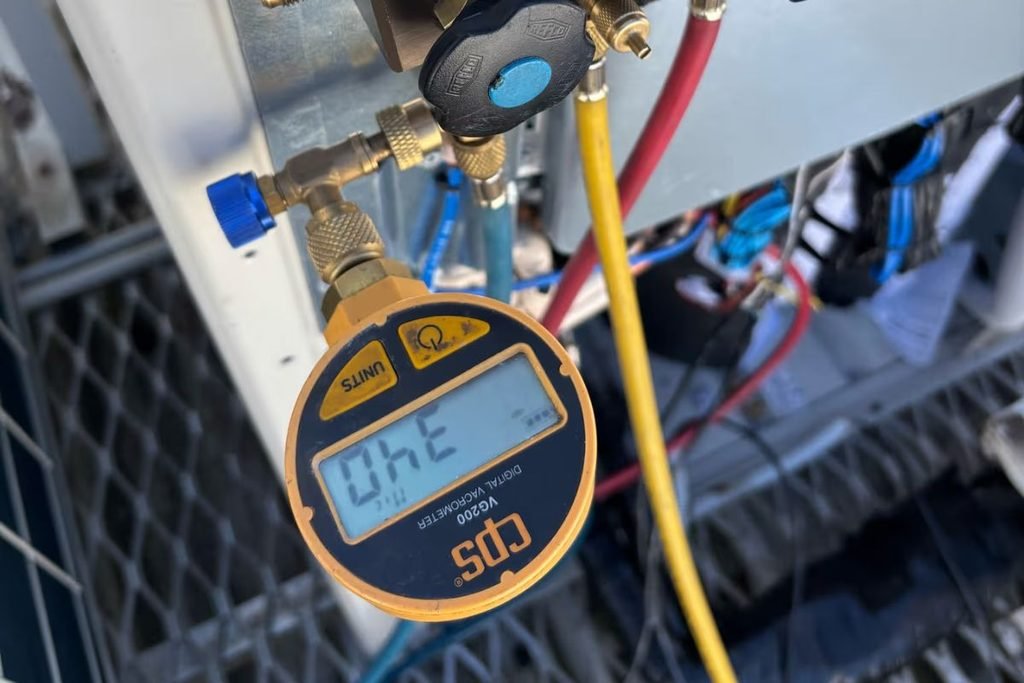
5. Gas pressure tested
Your system uses refrigerant gas to move heat outside. The technician checks its pressure, much like checking your tyre pressure. Low pressure usually points to a leak, and leaks get worse in summer. Under Australian law, only technicians licensed by the Australian Refrigeration Council can handle refrigerant.
6. Electrical connections checked
Wires and terminals are checked for loose connections, scorch marks or corrosion. A loose connection can cause the unit to cut out or, in rare cases, overheat. It’s a quiet check, but it matters.
7. Performance test
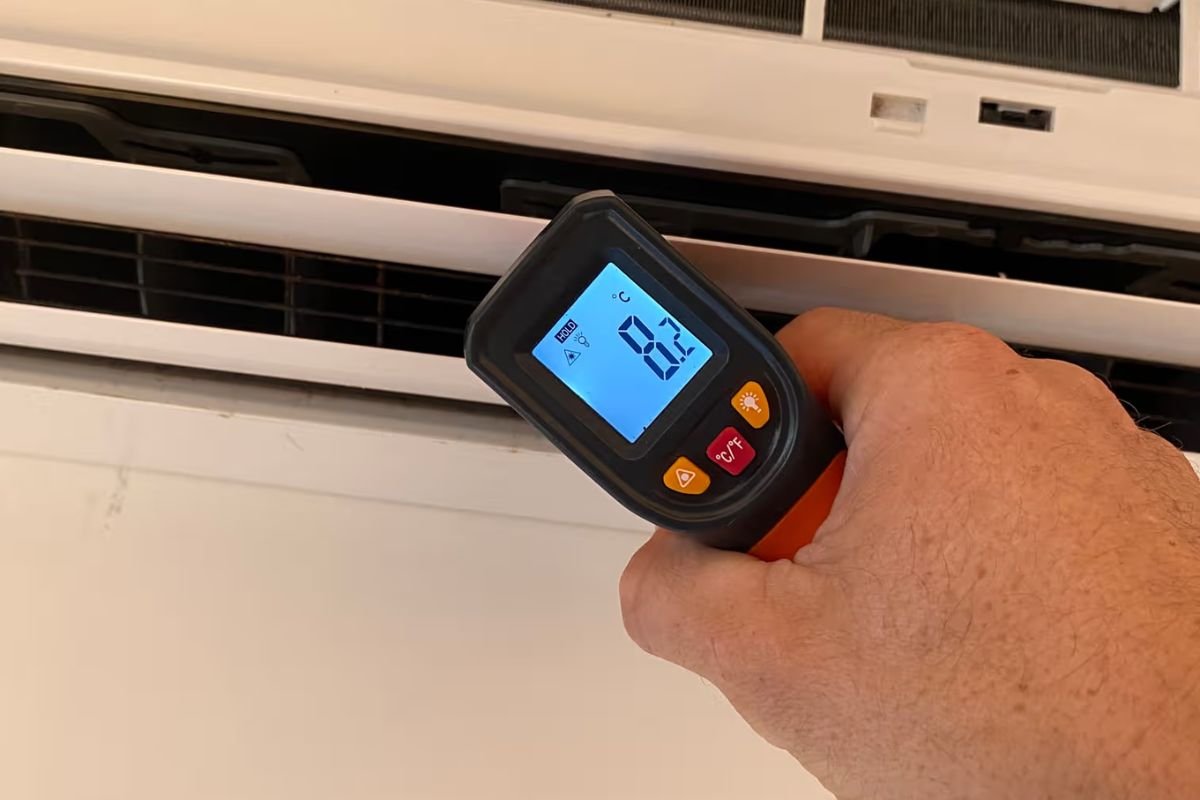
Finally, the technician measures the temperature of the air coming out against the air in the room. That number shows whether the system is actually cooling properly, not just blowing air.
A quick tip: if a “full service” took 20 minutes, ask which of these seven steps were done. A good technician will happily walk you through them.
Ducted air conditioning maintenance checklist
Ducted systems cool the whole home or office through vents in the ceiling. Because most of the system is hidden, problems often go unnoticed until something stops working. Ducted air conditioning maintenance covers three main areas.
Return air filter replacement
Most ducted systems have one large grille, often in a hallway ceiling. This is where the system breathes in air. The filter behind it catches dust, pet hair and kitchen grease. When it’s clogged, rooms at the far end of the house or office barely cool. We replace this filter rather than just shaking it out.
Controller and zones tested
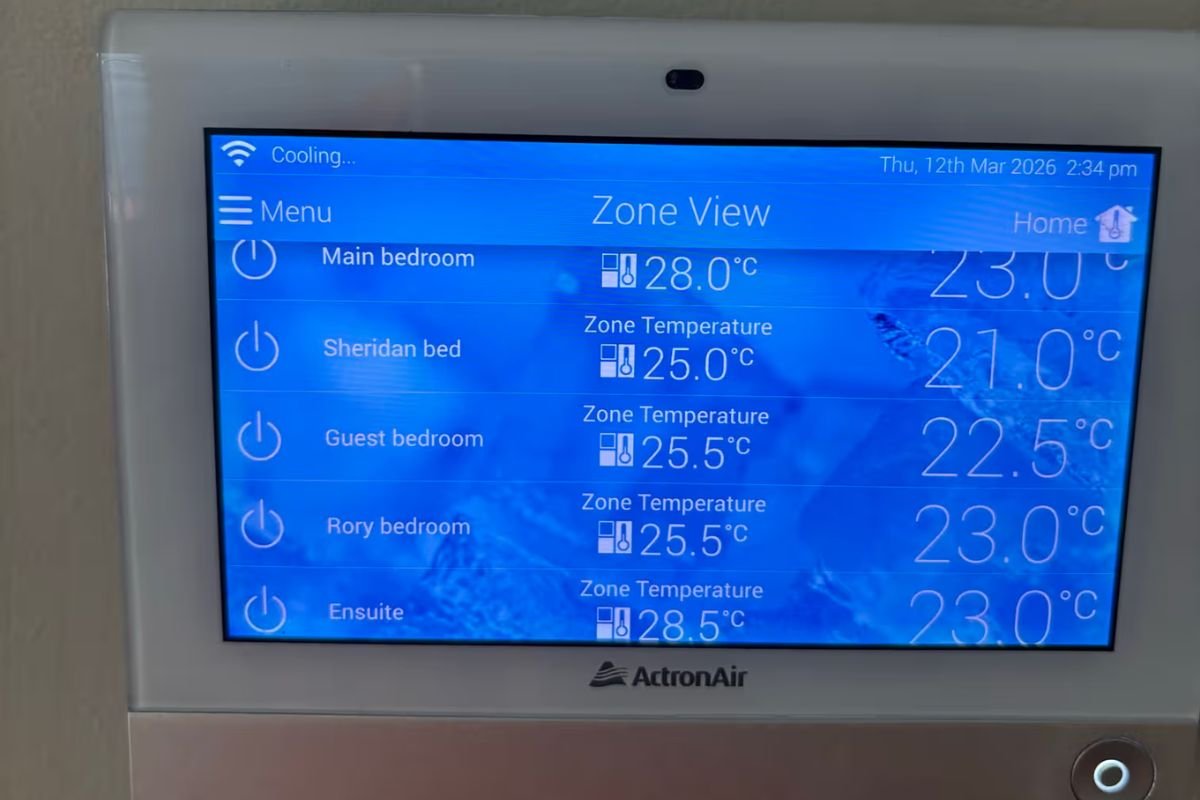
Zones let you cool some rooms without cooling others. For example, you can cool the bedrooms at night but not the living area. Inside the ducts, small motorised flaps open and close like doors. We test every zone to make sure each flap moves properly. A zone stuck open wastes power. A zone stuck closed leaves one room hot, which is often the room where guests or staff complain.
We also check the wall controller, its temperature sensor and its settings. A faulty sensor can make the system think a room is cool when it isn’t.
Outdoor unit inspected
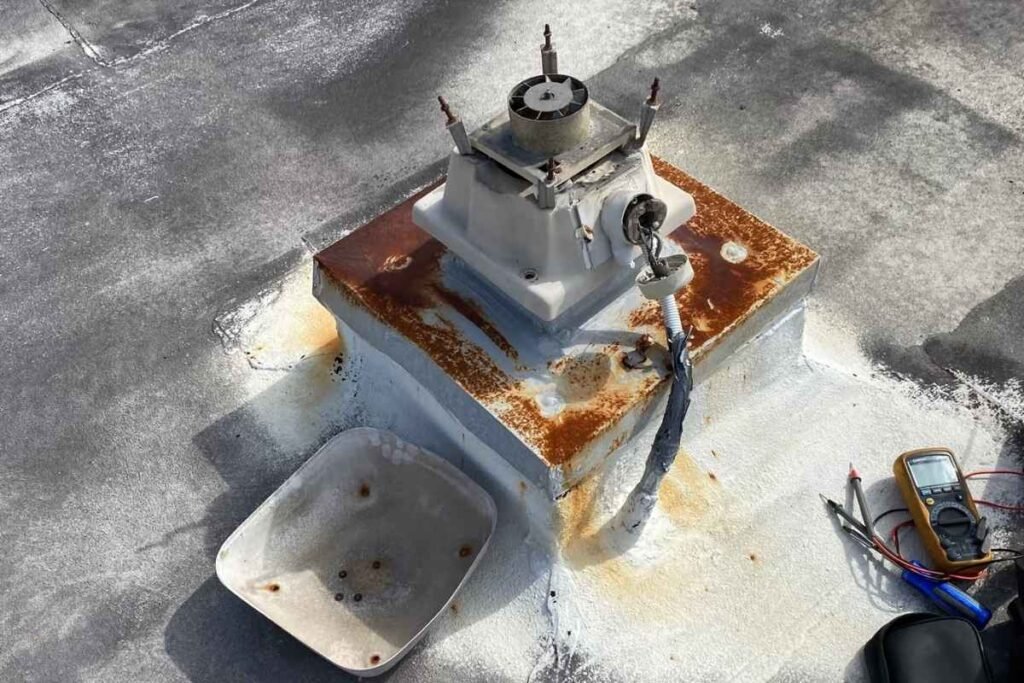
The outdoor unit on a ducted system is bigger and works harder. It gets the same coil, electrical and gas checks as a split system. In a commercial building, it may sit on the roof, where salt and sun hit it all day.
Ground-level outdoor units: Debris, geckos and garden clearance
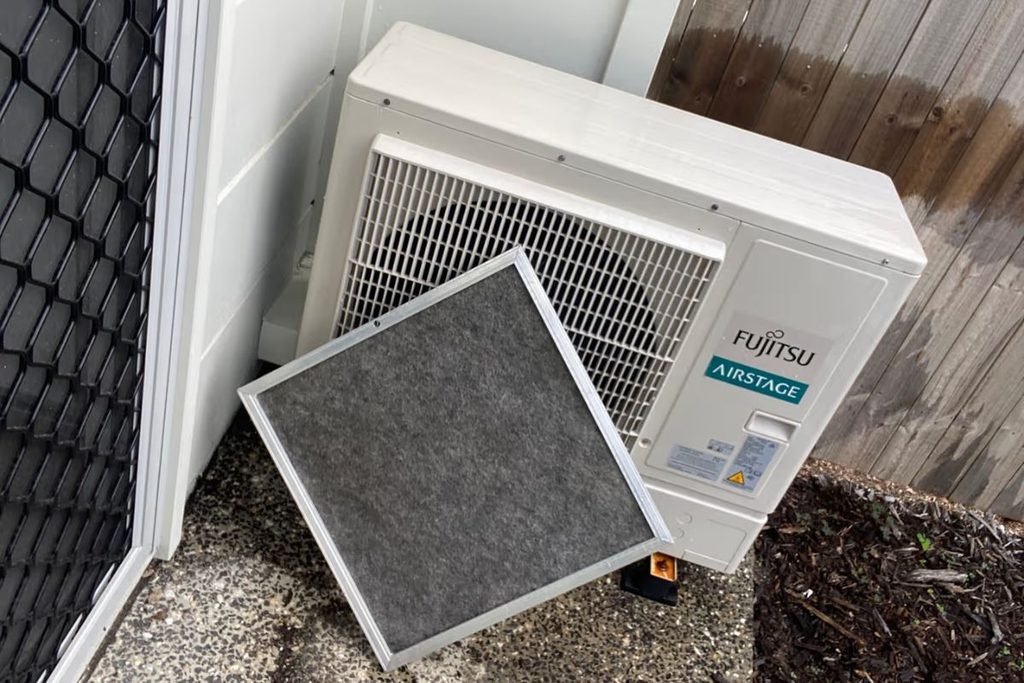
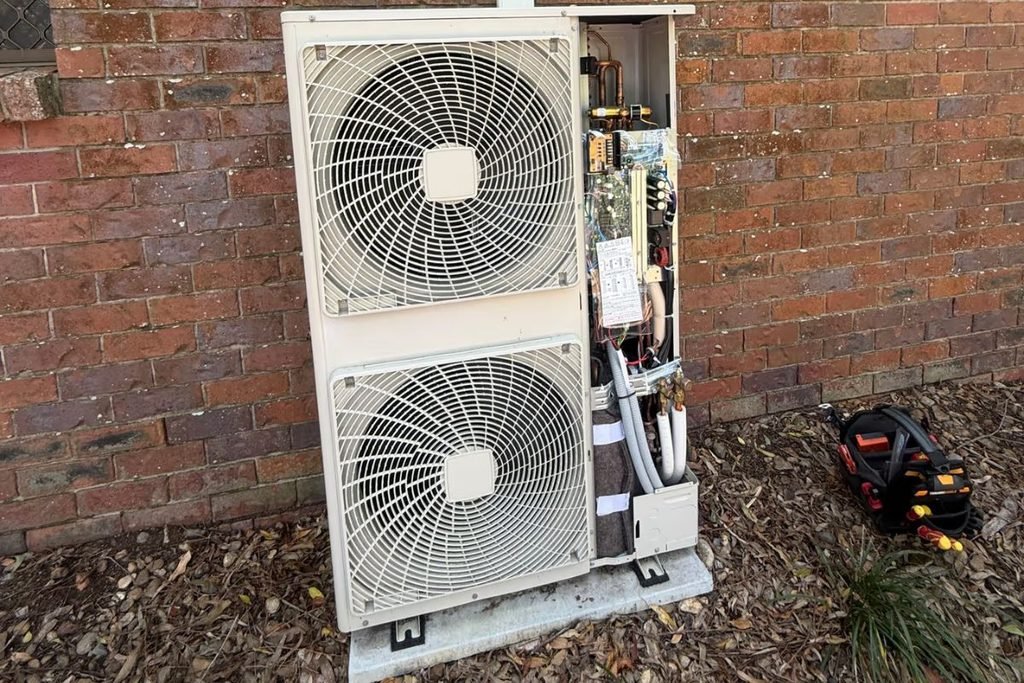
Most outdoor units sit at ground level beside a wall or fence. That puts them right in the path of Gold Coast garden life.
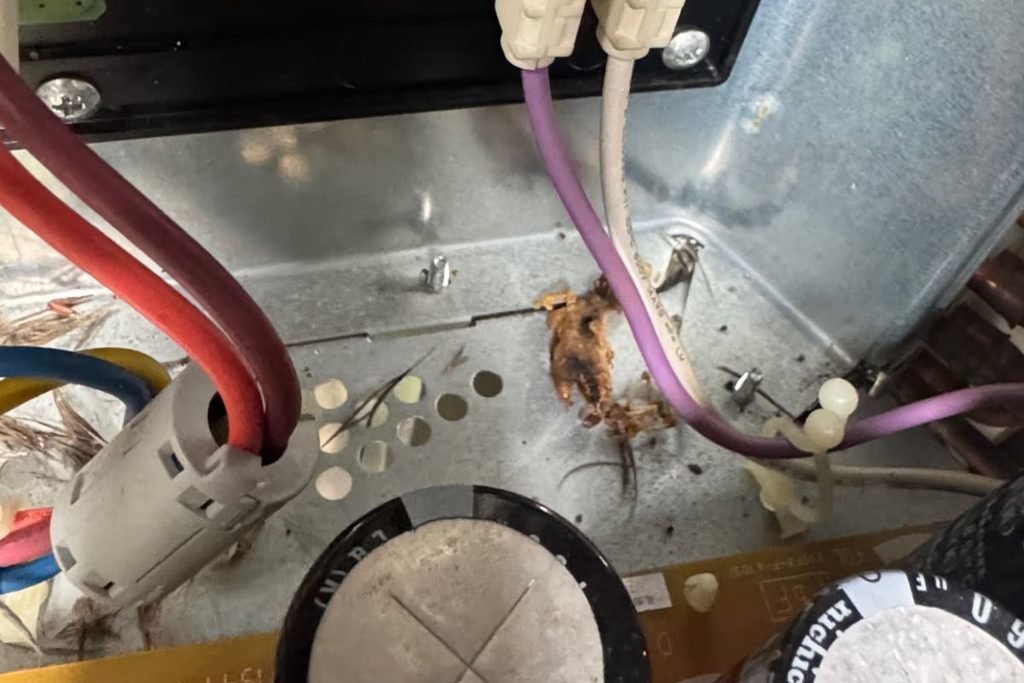
Geckos. This is a well-known local problem. Geckos crawl inside outdoor units for warmth and shelter. If one touches the electrical control board, it can short out the board. Our technicians check for signs of geckos and other pests during each service. We also offer gecko and rust treatment to help keep them out.
Ants. Ants are drawn to electrical parts too. A nest inside a unit can cause the same kind of failure.
Leaves, mulch and grass clippings. The outdoor unit pulls air through its fins to get rid of heat. Leaves, mulch and lawn clippings block that airflow. As a rule of thumb, keep about half a metre clear around the unit. Also point the mower’s side chute away from it.
Sprinklers and pool water. Garden sprinklers and pool splash leave mineral and chlorine marks on the fins. Over time, this speeds up corrosion, especially when combined with salt air.
You can keep the area clear yourself. However, please don’t open the unit or hose the fins at high pressure. The fins bend easily, and there’s electricity inside.
Hydro clean vs Standard clean: When you need which
This is one of the questions we get asked most. Think of it like a car wash versus a full professional detail.
A standard clean includes washing the filters, cleaning the coil surface and running all the checks above. It suits a system that’s serviced regularly and kept in good condition.
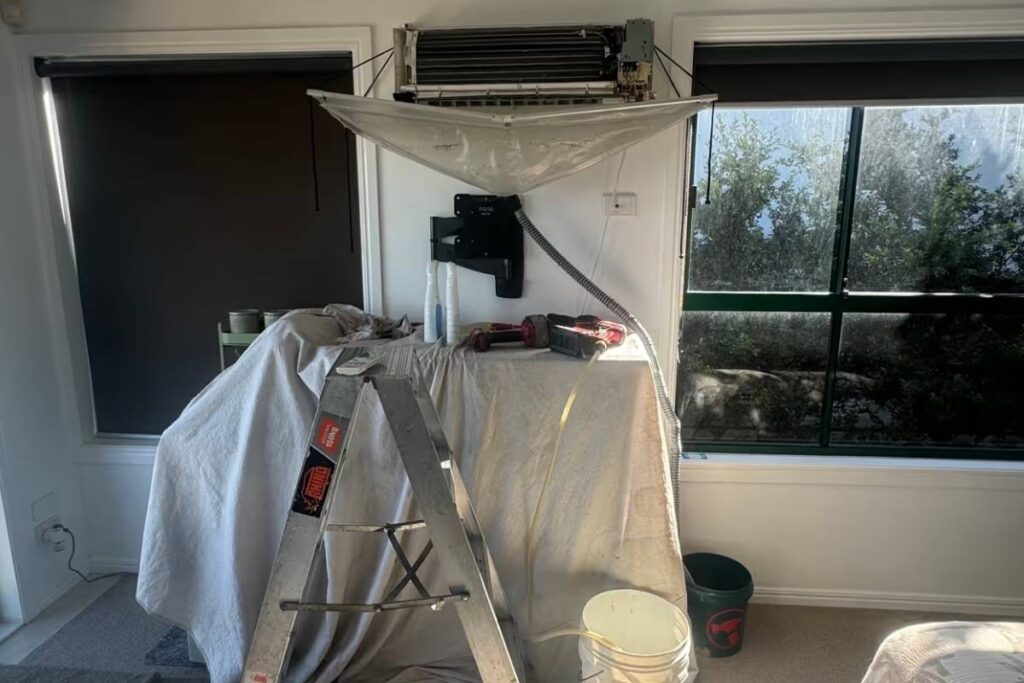
An aircon hydro clean goes much deeper. We cover the indoor unit with a special drainage bag. Then we wash the coil and fan barrel with a cleaning solution and low-pressure water. The dirty water runs into the bag, so your walls and floor stay dry. It’s often surprising how dark that water is.
You likely need a hydro clean if:
The air smells musty or “sour” when the unit starts
You can see black spots on the vent flaps or fan
Someone in the home sneezes or gets a stuffy nose when it’s on
The system hasn’t been properly cleaned in two years or more
You live near the beach or a busy road
The unit is in a commercial kitchen, gym, salon or clinic waiting room
For businesses, a hydro clean is often a reputation issue as well as a comfort one. A musty smell in a hotel room or medical waiting room is the first thing people notice. It’s also the thing they mention in online reviews.
Service plans: Choose the level that fits your system
No two air conditioning setups are the same. A two-bedroom unit in Burleigh with one split system needs something very different from a ducted family home in Robina. A restaurant running its kitchen 12 hours a day needs something different again.
That’s why we don’t push a one-size-fits-all package. Instead, our team looks at a few simple things first:
Your property. Is it a house, an apartment, an office, a shop or a commercial building?
Your system. Do you have split systems, ducted air, or a mix of both? How many units, and how old are they?
How you use it. Is it a few hours on hot evenings, or running all day for staff, guests or patients?
Where you are. Beachside homes and businesses need more protection from salt air than properties further inland.
What matters most to you. For some people that’s lower power bills. For others, it’s cleaner air for the kids, or making sure the business never has to close on a hot day.
From there, we’ll recommend the maintenance plan that suits your property and your budget. You’ll know exactly what’s included before you book, so the aircon service cost holds no surprises.
Also, keep in mind that a single emergency callout in the middle of summer often costs more than a full year of planned maintenance. For a business, there’s also the lost trade while the shop, office or dining room is too hot to use.
Not sure which plan is right for you? Call our friendly team on07 5526 0199for free advice on a maintenance plan that suits your home or business.
Book before the summer rush
Every year, our phones get busy as soon as the first heatwave hits. By then, everyone wants a technician on the same day. Booking your service in October or November means you get a time that suits you, before the summer rush.
DEEPCHILL is a family-owned Gold Coast business, established in 1986. We’ve looked after Gold Coast homes and businesses for 40 years. We’re proud to be Fujitsu/GENERAL National Dealer of the Year for 2024 and 2025. Our existing customers also get 7-day emergency support.
What does an aircon service cost on the Gold Coast?
The aircon service cost depends on your system type, how many units you have, how often you use them, and whether a hydro clean is needed. Call DEEPCHILL on 07 5526 0199and we’ll recommend a maintenance plan that fits your property and budget.
How long does a full air conditioning service take?
Most split system services take around an hour per unit. Hydro cleans and ducted systems need longer. If a service is finished in minutes, some steps were probably skipped.
How often should I service my air conditioner on the Gold Coast?
We recommend every six months, ideally before summer and before winter. Beachside homes and busy commercial sites may need more frequent checks. Our team can suggest the right schedule for your home or business.
Can I clean my air conditioner myself?
You can safely rinse the filters and keep the outdoor unit clear of leaves and mulch. Everything else, including gas checks, electrical work and hydro cleans, should be done by a licensed technician.
Which maintenance plan is right for me?
That depends on your property, your system and how you use it. Small apartments, family homes and busy restaurants all need different care. Call us on 07 5526 0199 for free advice, and we’ll recommend the plan that suits you.