A gas leak inside your air conditioner’s copper pipes is one of the most common – yet most overlooked – problems homeowners face. On the Gold Coast, where cooling runs hard through summer, even a small leak can snowball into poor cooling, high energy bills, mould problems, and long-term system damage. As an HVAC company with over 40 years of experience in air conditioning Gold Coast, DEEPCHILL breaks down the real signs of a copper pipe gas leak, how to check safely, and what your next steps should be.
Table of contents
What is a copper pipe gas leak? (Expert explanation)
Your AC relies on refrigerant circulating through copper pipes to absorb heat and cool the home.
If any part of the copper line cracks, corrodes, loosens, or is improperly installed, the refrigerant escapes.
Once this happens, cooling efficiency drops immediately and the longer the leak continues, the more damage your system suffers.

Common signs your AC copper pipe is leaking gas
Below are expert-verified signs that almost always point to a refrigerant leak:
1. Weak or no cooling
The most obvious warning. Even when you set the temperature low, the airflow feels warm or barely cool.
2. Blinking error light
Many modern AC systems include gas-pressure sensors. When levels drop too low, the system alerts you via flashing error lights.
3. Unusual chemical or gas smell
A faint, sharp, or chemical smell inside a closed room can indicate refrigerant escaping from the copper line or indoor coil.
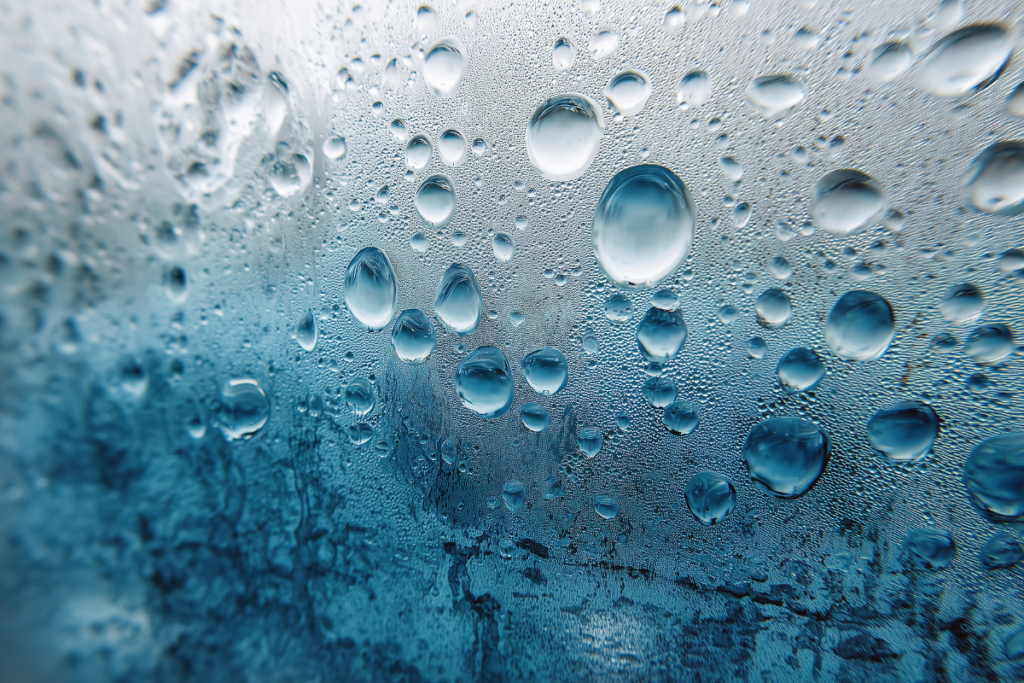
4. Water leaking or dripping inside
Low refrigerant = frozen evaporator coil. When the ice melts, water begins dripping from the indoor unit onto walls or floors.
5. Frost or ice on the copper pipe
If you see ice buildup on the copper line, flare joints, or near the indoor unit, the system is running with insufficient refrigerant.
6. Higher energy bills
A leaking system works overtime to compensate for the lost refrigerant, resulting in a noticeable spike in electricity usage.

Why copper pipe gas leaks happen
A gas leak is not random. It usually comes from one of these causes:
1. Poor installation
Loose flare joints, improperly tightened connections, or incorrect pipe bending can all cause micro-leaks.
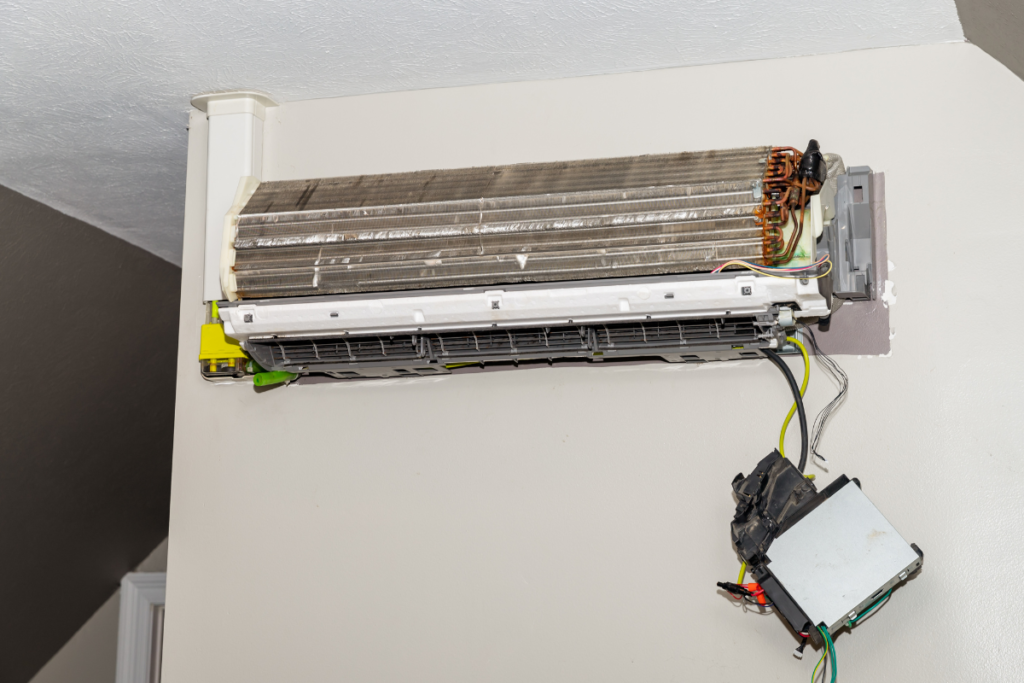
2. Corroded or damaged copper pipes
Older systems or units exposed to sunlight, salt air, rodents, or construction impacts are more likely to develop cracks.
3. Leaks at welded joints or coils
Solder joints, indoor coils, or outdoor coils can develop pinhole leaks over time.
4. Long-term lack of maintenance
Dust, vibration, pests, and wear-and-tear weaken joints and accelerate corrosion.
5. Manufacturing faults
Less common but possible, especially when the coil or pipe material ages prematurely.

What happens if you ignore a copper pipe gas leak?
Gas leaks are not harmless. They can cause:
Mouldy, damp walls
Dripping water damages paint, plaster, and timber.
Unhealthy indoor air
A leak can worsen allergies and asthma due to moisture and bacteria buildup.
Compressor burnout
Running with low refrigerant overheats the compressor – one of the costliest AC repairs.
Electrical hazards
Moisture leaks around electrical wiring or outlets create serious risks.
Damage to furniture or electronics
Water drip from the indoor unit can damage TVs, cabinets, or flooring.

Why choose DEEPCHILL for gas leak inspection?
With over 40 years of experience servicing air conditioning Gold Coast homes and businesses, DEEPCHILL will:
Step 1: Stop using the AC
Running the system while leaking can burn out the compressor.
Step 2: Leak detection & pressure testing
Technicians use specialised electronic detectors and nitrogen pressure to locate the exact leak point.
Step 3: Repair or replace the copper pipe
Depending on severity:
- Small leak → cut and reflare the pipe
- Moderate leak → replace damaged pipe section
- Severe corrosion → replace the full copper line set
Step 4: Vacuum & refill the system
Once sealed, the system is vacuumed to remove moisture, then charged with the correct refrigerant type and volume.
Step 5: Re-test for tightness
Final checks ensure the system is fully sealed and safe for long-term use.
Your AC should run safely, efficiently, and without hidden leaks, especially during Queensland’s hot and humid seasons.

Book a professional gas leak inspection today
If you notice weak cooling, water leaks, or ice on your copper pipes, don’t wait. Gas leaks only get worse over time.
Contact DEEPCHILL today for a full copper pipe gas leak inspection and repair.
Keep your home cool, safe, and worry-free!