Have you noticed your home feels stuffier in early autumn, even though outdoor temperatures are dropping? You’re not imagining it. Many Gold Coast homeowners ask: What causes a house to feel stuffy? or Why is my house so hot even when it’s cold outside? The answer usually isn’t one single issue. It’s a mix of airflow, humidity shifts, seasonal allergens, and how your air conditioning Gold Coast system responds to changing weather.
Table of contents
- Why does my house always feel stuffy when seasons change?
- Low humidity can still feel uncomfortable
- Airflow slows down in autumn
- Opening windows doesn’t always fix the problem
- Fall allergens increase stuffy sensations
- Your air conditioning still influences comfort in mild weather
- Why indoor temperatures can feel higher than outside
- What you can do to improve autumn comfort
Why does my house always feel stuffy when seasons change?
When summer shifts into autumn, several quiet changes happen inside your home:
- You stop running the AC as often
- Windows remain closed overnight
- Outdoor humidity drops
- Indoor air circulation slows
- Pollen and mould levels shift
Even though the air outside feels cooler, indoor air can become stagnant. Without consistent airflow, warmth and moisture settle inside your living spaces.
Autumn doesn’t just change temperature. It changes how your house breathes.
Low humidity can still feel uncomfortable
On the Gold Coast, humidity doesn’t disappear completely in autumn – but it fluctuates more than in summer.
Here’s what happens:
- Warm days + cooler nights = moisture imbalance
- Indoor air dries out when AC or reverse-cycle heating runs
- Dry air irritates nasal passages
Ironically, both high and low humidity can make a space feel stuffy.
When humidity drops below 40%, air feels:
- Dry
- Stale
- Irritating
When humidity sits too high:
- Air feels heavy
- Rooms feel warmer than they are
Balanced indoor humidity should sit between 40–60%.
If your home doesn’t feel fresh, humidity imbalance may be a contributor.

Airflow slows down in autumn
During summer, your AC runs frequently. That constant cycling:
- Moves air
- Filters particles
- Reduces moisture
In early autumn, systems run less.
Less cycling = less air movement.
When air stops circulating properly:
- Corners feel warm
- Bedrooms feel stuffy by morning
- Living areas feel slightly heavy by evening
This leads many homeowners to ask:
Why is my house so hot even when it’s cold outside?
The reason isn’t outdoor temperature – it’s stagnant indoor air trapping residual heat.
Even mild weather still requires controlled ventilation.
Opening windows doesn’t always fix the problem
It’s natural to think: “I’ll just open the windows”.
Sometimes that helps. But not always.
Here’s why:
- Autumn evenings can carry damp air
- Pollen levels peak in certain weeks
- Outdoor air may be cooler but still humid
- Air exchange is inconsistent
When windows are opened briefly without cross-ventilation, you may not actually reset the indoor air.
Fresh air requires:
- Consistent airflow pathways
- Balanced pressure
- Controlled exchange
If airflow inside the home isn’t balanced, opening windows may temporarily shift the air, but not fully refresh it.

Fall allergens increase stuffy sensations
Spring gets attention for allergies.
Autumn deserves it too.
Common early autumn triggers on the Gold Coast:
- Ragweed pollen
- Mould from fallen leaves
- Dust accumulation from reduced AC use
If your filtration system isn’t maintained, particles can circulate longer inside your home.
Clogged filters reduce airflow and increase that stale feeling.
This is one of the most common answers to: What causes a house to feel stuffy?
Often, it’s filtration performance – not temperature.
Your air conditioning still influences comfort in mild weather
Many people assume: “If it’s not hot, I don’t need AC”.
But your air conditioning Gold Coast system doesn’t just cool.
It also:
- Circulates air
- Filters contaminants
- Manages humidity
- Controls pressure balance
Even in mild autumn weather, improper settings can lead to:
- Over-drying the air
- Inconsistent airflow
- Rooms that feel heavier overnight
If your home feels stuffier in early autumn, check:
- Is fan mode active?
- Is airflow direction upward?
- Are filters clean?
- Is your system due for seasonal servicing?
Comfort isn’t about blasting cold air.
It’s about balanced circulation.

Why indoor temperatures can feel higher than outside
Another common confusion:
Outdoor air is 20°C, but inside still feels warm and stale.
This happens because homes:
- Absorb heat into concrete, brick and roofing materials
- Retain thermal mass from summer
- Have limited air escape pathways
Heat stored in walls and ceilings slowly releases inward.
Without airflow, it lingers.
That’s why indoor spaces sometimes feel warmer than the outdoor reading suggests.
What you can do to improve autumn comfort
Here are practical steps:
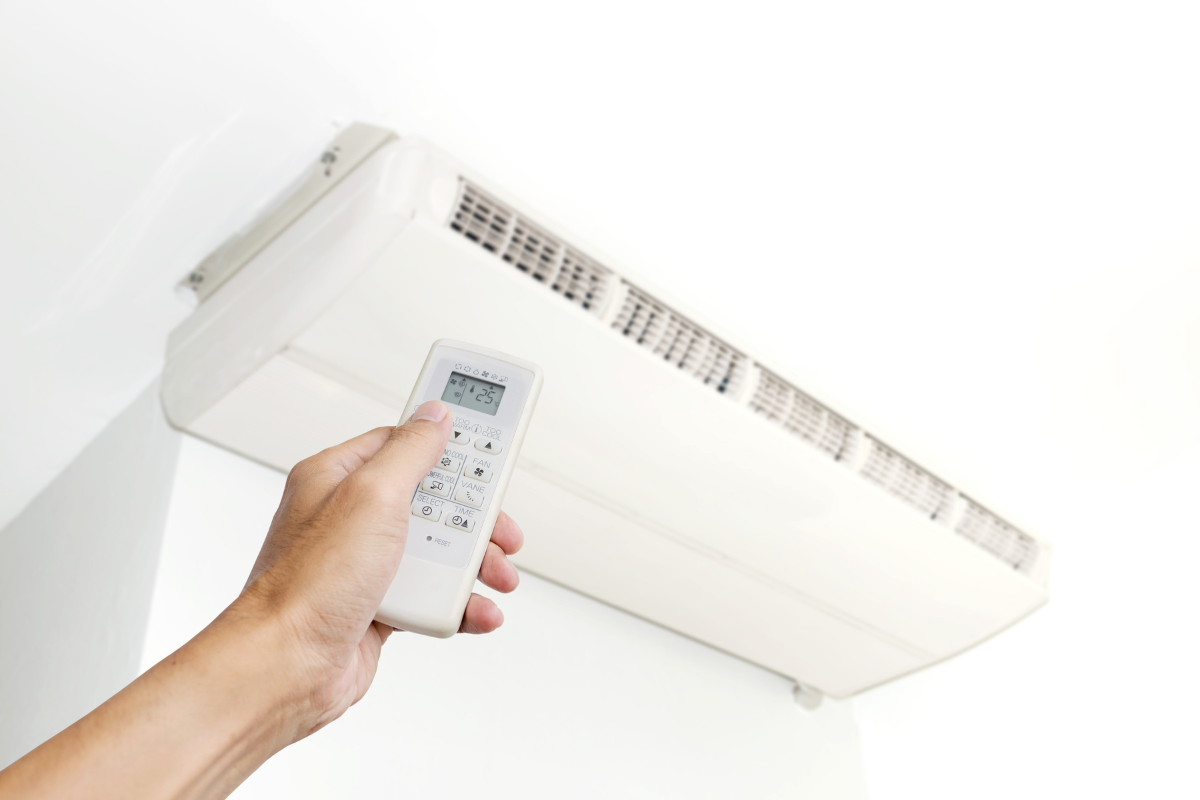
- Use Auto fan mode, even if cooling isn’t needed
- Set temperature slightly higher (27–28°C at night)
- Keep filters clean
- Book seasonal servicing before winter
- Consider humidity monitoring
If stale air persists, it may be time to assess:
- Duct leakage
- Ventilation balance
- System maintenance
A professional inspection ensures your air conditioning Gold Coast system adapts properly to seasonal transitions.